Malaysia to Reopen Labour Market, Recruit 10,000 Bangladeshis at Zero Cost
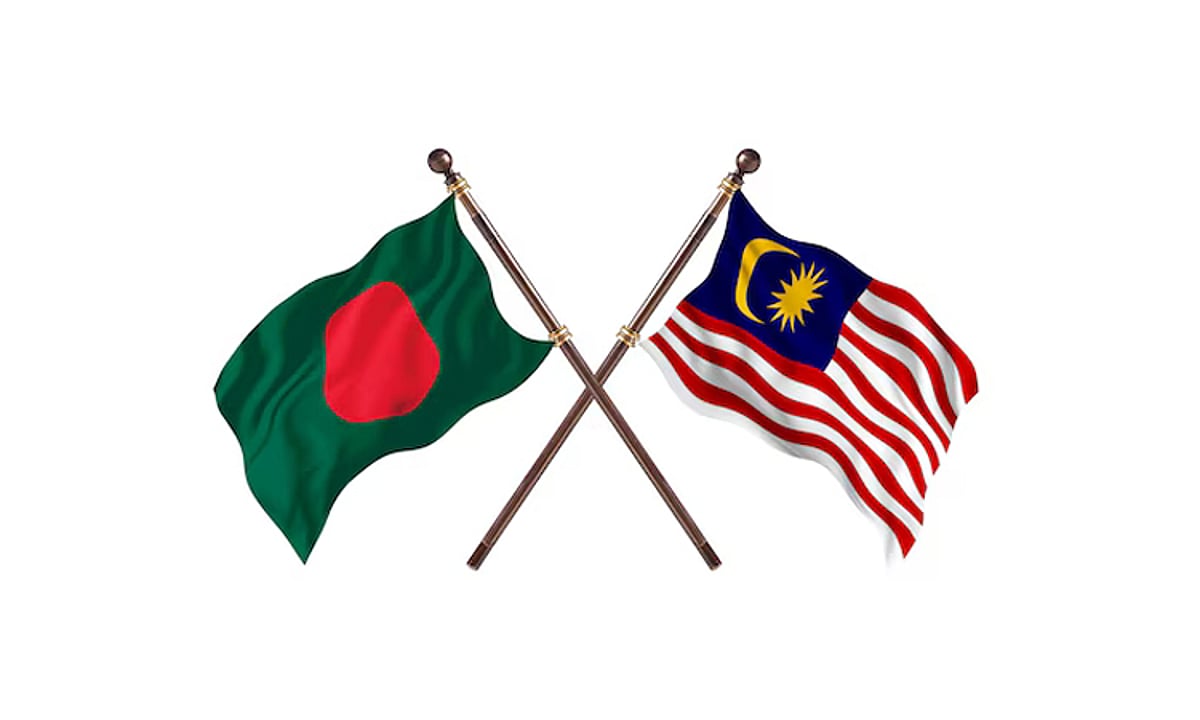
Prothom Alo English, Dhaka — Malaysia's labour market, which has remained closed to Bangladeshi workers over corruption, mismanagement, syndication and irregularities during the previous regime, is set to reopen soon through a transparent process — with Malaysia agreeing to recruit 10,000 Bangladeshi workers on a "zero-cost" basis, the Ministry of Expatriates' Welfare and Overseas Employment announced on Friday.
In a press release, the ministry said the issue received top priority through several ministerial-level meetings between Bangladesh and Malaysia. Prime Minister Tarique Rahman also discussed it with Malaysian Prime Minister Anwar Ibrahim and King Sultan Ibrahim Iskandar during his first foreign visit — underscoring the diplomatic priority attached to resuming one of Bangladesh's most important labour migration corridors.
👥 Zero-Cost Recruitment Programme
Malaysia has agreed to recruit 10,000 Bangladeshi workers on a "zero-cost" basis at Bangladesh's request. The first batch will be sent on special chartered flights through state-owned Bangladesh Overseas Employment and Services Limited (BOESL), without airfare or other migration-related costs.
The "zero-cost" framework is a major departure from the previous arrangement, under which Bangladeshi workers paid recruitment fees averaging $4,000-$6,000 to secure Malaysian employment — a cost burden that frequently pushed workers into debt bondage and made them vulnerable to wage exploitation. The new arrangement shifts the recruitment cost burden to the Malaysian employer, in line with international best practices promoted by the International Labour Organization (ILO) and the UN Migration Agency (IOM).
🏛 Recruiting Agency Selection Process
The ministry said Malaysia has directly selected 25 Bangladeshi recruiting agencies and allowed another 312 agencies to operate as associate recruitment agencies. The agencies were screened by a high-level Malaysian joint committee comprising:
- 🏛 Representatives of relevant Malaysian ministries
- 🚧 Malaysian Anti-Corruption Commission
- 👮 Malaysian law enforcement agencies
The selection was conducted with no involvement from the Bangladesh government — an explicit rejection of the previous recruitment system that had been plagued by syndication between Bangladeshi officials and recruiting agencies. The Malaysian-led screening process is designed to prevent the recurrence of the corruption that led to the closure of the Bangladesh-Malaysia labour corridor under the previous regime.
👥 Anti-Fraud Warning
The ministry urged people not to make payments, undergo medical tests, or submit passports until an official notice is issued, warning against brokers and fraudulent groups. The warning reflects the historical pattern of fraudulent recruitment activity that has emerged in Bangladesh each time a new labour market opens or reopens — with scam operators often moving to collect payments from hopeful workers before formal recruitment processes begin.
📊 Strategic Context: Bangladesh-Malaysia Labour Migration
The Malaysia-Bangladesh labour corridor is one of the most important in Bangladesh's external employment portfolio:
- 👥 Estimated 800,000+ Bangladeshi workers in Malaysia (pre-suspension peak)
- 💰 Annual remittance contribution: Malaysia has historically been a top-5 source of Bangladesh's remittance inflows
- 📊 Suspension period: Malaysia suspended new Bangladeshi worker recruitment following corruption and syndication allegations during the previous Bangladesh government
- 👥 Worker categories: plantation, construction, manufacturing, services, and domestic work
The resumption of recruitment represents a strategically important recovery for Bangladesh's labour migration portfolio, which has been affected by multiple external shocks in recent years — including the Saudi Arabia visa suspension aftermath, the Malaysia closure, and the global economic slowdown that has reduced demand for migrant workers in several Gulf economies.
💰 Remittance Impact
Remittances from Malaysia have historically represented one of Bangladesh's largest single-country remittance streams. At pre-suspension levels, the Malaysia corridor was generating an estimated $2-3 billion annually in remittance inflows — a figure that dropped substantially during the recruitment freeze. The 10,000 worker initial deployment, while modest in absolute terms, signals the beginning of a normalisation process that could, if scaled, restore Bangladesh's Malaysia remittance pipeline over the next 12-24 months.
The resumption also comes at a strategically important moment for Bangladesh's broader external position. With FY26 merchandise export earnings having declined by 0.65% YoY to $48.38 billion, and the broader current account under pressure from elevated petroleum import costs (+107% YoY in FY26), any recovery in remittance inflows from Malaysia provides welcome support for the country's foreign exchange reserves, which stood at $32.90 billion (BPM6) at end-FY26.
🏛 Diplomatic Significance
The agreement carries significant diplomatic weight. The fact that the issue was raised at the highest political level — during Prime Minister Tarique Rahman's first foreign visit — signals the strategic importance Bangladesh attaches to restoring normal labour migration flows with Malaysia. The direct engagement of the Malaysian Anti-Corruption Commission in the recruiting agency selection process, meanwhile, reflects Putrajaya's commitment to ensuring the new system operates free of the corruption patterns that had previously discredited the bilateral labour corridor.
The Malaysia-Bangladesh Joint Committee structure, with law enforcement representation from both sides, also establishes a longer-term oversight mechanism that should provide ongoing accountability for the recruitment process — a structural improvement over the previous system that lacked bilateral oversight.
🏛 BOESL's Role
The use of Bangladesh Overseas Employment and Services Limited (BOESL) — the state-owned recruitment agency — as the principal deployment channel for the first batch of 10,000 workers is itself a strategically significant choice. BOESL's involvement ensures that the initial deployment phase is conducted under direct government oversight, with chartered flights and pre-verified worker documentation. This approach:
- ✅ Eliminates middleman fraud in the initial deployment
- ✅ Provides verifiable documentation of the zero-cost framework
- ✅ Sets a positive precedent for future deployments through the 25 selected agencies and 312 associate agencies
- ✅ Builds Malaysian trust in the Bangladeshi recruitment system by demonstrating the government's commitment to clean processes
The resumption of the Malaysia labour corridor, even at the modest initial scale of 10,000 workers, is therefore a strategically important diplomatic and economic milestone for Bangladesh — one that signals the country's capacity to clean up historically corrupt recruitment systems, restore confidence with important bilateral partners, and rebuild remittance inflows that are critical to the country's external economic stability.
This news was originally published by Prothom Alo English. For the full original report, please visit: https://en.prothomalo.com/bangladesh/government/53vn42glrm
Related on BangladeshExport
📬 Get Bangladesh Trade News in your inbox
Weekly digest of export industry news, policy updates, and market analysis.
📰 Related Stories