Bangladesh Bank Allows Commodity Hedging Without Case-By-Case Approval
Importers can now use futures, swaps, options and forward contracts to hedge 100% of actual import exposure as Iran war drives Brent crude to $104.4/barrel in April-June 2026
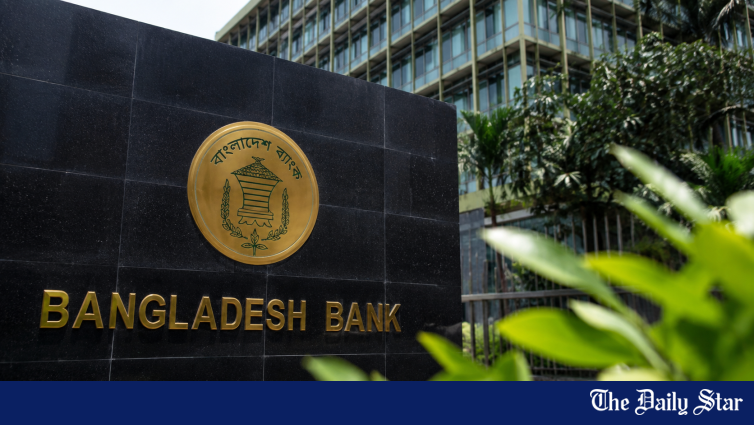
💰 The Bangladesh Bank (BB) has introduced a commodity price risk hedging facility for importers, moving away from its previous requirement for firms to obtain clearance on a case-by-case basis. The reform represents a structural upgrade to Bangladesh's import finance framework — enabling importers to lock in prices and protect against international market volatility at a time when global commodity prices are surging amid the Iran war and Middle East supply disruptions.
📊 A hedging facility allows businesses to lock in prices or use financial contracts to protect themselves against international market volatility, making future import costs predictable. In a guideline issued yesterday, the BB said banks will be able to offer eligible importers a range of price risk management facilities without requiring case-by-case approval from the regulator.
🌏 Geopolitical Context: Iran War Drives Price Surge
The move comes at a time when global markets, especially those for energy commodities such as oil, face volatility amid heightened concerns over the spiralling war in the Middle East. Iran has kept the Strait of Hormuz effectively shut, while the Houthis have taken control of the strategically significant Bab el-Mandeb Strait, a chokepoint for Red Sea maritime traffic. Since the beginning of the US-Israel war on Iran on February 28 this year, energy prices have jumped.
Brent crude oil averaged $104.4 per barrel in the April-June quarter this year, up 30 percent from $80.5 in the previous quarter, according to World Bank commodity price data. The oil price was $67.8 a barrel in the April-June period of 2025. The 54% year-on-year increase in Brent crude — from $67.8 to $104.4 per barrel — has directly increased Bangladesh's fuel import bill, contributing to the LNG subsidy burden (Tk 10,600 crore in FY26) and driving domestic fuel price adjustments that have fed into headline inflation.
- 💰 Brent crude Q2 2026 average: $104.4/barrel
- 💰 Brent crude Q1 2026 average: $80.5/barrel
- 💰 Brent crude Q2 2025 average: $67.8/barrel
- 📊 Q-o-Q increase: +30%
- 📊 Y-o-Y increase: +54%
- 📜 Iran war start: February 28, 2026
- 📜 Hedging coverage: Up to 100% of actual import exposure
- 📜 Approval mechanism: Banks (no BB case-by-case approval)
- 📜 Accounting framework: IFRS-9
- 📜 Audit requirement: Annual statutory auditor certificate
💵 Commodities Affected By Price Surge
Prices of liquefied natural gas and fertilisers, namely urea, triple superphosphate and diammonium phosphate (DAP), for which Bangladesh is highly dependent on imports, surged amid supply uncertainty caused by the war. Under the new guideline, importers can use internationally recognised hedging instruments, including commodity futures, swaps, commodity index-based forward contracts and options, against actual import liabilities.
Importers of raw materials, intermediate goods, fuel, edible oil, metals, grains and fertiliser, among other essential commodities for domestic consumption, will fall under this facility, a senior official of the BB said on condition of anonymity. Public sector entities engaged in strategic or large-scale import operations will also be able to take advantage of hedging. The inclusion of public sector entities is strategically significant — Bangladesh Petroleum Corporation (BPC), Petrobangla and the Directorate General of Food collectively import billions of dollars of commodities annually, and their access to hedging could meaningfully reduce the fiscal volatility associated with these imports.
📜 Coverage Limits And Multiple Hedge Contracts
In its directive, the central bank said businesses can hedge up to 100 percent of their actual underlying commodity exposure. Partial coverage and multiple hedge contracts are permitted, provided aggregate values do not exceed import liabilities. "This will allow importers to protect themselves against abnormal price spikes in international markets and make cost planning easier for businesses," said the BB official.
The 100% coverage limit — combined with the permission for partial coverage and multiple hedge contracts — provides substantial flexibility for importers to structure hedging programmes that match their specific risk profiles. An importer with regular monthly cargo arrivals could establish rolling hedge positions that cover each cargo's price risk, while an importer with irregular large-volume purchases could use options contracts that provide price protection without obligating exercise if market prices move favourably.
🚫 Speculative Trading Strictly Prohibited
The regulator said hedging products must be used strictly for genuine exposures and not for speculative or leveraged trading. It is solely a mechanism to reduce price volatility risk in international markets. Banks must ensure proper due diligence, record-keeping, risk disclosure and reporting to the BB. The non-speculative constraint is critical — it ensures that the hedging facility supports genuine risk management rather than creating exposure to commodities speculation that could expose importers (and the banking system) to outsized losses if market positions move against them.
The central bank official said the scope will help businesses, particularly importers, with cost forecasting and business planning. It will thereby improve their competitiveness amid global price volatility. According to the BB, importers must operate under a board-approved risk management policy and submit written declarations confirming transactions are solely for risk mitigation. They must also obtain annual certificates from statutory auditors confirming hedge alignment with exposures.
📜 IFRS-9 Accounting Framework
Hedging gains or losses must be accounted for in accordance with International Financial Reporting Standards (IFRS-9), which set out how companies should record and report gains or losses from financial contracts used to protect themselves against price changes, where applicable. The IFRS-9 requirement aligns Bangladesh's hedging accounting framework with international best practice — providing consistent, transparent treatment of hedge accounting that will be understood by international lenders, auditors and investors.
IFRS-9's hedge accounting requirements include documentation of risk management objectives, effectiveness testing of hedge relationships, and presentation of hedge gains/losses in financial statements. For Bangladeshi importers, compliance with IFRS-9 will require upgraded financial reporting systems and trained accounting personnel — a meaningful but manageable capability investment that will improve the quality of corporate financial reporting more broadly.
🏛 Bank Approval And Product Specification Requirements
The BB said banks intending to offer these services must obtain its prior approval by submitting board-approved product specifications and standard operating procedures. The prior approval requirement for banks — distinct from the case-by-case approval requirement that has been removed for individual hedging transactions — provides a structural framework for BB oversight. Banks must demonstrate their internal capacity to manage hedging programmes before offering them to clients, ensuring that the financial system's exposure to commodity derivatives is intermediated through institutions with appropriate risk management capabilities.
🌏 Strategic Context For Bangladesh's Trade Finance Modernisation
The hedging facility represents a meaningful upgrade to Bangladesh's trade finance architecture, complementing other recent reforms including the RTGS facility for Chittagong Port service charges and the easing of foreign borrowing rules for Invest Bangladesh Authority-registered firms. Together, these reforms are gradually modernising the country's trade finance framework to align with the needs of a growing export economy preparing for LDC graduation in November 2026.
For Bangladesh's broader macroeconomic management, the hedging facility offers a structural tool for reducing imported inflation. When importers can hedge commodity prices, the passthrough from international price spikes to domestic inflation is dampened — providing the central bank with greater monetary policy flexibility. The facility also reduces pressure on foreign exchange reserves by smoothing import cost volatility, though the magnitude of this effect will depend on the actual uptake of hedging by eligible importers.
🤝 What Comes Next
The coming months will reveal whether AD banks move quickly to build the internal capacity needed to offer hedging instruments at scale, and whether Bangladeshi importers — historically unfamiliar with formal hedging — adopt the facility with sufficient breadth to meaningfully reduce aggregate price risk. If uptake is strong, the hedging facility could become a structural pillar of Bangladesh's trade finance modernisation agenda — supporting import cost stability, reducing fiscal subsidy volatility and improving the predictability of consumer prices for essential commodities.
For an economy that has been repeatedly exposed to global commodity price volatility — through oil price spikes, LNG price surges, edible oil supply disruptions and fertiliser cost inflation — the hedging facility provides a structural risk management tool that has been notably absent from Bangladesh's trade finance toolkit. The timing of the reform — amid the most sustained period of global commodity price volatility in years — underscores the government's recognition that the absence of hedging access has been a meaningful constraint on Bangladesh's economic resilience.
This news was originally published by The Daily Star. For the full original report, please visit: https://www.thedailystar.net/business/economy/news/bb-allows-commodity-hedging-without-case-case-approval-4272931
Related on BangladeshExport
📬 Get Bangladesh Trade News in your inbox
Weekly digest of export industry news, policy updates, and market analysis.
📰 Related Stories