Bangladesh Removes REHAB President Ali Afzal Over Loan Default
Commerce ministry declares REHAB president post vacant after Bangladesh Bank CIB report identifies Ali Afzal as loan defaulter under Section 23(1)(b) of relevant law
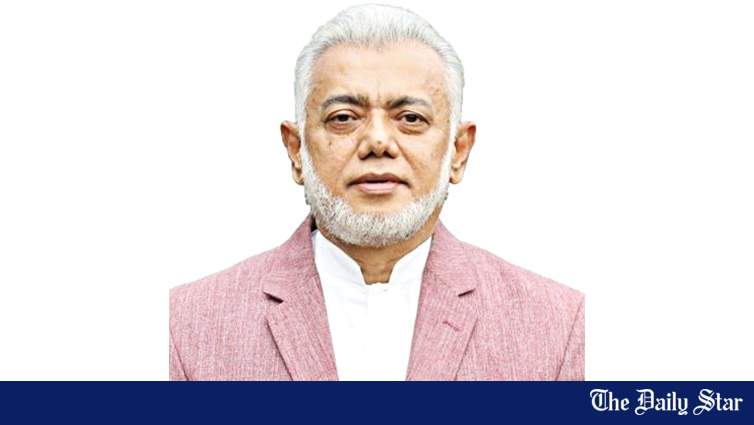
🏛 The commerce ministry has declared the post of Real Estate and Housing Association of Bangladesh (REHAB) President Ali Afzal vacant after a Bangladesh Bank report identified him as a loan defaulter. The removal represents one of the most concrete applications of Bangladesh's loan-default disqualification provisions against a senior industry association leader — signalling a structural shift in the enforcement of banking sector discipline across the broader business community.
📊 According to the order issued yesterday, Bangladesh Bank's Credit Information Bureau (CIB) report showed that Ali was a director of a loan-defaulting company and was consequently identified as a defaulter himself. Under Section 23(1)(b) of the relevant law, an elected office-bearer's position becomes vacant if they remain a loan defaulter for 180 days without repaying the outstanding loan, according to the provision cited in the matter.
📜 Legal Framework And Removal Process
The order, signed by Chowdhury Samia Yasmin, deputy secretary of the commerce ministry, was sent to REHAB's senior vice-president, the Registrar of Joint Stock Companies and Firms, the FBCCI administrator and other officials concerned. The multi-stakeholder notification — covering the association's senior leadership, the corporate registrar and the apex business chamber — reflects the formal nature of the removal process under the relevant legal framework.
The 180-day threshold for loan-default-triggered vacancy is a structural feature of Bangladesh's regulatory framework for trade associations. The provision ensures that office-bearers cannot retain their positions while their companies remain in default on banking sector obligations — creating a direct link between banking sector discipline and corporate governance of industry associations. The application of this provision against a senior REHAB official signals that the provision is now being actively enforced rather than remaining dormant as it has been in previous years.
- 🏛 Removed REHAB President: Ali Afzal
- 🏛 Ali Afzal's other role: Group MD, Krishibid Group Bangladesh
- 📅 REHAB election: April 18, 2024 (Progressive Panel)
- 📅 Office assumption: April 22, 2024
- 📅 Board complaint filed: July 26, 2026
- 👥 Board members who filed complaint: 10
- 📜 Legal basis: Section 23(1)(b) of relevant law
- ⏳ Loan default threshold: 180 days
- 📜 Order signed by: Chowdhury Samia Yasmin (Deputy Secretary, Commerce Ministry)
📜 Context: Ali Afzal's REHAB Tenure
Ali, also the group managing director of Krishibid Group Bangladesh, was elected president from the Progressive Panel in the REHAB election held on April 18, 2024, and assumed office on April 22 that year. His removal comes amid a separate controversy within the country's real estate trade body. On July 26 this year, 10 members of REHAB's board of directors submitted a written complaint to the commerce ministry against Ali, alleging financial irregularities and several other issues.
The complaint is currently under investigation, according to officials familiar with the matter. The latest action, however, is based specifically on his loan-default status as reflected in Bangladesh Bank's CIB report, rather than the allegations contained in the complaint. The ministry's letter does not disclose the amount of the outstanding loan or when the default occurred. It also does not provide details of Ali's shareholding or directorship in the company.
🤝 Separation Of Issues: Loan Default Vs Financial Irregularities
The separation between the loan-default removal and the financial irregularities complaint is strategically significant. The commerce ministry's action is based solely on the CIB report finding — a clear, objective, regulatory standard that does not require adjudication of contested allegations. The financial irregularities complaint, which involves more complex factual disputes requiring investigation, continues separately. This sequencing — acting on the objective default finding first, while continuing to investigate contested allegations — provides a defensible legal foundation for the removal action.
The Daily Star tried to reach Ali through text messages and phone calls but could not reach him until the filing of this report. The non-response from Ali Afzal limits the available information about his position on the loan default finding or the financial irregularities complaint. His response, when received, will provide important context about whether the loan default is contested, the underlying reasons for the default, and the planned next steps for both Ali and the affected lending institution.
🏛 Implications For REHAB And Real Estate Sector
For REHAB — Bangladesh's apex real estate trade body representing over 1,000 member developers — the removal of its president creates both governance and operational challenges. The senior vice-president will likely assume acting leadership pending the election of a new president, but the transition period creates uncertainty for ongoing REHAB advocacy initiatives, including ongoing engagement with the government on real estate sector policy reforms.
The real estate sector has been under sustained pressure in 2025-26 from weak demand, financing constraints, regulatory uncertainty and the broader economic slowdown. The sector's contribution to GDP has declined from its peak, with apartment sales in Dhaka and Chattogram running significantly below historical averages. The removal of the REHAB president adds governance uncertainty to an already challenging operating environment for the sector.
🌏 Broader Implications For Loan Default Enforcement
For Bangladesh's broader banking sector reform agenda, the removal of Ali Afzal from REHAB presidency carries significant signalling value. The application of Section 23(1)(b) loan-default disqualification provisions against a senior industry association leader signals that the government is willing to enforce long-dormant regulatory provisions — even when doing so creates political and commercial disruption.
This enforcement precedent has implications across multiple industry associations. The Bangladesh Bank CIB database identifies loan defaults for thousands of company directors across Bangladesh — including many who hold positions in industry associations, chambers of commerce and trade bodies. If the loan-default disqualification provision is consistently applied, several other association leaders may face similar removal — creating a structural incentive for loan settlement that has been absent from Bangladesh's banking sector reform landscape.
The action also aligns with the broader banking sector reform agenda being pursued by the interim government — including the introduction of KPI frameworks for bank CEOs, the enforcement actions against Commerce Bank officials, and the broader push for accountability in lending decisions. The cumulative effect of these measures represents the most comprehensive banking sector enforcement programme Bangladesh has seen in years.
📜 What Comes Next
The coming weeks will reveal several important developments. First, REHAB will need to convene its board to elect a new president — a process that may surface internal divisions exposed by the July 26 board complaint against Ali Afzal. The new president's mandate will be shaped by both the loan-default enforcement action and the ongoing financial irregularities investigation.
Second, the commerce ministry's action may catalyse similar reviews of loan-default status for office-bearers in other industry associations. If the Section 23(1)(b) provision is applied consistently, Bangladesh could see meaningful turnover in association leadership — with implications for policy advocacy, sector representation and the broader relationship between the business community and the government.
Third, the affected lending institution(s) will need to pursue recovery of the defaulted loan — a process that may involve asset seizure, restructuring or legal action. The recovery outcome will determine whether the loan-default enforcement produces actual financial returns for the banking sector, or whether the removal action remains primarily a governance signal without corresponding financial recovery.
For Bangladesh's broader economic reform trajectory, the REHAB president's removal represents a tangible demonstration that the loan-default enforcement framework can produce concrete outcomes. The credibility of this enforcement will depend on consistent application across multiple cases — and on the visible recovery of defaulted loans that have long burdened the banking sector's balance sheet.
This news was originally published by The Daily Star. For the full original report, please visit: https://www.thedailystar.net/business/economy/news/rehab-president-removed-over-loan-default-4272836
Related on BangladeshExport
📬 Get Bangladesh Trade News in your inbox
Weekly digest of export industry news, policy updates, and market analysis.
📰 Related Stories