Saudi Pipeline Outage Threatens Loss Of 4% Of Global Oil Supply
Saudi Arabia has 5-7 days of Yanbu stocks after drone attack shut east-west pipeline; Saudi production already at 6.2 million bpd from 10.9 million in February pre-war
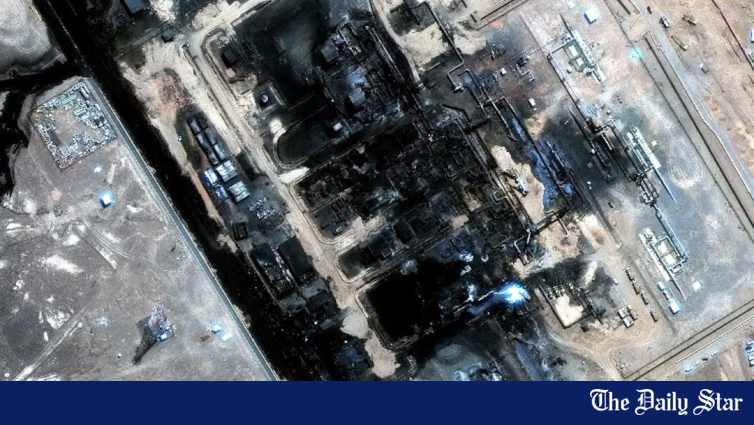
⚠ Saudi Arabia will run out of oil stocks for exports if it doesn't restart its major pipeline to the Red Sea within days, leading to a loss of up to 4 percent of global supply, Saudi oil buyers and traders have warned. The potential supply loss — coming on top of existing disruptions through the Strait of Hormuz — would represent one of the most severe oil supply shocks in modern history, with cascading implications for global energy markets, inflation and the broader macroeconomic environment.
📊 A further decline in Saudi flows will worsen the global supply crunch, which has already pushed global fuel prices to record highs, spurred inflation around the world and sent US bond yields to the highest levels since the 2008 financial crisis. Since drone attacks forced Saudi Arabia to shut its huge east-west oil pipeline on Friday, Riyadh has not given full details about the extent of the damage or how long the route will stay off-line.
🚧 Pipeline Damage: 5-6 Weeks Repair Estimate
Sources that spoke to Reuters gave varying estimates, with one saying the damage could take as long as five to six weeks to repair, while another said it could be fixed sooner and could resume pumping partially while repairs are ongoing. Saudi Arabia's government media office and energy ministry did not immediately respond to requests for comment.
The 5-6 week repair timeline — if accurate — would mean the pipeline remains offline through October and potentially into November, coinciding with the US midterm elections on November 3 that President Trump has cited as the likely endpoint of the Iran war. The extended outage would sustain the global oil supply disruption through the peak northern hemisphere winter demand season, when heating oil demand adds to the seasonal pressure on global refining capacity.
- 📊 Saudi pipeline daily capacity: ~4 million bpd (~4% global supply)
- 📅 Pipeline shutdown date: Friday (drone attack)
- ⏳ Repair estimate: 5-6 weeks (Reuters source)
- 💰 Yanbu storage capacity: ~35 million barrels
- 📅 Yanbu export stock duration: 5-7 days
- 💰 Ain Sukhna (Egypt, Red Sea) storage: 18 million barrels
- 💰 Sidi Kerir (Egypt, Mediterranean) storage: 20 million barrels
- 📊 Saudi production August: 6.2 million bpd (3-decade low)
- 📊 Saudi production February (pre-war): 10.9 million bpd
- 📊 Production decline: -4.7 million bpd (-43%)
- 📊 Global oil supply decline 2026: 5.7 million bpd (~6%)
- 📊 Middle East pre-war supply: 22 million bpd
- 📊 Hormuz current flows: 6-9 million bpd
📜 Pipeline's Strategic Role: 6-Month Lifeline
For the past six months, the pipeline running through the desert across the Arabian Peninsula has spared Saudi Arabia from the brunt of the impact of the wartime shutdown of the Strait of Hormuz that has crippled exports from its neighbours. The world's biggest exporter has used the pipeline to reroute around 4 million barrels per day — around 4 percent of global supply — to the port of Yanbu on the Red Sea.
The 1,200-kilometre east-west pipeline has been Saudi Arabia's strategic hedge against Strait of Hormuz disruption — allowing the kingdom to bypass the strait by routing crude from its eastern oil fields to Red Sea export terminals. The pipeline's strategic value has been repeatedly demonstrated through the Iran war, and its outage now removes the kingdom's primary alternative export route at a time when Hormuz flows remain constrained by Iranian attacks on tankers.
💰 Stock Duration: 5-7 Days At Yanbu
But with the pipeline out of service, Yanbu now has stocks to maintain exports for just five to seven days, according to three industry sources familiar with Saudi exports. Saudi Arabia also has stocks to supply customers for several days from Egypt's ports of Ain Sukhna on the Red Sea and Sidi Kerir on the Mediterranean, a fourth source said. Yanbu storage capacity stands at around 35 million barrels, according to industry estimates, with Ain Sukhna and Sidi Kerir able to store 18 million and 20 million barrels respectively.
Stocks are not full and will ultimately run out without the east-west pipeline resuming operations, the four sources said. The aggregate storage capacity across Yanbu, Ain Sukhna and Sidi Kerir — approximately 73 million barrels — provides only a partial and time-limited buffer. At Saudi's pre-pipeline-shutdown export rate of 4 million bpd via Yanbu, the 73 million barrel aggregate storage would last approximately 18 days — though actual export rates may be lower as Saudi prioritises strategic customers and manages inventory depletion.
📊 Saudi Production At Three-Decade Low
Saudi oil supply has already fallen to a more than three-decade low in August on reduced flows via Hormuz and the Red Sea, the International Energy Agency said on Friday. World oil supply will decline this year by 5.7 million bpd, or about 6 percent, the IEA, which coordinates Western energy policies, said.
Saudi Arabia told OPEC last week that its oil production had dropped to just 6.2 million bpd in August from 10.9 million bpd in February before the start of the war. The 43% production decline from pre-war levels represents an extraordinary structural reduction in global oil supply capacity — removing 4.7 million bpd from a market that was already tight before the conflict began. The Saudi production collapse has been driven by the combined impact of Hormuz disruption, pipeline attacks and Houthi control of Bab el-Mandeb — all of which have constrained the kingdom's ability to export crude to international buyers.
🚢 Houthi Seizure Of Red Sea Island
In addition to the attack on the pipeline, Houthi fighters in Yemen who have threatened Saudi oil shipments seized an island on Friday in the mouth of the Red Sea. The Middle East supplied around 22 million barrels per day of oil before the war. Flows through the Strait of Hormuz have slowed to just 6 million to 9 million bpd, industry sources say.
The Houthi seizure of an island at the mouth of the Red Sea compounds the Saudi pipeline disruption by adding direct threat to Red Sea shipping — the alternative route that Saudi Arabia and other Gulf producers have used to bypass Hormuz. With both Hormuz and the Red Sea route under pressure, the kingdom's export options have been structurally narrowed, driving the production collapse documented by the IEA.
🌏 Implications For Bangladesh And Global Energy Markets
For Bangladesh, the Saudi pipeline outage carries direct and immediate implications. Bangladesh imports over 5 million tonnes of crude and refined petroleum products annually, with Saudi Arabia historically serving as one of the country's largest crude suppliers. The combination of Saudi production collapse and potential loss of 4 million bpd of pipeline-routed exports would sustain elevated crude prices — currently above $100 per barrel — and could trigger further increases if the outage extends beyond the 5-7 day stock buffer.
The impact on Bangladesh's fuel import bill would be substantial. At current prices, Bangladesh's annual fuel import cost has expanded by approximately $2-3 billion compared to pre-war levels. A further 10-15% crude price increase from the Saudi pipeline crisis would add another $300-500 million to the annual fuel import bill — putting sustained pressure on foreign exchange reserves and forcing additional domestic fuel price adjustments that would feed into headline inflation.
For Bangladesh's broader energy security strategy, the Saudi pipeline crisis reinforces the urgency of the government's recently announced plans to add a third FSRU before 2028, drill 300 new gas wells in two phases, and prioritise solar energy in a diversified power system. The recurring pattern of Middle East supply disruptions — Hormuz, Bab el-Mandeb, Saudi pipeline — demonstrates that Bangladesh's energy import dependence creates structural vulnerability that can only be addressed through domestic energy resource development and renewable capacity expansion.
🤝 Global Macroeconomic Implications
Globally, the Saudi pipeline outage threatens to deepen the macroeconomic headwinds that have been building through 2026. The combination of elevated oil prices, surging inflation (with US CPI at 3.4% in August) and rising US bond yields (10-year Treasury yields at 4.92%) creates a stagflationary pressure that constrains both monetary policy and fiscal policy responses in major economies. For emerging markets including Bangladesh, the spillover effects include stronger dollar, capital outflow pressure and reduced export demand if developed economies enter recession.
The coming weeks will be critical for global energy markets — if Saudi Arabia can restart partial pipeline operations within the 5-7 day stock buffer, the supply disruption may be contained. If the full 5-6 week repair timeline proves necessary, global oil markets face sustained supply pressure that could push crude prices to $120-130 per barrel, with cascading implications for inflation, monetary policy and global growth through the end of 2026 and into 2027.
This news was originally published by The Daily Star. For the full original report, please visit: https://www.thedailystar.net/business/global-economy/news/saudi-pipeline-outage-threatens-loss-4-global-oil-supply-4272841
📬 Get Bangladesh Trade News in your inbox
Weekly digest of export industry news, policy updates, and market analysis.
📰 Related Stories