Bangladesh China Chamber Seeks Chinese Bank Branch in Dhaka
BCCCI delegation urges Commerce Ministry to facilitate a Chinese bank branch, build 20 product display centres in China and curb bonded warehouse misuse to boost bilateral trade
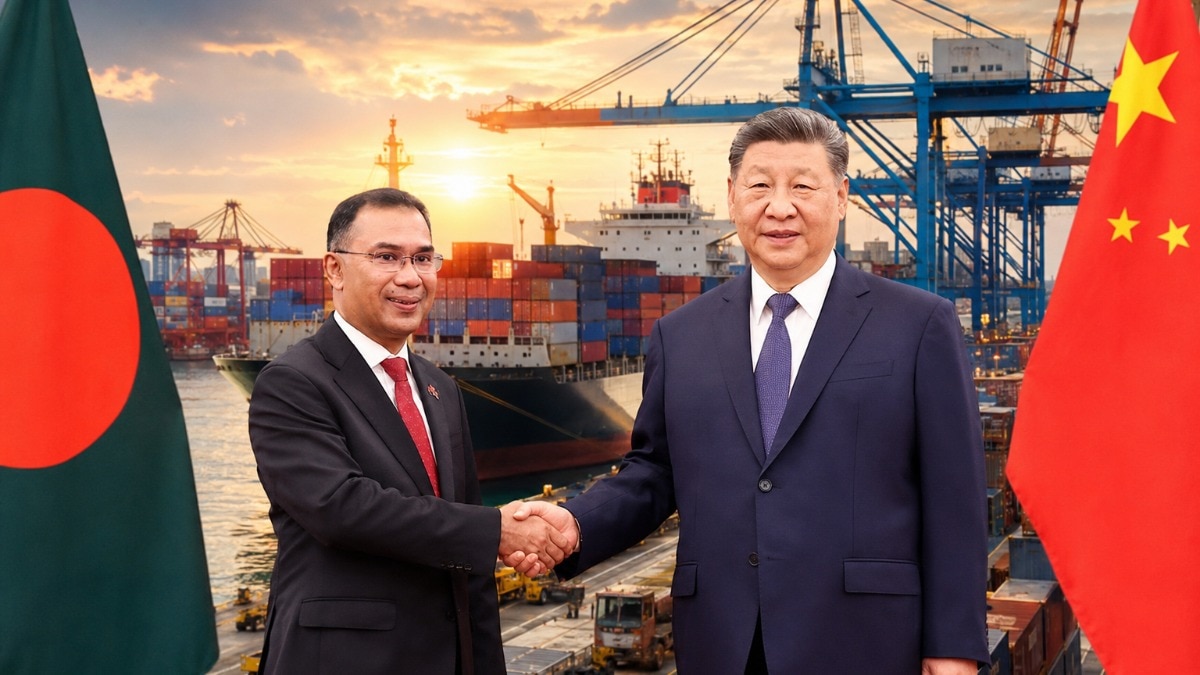
🤝 A delegation of the Bangladesh China Chamber of Commerce and Industry (BCCCI) has called on the government to facilitate the establishment of a branch of a Chinese bank in Bangladesh to ease and expedite trade transactions between the two countries. The proposal formed part of a six-point reform agenda submitted to Commerce Secretary Md Ataur Rahman Khan at the commerce ministry in Dhaka, as Bangladeshi exporters push for structural solutions to the persistent trade gap with China.
📊 The delegation, led by BCCCI President Mohd Khorshed Alam, made the proposals at a meeting with Commerce Secretary Md Ataur Rahman Khan at the commerce ministry in Dhaka. The chamber's leaders urged the government to increase exports to the Chinese market, improve participation in major Chinese trade fairs and expand technical and vocational cooperation with China — a coordinated push to convert bilateral goodwill into commercial outcomes.
They also shared observations from Bangladesh's participation in the 10th China-South Asia Expo in Kunming, highlighting opportunities to further promote Bangladeshi products and attract Chinese investment. The expo has emerged as one of the most important platforms for Bangladeshi exporters seeking visibility in the Chinese market, particularly for jute, leather, pharmaceuticals and agro-processed goods.
🏢 Six-Point Reform Agenda
In their six written proposals submitted to the commerce ministry, the chamber called for strengthening Bangladesh-China trade and investment ties. The agenda covers financial infrastructure, market access, regulatory enforcement and investment facilitation — the four levers that have historically constrained Bangladesh's ability to scale exports to China despite the country being Bangladesh's largest import source.
- 🏛 Establish a branch of a Chinese bank in Bangladesh to ease bilateral trade transactions
- 📍 Set up at least 20 permanent display centres for Bangladeshi products in China
- 👕 Improve participation in major Chinese trade fairs and expositions
- 🔧 Expand technical and vocational cooperation with China
- 🛡 Curb misuse of bonded warehouses that creates unfair competition
- 📜 Strengthen bilateral trade and investment framework
💰 Why A Chinese Bank Branch Matters
The proposal to allow a Chinese bank to establish a branch in Bangladesh addresses a long-standing structural bottleneck in bilateral trade. Bangladesh's trade with China exceeded $25 billion in fiscal 2025-26, with imports from China dominating the relationship and exports from Bangladesh struggling to gain meaningful market share. The absence of a Chinese bank branch in Dhaka forces Bangladeshi importers to route trade finance through correspondent banking relationships in third countries — typically Singapore or Hong Kong — adding cost, time and complexity to every transaction.
A local Chinese bank branch would directly issue letters of credit (LCs) to Bangladeshi importers, accelerate trade settlement, and provide Chinese-language banking services that reduce friction for businesses operating across both jurisdictions. The branch would also facilitate Chinese foreign direct investment (FDI) into Bangladesh by simplifying capital transfers, repatriation of dividends and intra-group funding for Chinese corporates — a critical enabler as Chinese firms continue to invest in Bangladesh's economic zones and export-oriented manufacturing capacity.
For Bangladesh Bank, the regulatory decision to allow a Chinese bank branch will hinge on reciprocity, capital adequacy, and supervisory capacity. The central bank has historically been cautious about expanding the footprint of foreign banks in the domestic market, but the strategic value of a Chinese bank branch in deepening bilateral trade ties may outweigh those concerns — particularly as Bangladesh seeks to attract Chinese capital for infrastructure and manufacturing investment ahead of LDC graduation in November 2026.
📍 20 Display Centres: Building Brand Bangladesh In China
The BCCCI's proposal to establish at least 20 permanent display centres for Bangladeshi products in China represents a strategic push to build brand visibility in the world's second-largest consumer market. Currently, Bangladeshi exports to China are concentrated in low-value raw materials and intermediate goods, with limited penetration of branded finished products in the Chinese retail market.
Permanent display centres would allow Chinese buyers and distributors to physically inspect Bangladeshi goods, understand quality and design specifications, and build the long-term commercial relationships needed to convert one-off orders into recurring supply contracts. The model has been successfully deployed by Vietnam, Thailand and other ASEAN exporters in China — and BCCCI's proposal seeks to replicate that playbook for Bangladeshi exporters.
The chamber did not specify proposed locations for the display centres, but trade economists have previously suggested tier-one Chinese cities including Beijing, Shanghai, Guangzhou, Shenzhen and Chengdu as priority markets, alongside tier-two cities with strong consumer demand for differentiated imported goods.
⚠ Bonded Warehouse Misuse Flags Regulatory Concerns
The delegation placed the misuse of bonded warehouses at the forefront of the discussion, saying the unauthorised sale of bonded goods in the local market is creating unfair competition and discouraging potential foreign investment, particularly from China. Bonded warehouses are designed to allow importers of raw materials for export-oriented manufacturing to defer customs duties, but the system has been widely abused — with bonded goods frequently diverted into the domestic market at prices that undercut compliant local manufacturers.
The BCCCI called for stronger monitoring and enforcement to curb such practices and ensure a level playing field for compliant businesses and genuine investors. For Chinese investors considering Bangladesh as a manufacturing base — particularly in sectors like textiles, light engineering and electronics — the bonded warehouse abuse creates an unpredictable competitive landscape that erodes confidence in the regulatory environment.
🌏 Broader Strategic Context
The BCCCI's six-point agenda comes at a strategically significant moment for Bangladesh-China commercial relations. China has emerged as Bangladesh's single largest import source, supplying the machinery, raw materials and intermediate goods that underpin much of Bangladesh's export manufacturing base. Yet Bangladesh's exports to China remain a fraction of imports, leaving a substantial trade deficit that BCCCI and the commerce ministry are keen to narrow.
For an economy preparing to graduate from LDC status in November 2026, the China relationship carries particular weight. As Bangladesh loses preferential market access in some traditional export destinations, scaling exports to China — the world's largest single consumer market — offers a critical diversification lever. The BCCCI's proposal package, if implemented, would address several structural bottlenecks simultaneously: financial infrastructure (Chinese bank branch), market access (display centres), regulatory certainty (bonded warehouse enforcement) and investment facilitation (technical cooperation).
The coming months will reveal whether the commerce ministry translates the chamber's proposals into concrete policy action — and whether Bangladesh Bank moves forward on the politically sensitive question of allowing a Chinese bank to establish a branch in Dhaka.
This news was originally published by The Daily Star. For the full original report, please visit: https://www.thedailystar.net/business/economy/news/sino-chamber-seeks-chinese-bank-branch-bangladesh-4269786
Related on BangladeshExport
📬 Get Bangladesh Trade News in your inbox
Weekly digest of export industry news, policy updates, and market analysis.
📰 Related Stories