Bangladesh Government Faces Rising Spending Pressure Amid Limited Revenue
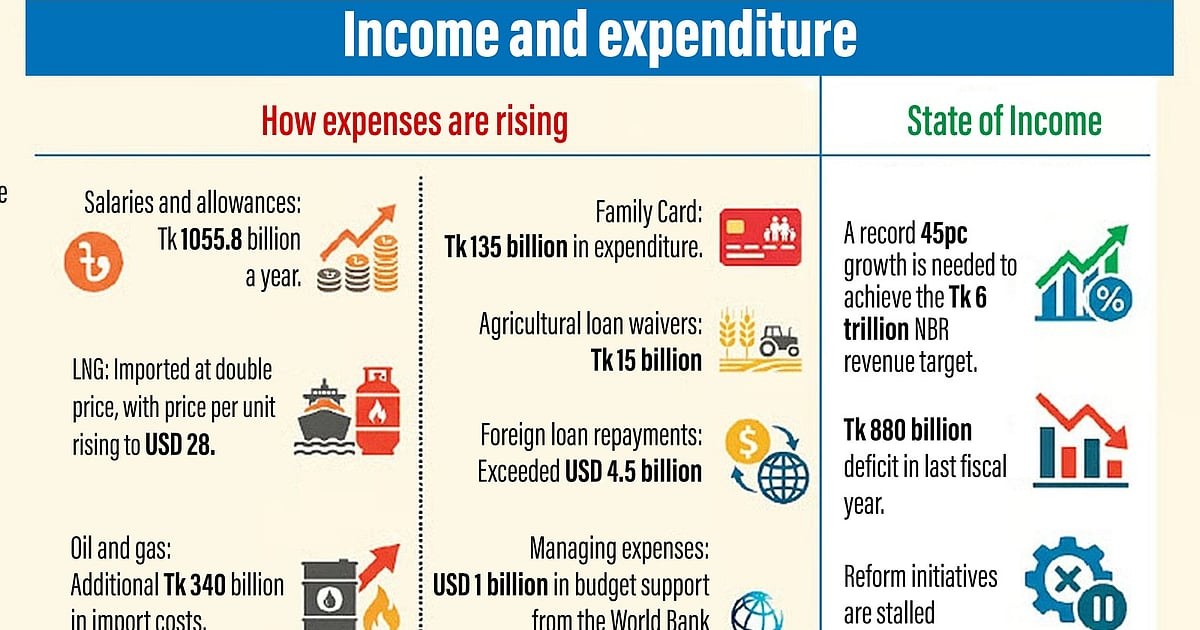
Prothom Alo English, Dhaka — Nearly 42 per cent of the Tk 9.38 trillion budget for fiscal year 2026–27 has been allocated to sectors such as salaries and allowances, pensions, interest payments on loans, and subsidies and incentives — totalling nearly Tk 4 trillion — as the government faces mounting spending pressure from multiple directions while revenue growth remains insufficient.
The government's spending pressure has increased from several directions: the implementation of the new pay structure, repayment of domestic and foreign loans, additional pressure from subsidies and fuel expenditure, new programmes, and major purchases including aircraft.
📊 Budget Allocation Breakdown
- 💰 Total FY27 budget: Tk 9.38 trillion
- 💰 42% allocated to: salaries, pensions, interest, subsidies
- 💰 Three sectors total: nearly Tk 4 trillion
- 💰 Salaries allocation: Tk 1.41 trillion (+Tk 545.72 billion vs FY26)
- 💰 Pensions and gratuities: Tk 280 billion
- 💰 Subsidies and incentives: Tk 895.39 billion
💰 New Pay Scale Impact
Once the new pay structure is fully implemented, the government will incur an additional annual expenditure of around Tk 1.06 trillion (Tk 105,580 crore) on this sector alone. The new pay scale increases salaries by 100 to 142 per cent, implemented in four phases:
- 💰 FY27 share: 70-75% of new increased basic salary (two instalments)
- 💰 Full annual cost when complete: Tk 1.06 trillion
- 💰 Pension impact: new pay structure also increases pension costs
💰 NBR Revenue Challenge
The National Board of Revenue (NBR) has been tasked with collecting Tk 6.04 trillion in the current fiscal year. Achieving this target requires revenue growth of 45 per cent — much higher than the growth achieved in the past. As a result, spending obligations are increasing on one hand, while revenue is not growing at the desired rate on the other.
🏛 CPD Economist's Assessment
Mustafizur Rahman, Distinguished Fellow at the Centre for Policy Dialogue (CPD), told Prothom Alo that additional expenditure in the energy sector has been added to the government's regular spending. "Spending has also increased on the new salaries and allowances and repayment of debt obligations."
"The economy is now facing two-way pressure from the global trade situation and problems inherited from the past, including accumulated problems left by the previous government in various sectors. Macroeconomic management has come under pressure. The economy is in a more adverse situation than at any other time," he said.
According to Mustafizur Rahman, spending priorities must be determined carefully. Otherwise, the debt burden will increase. He also said there is no alternative to increasing revenue collection to deal with the situation.
⚡ Energy Sector Spending Pressure
The gas, electricity, and energy sectors are facing multiple problems:
- ⚡ Government owes Tk 440 billion to private power-generating companies
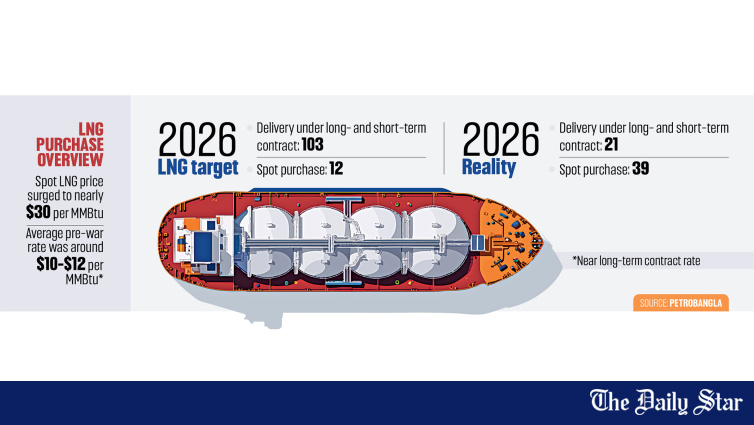
- ⚡ LNG cargoes Jul-Aug 2026: 15 (vs 21 same period last year)
- ⚡ September LNG plan: 10 cargoes, 8 confirmed
- ⚡ LNG price: risen from $22-24 to $28 per unit (before Iran war: half)
- ⚡ Crude oil price: risen from $70-75 to $95 per barrel
- ⚡ Budget policy statement: energy prices may increase 30% in FY27
🌾 Fertiliser Subsidy Pressure
- 🌾 Annual fertiliser demand: 6.7 million tonnes
- 🌾 Import dependency: 80-85% imported
- 🌾 WB fertiliser support: $300 million (June 2026)
- 🌾 WB energy support: $710 million (June 2026)
- 🌾 Fertiliser to be imported: 600,000 tonnes by April 2027
💰 ZCA Report: $2.8 Billion Additional Fossil Fuel Cost
A report by Zero Carbon Analytics (ZCA) on 2 September 2026 said Bangladesh would have to spend an additional $2.8 billion due to the current increase in the prices of oil, gas and coal — equivalent to more than Tk 340 billion at current market rates.
👥 New Programmes and Major Purchases
- 💰 Bank incentives: Tk 600 billion (government bears 6% interest)
- 👥 Family Card programme: Tk 135 billion for 4.1 million families (FY27)
- 👥 16 million families to receive cards over 4 years
- 🌾 Agricultural loan waiver: Tk 15 billion for 1.2-1.3 million small farmers
- ✈️ Boeing 25 aircraft: 14 ($3.7 billion) + 11 more announced
- ✈️ Aircraft delivery: through 2037 (annual allocations needed)
🌏 Strategic Implications
- ⚠️ 42% budget on non-revenue-generating sectors: salaries, pensions, interest, subsidies
- ⚠️ 45% revenue growth target: NBR faces unprecedented challenge
- ⚠️ Energy sector costs surging: LNG, crude oil, fertiliser all more expensive
- ⚠️ Tk 440 billion power sector arrears: government owes private generators
- ⚠️ New pay scale Tk 1.06 trillion: largest single new spending commitment
- ⚠️ Boeing aircraft commitment: 25 aircraft through 2037
- ⚠️ Family Card Tk 135 billion: new social programme spending
- ✅ WB budget support: $1.01 billion for fertiliser and energy
- ✅ CPD advisory: spending priorities must be carefully determined
The fiscal pressure facing the Bangladesh government represents one of the most challenging budgetary environments in the country's history — with 42 per cent of the budget consumed by non-discretionary spending (salaries, pensions, interest, subsidies), while the NBR faces a 45 per cent revenue growth target amid an economic slowdown. The combination of the new pay scale (Tk 1.06 trillion), surging energy costs ($2.8 billion additional), Boeing aircraft commitments, and new social programmes (Family Cards, agricultural loan waivers) creates a fiscal squeeze that will require both aggressive revenue mobilisation and disciplined expenditure management through the LDC graduation transition period beginning November 2026.
This news was originally published by Prothom Alo English. For the full original report, please visit: https://en.prothomalo.com/business/local/d2penj6mt1
📬 Get Bangladesh Trade News in your inbox
Weekly digest of export industry news, policy updates, and market analysis.
📰 Related Stories