FBCCI Seeks More Chinese Investment to Narrow $17.5 Billion Bilateral Trade Gap

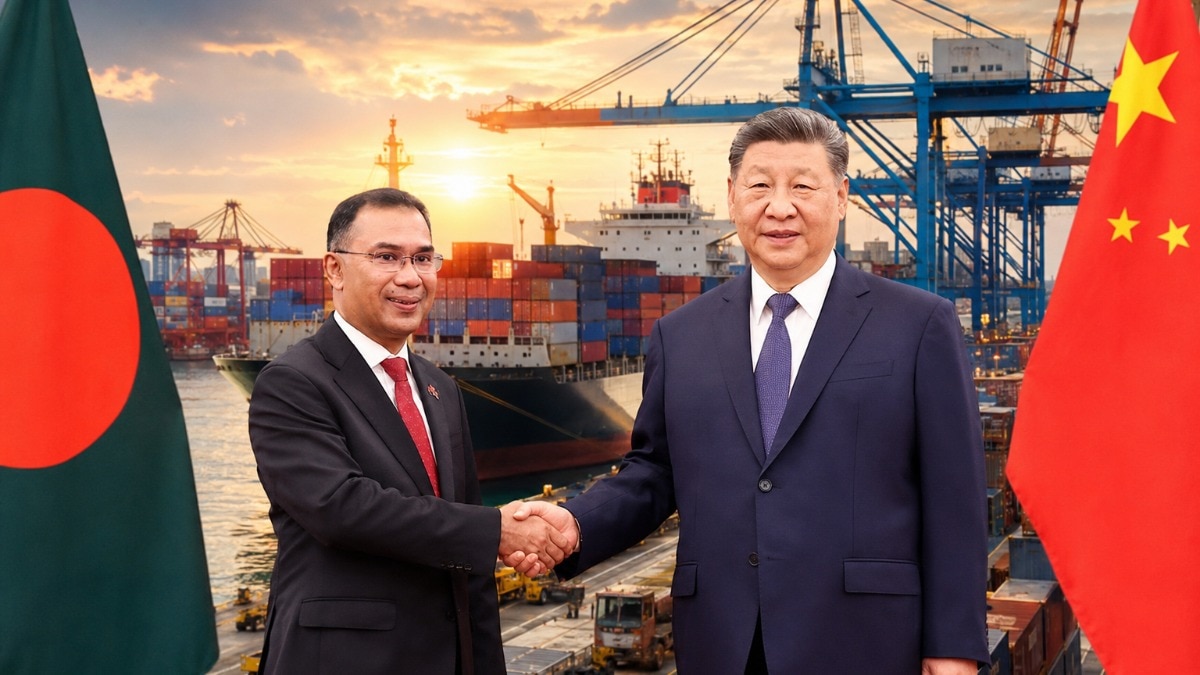
Star Business Report, Dhaka — The Federation of Bangladesh Chambers of Commerce and Industry (FBCCI) has urged Chinese investors to increase investment in Bangladesh to help narrow the bilateral trade gap of approximately $17.5 billion, during a high-level meeting between FBCCI Administrator Md Fazlul Hoque and Chinese Ambassador to Bangladesh Yao Wen in Dhaka on Wednesday.
The meeting focused on expanding two-way trade and investment between Bangladesh and China, with FBCCI positioning itself as the principal institutional bridge between the two countries' business communities. The trade gap has emerged as one of the most significant bilateral economic challenges facing Bangladesh, with Chinese imports dwarfing Bangladeshi exports by a factor of more than 26 to 1.
📊 The Trade Imbalance
The bilateral trade data for fiscal year 2024-25 reveals the scale of the imbalance:
- 💸 Bangladesh exports to China (FY25): ~$694 million
- 💸 Bangladesh imports from China (FY25): ~$18.19 billion
- 📊 Import-to-export ratio: 26:1
- 📊 Bilateral trade deficit: ~$17.5 billion
The two countries have seen significant expansion in bilateral trade over the past decade, but Bangladesh continues to export far less to China than it imports. Imports from China were approximately 26 times higher than exports in FY25, highlighting the urgent need to diversify exports and attract more investment from Chinese companies.
🏛 FBCCI's Strategic Proposal
Fazlul Hoque urged Chinese entrepreneurs to invest in Bangladesh's special economic zones, particularly in:
- 🏗 Chattogram Economic Zone — with proximity to Chattogram Port (ranked 68th globally)
- 🏗 Khulna Economic Zone — positioned for Mongla Port access and southwest Bangladesh industrial development
He said greater Chinese investment could help diversify Bangladesh's exports and reduce the trade gap. The reference to specific economic zones is strategically significant: Bangladesh has, in recent years, designated multiple Chinese-built economic zones, but uptake has been slower than originally projected, with Chinese investors citing regulatory friction and infrastructure gaps as primary obstacles.
👥 Institutional Cooperation Framework
The FBCCI Administrator called for stronger institutional cooperation among three key bilateral bodies:
- 🏛 FBCCI (Federation of Bangladesh Chambers of Commerce and Industry)
- 🏛 CCPIT (China Council for the Promotion of International Trade)
- 🏛 CEAB (Chinese Enterprises Association in Bangladesh)
"Greater institutional cooperation between the business communities of the two countries is essential to expand trade and investment," Fazlul said. He also urged the Chinese side to simplify visa procedures for Bangladeshi businesspeople travelling to China, saying easier business travel would help strengthen commercial ties — a long-standing complaint from the Bangladeshi business community, with multiple Bangladeshi executives reporting multi-week delays in Chinese business visa processing.
🌏 Chinese Ambassador's Response
Ambassador Yao Wen said the Chinese embassy is ready to work closely with FBCCI to take bilateral trade relations to a new level. He identified four promising areas for Chinese trade and investment in Bangladesh:
- 🚗 Electric vehicles — aligning with Bangladesh's EV transition push
- 🍎 Fruits and processed agricultural products — targeting Bangladesh's growing agro-processing export potential
- ⚡ Renewable energy — supporting Bangladesh's green transition and COP commitments
- 🏗 Tourism — a relatively underdeveloped sector in Bangladesh-China economic relations
The four priority sectors align closely with Bangladesh's broader diversification agenda ahead of LDC graduation in November 2026. The electric vehicle focus is particularly notable given that Runner Automobiles has already begun manufacturing BYD vehicles in Bangladesh, and the broader EV transition represents one of the fastest-growing segments of the regional automotive market.
👥 Senior Officials Present
The meeting was attended by:
- 👥 Md Alamgir, FBCCI Secretary General
- 👥 Senior Chinese embassy officials
🏛 Strategic Context: Bangladesh-China Economic Relations
The FBCCI's investment pitch comes at a strategically important moment in Bangladesh-China economic relations. China remains Bangladesh's largest source of imports, with Chinese capital goods, machinery, textiles, and electronics dominating several key import categories. However, Chinese FDI in Bangladesh has lagged well behind the volume implied by the trade relationship.
Several factors have constrained deeper Chinese investment in Bangladesh:
- 🏛 Regulatory friction in BIDA approval processes for Chinese-invested projects
- 👥 Land acquisition delays at designated Chinese economic zones
- 🚢 Port and customs bottlenecks at Chattogram affecting Chinese cargo clearance
- 💵 Foreign exchange management concerns for Chinese investors repatriating profits
- 📜 Visa and work permit restrictions for Chinese technical personnel
FBCCI's pitch is therefore aligned with the broader strategic objective articulated by the Commerce Ministry and BIDA: converting Bangladesh's $18 billion annual import relationship with China into a more balanced two-way investment and trade partnership — one in which Chinese manufacturing capacity relocates partially to Bangladesh to serve both the South Asian market and global export customers.
📊 Implications for Bangladesh Export Diversification
A meaningful reduction in the $17.5 billion trade gap with China would have significant implications for Bangladesh's broader external position:
- 💰 FX reserves: Reducing the import-export gap with China would ease pressure on Bangladesh's foreign exchange reserves, which stood at $32.90 billion (BPM6) at end-FY26
- 📊 Export diversification: Chinese investment in Bangladeshi manufacturing would help diversify exports beyond RMG, particularly in electronics, EV components, and agro-processing
- 🏛 Job creation: Chinese investment in Chattogram and Khulna economic zones would generate direct manufacturing employment and indirect supply-chain jobs
- 🌏 Geopolitical balance: Deeper Chinese investment in Bangladesh would balance the country's growing commercial engagement with the US following the recent US-Bangladesh trade agreement
The FBCCI's push for Chinese investment is therefore not just a narrow trade-gap reduction effort — it represents a strategic positioning of Bangladesh as a manufacturing destination for Chinese capital looking to serve both the Bangladesh domestic market and the broader South Asian export economy. The next 12-18 months will be critical in determining whether the FBCCI pitch translates into actual Chinese FDI commitments at scale.
This news was originally published by The Daily Star. For the full original report, please visit: https://www.thedailystar.net/business/economy/news/fbcci-seeks-more-chinese-investment-narrow-trade-gap-4258296
Related on BangladeshExport
📬 Get Bangladesh Trade News in your inbox
Weekly digest of export industry news, policy updates, and market analysis.
📰 Related Stories