Bangladesh Army to Transform Defunct Jalil Textile Mills into Defence Export Hub
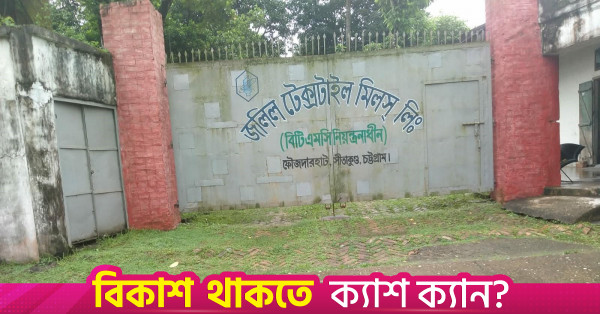
Mizanur Rahman Yousuf, Chattogram — The Bangladesh Army has formally taken over the 54.99-acre site of the defunct Jalil Textile Mills at Bhatiary, Chattogram, with the announced intention of transforming the location into an export-oriented defence manufacturing hub — the country's second modern arms manufacturing facility after the existing Bangladesh Ordnance Factory (BOF) in Gazipur.
The land was handed over by the Bangladesh Textile Mills Corporation (BTMC) to the Bangladesh Army on 27 August 2026 at a ceremony held at the Jalil Textile premises. An agreement between the Commerce Ministry and BOF was signed to formalise the handover, with Commerce and Industries Minister Khandaker Abdul Muktadir Chowdhury and Chief of Army Staff General Waker-Uz-Zaman attending the event.
🏛 Strategic Vision: Defence as Export Industry
General Waker said the expanded factory would produce weapons and ammunition not only for domestic defence needs but also for export. "We are not only trying to meet our own defence requirements. We want to transform this into an export-oriented industry," he told the gathering.
The army chief highlighted that the location was chosen partly because of its proximity to Chattogram Port, which would make it easier to export defence products to international markets. Bangladesh already has international demand for some products manufactured by its defence industry, including assault rifles and ammunition, he added.
⚖️ Call for Export Policy Reform
General Waker, however, flagged a significant policy bottleneck: the existing system of obtaining export approval on a case-by-case basis could hinder efforts to develop a competitive export-oriented industry.
"If you want to export something, you have to send a letter and wait for approval for one and a half to two months. This way, no export-oriented industry can expand," he said. He called for a clear policy framework that would allow defence products to be exported while ensuring accountability over buyers and destinations — a request that aligns with the broader Bangladesh Bank move earlier in August to streamline bank guarantee facilities for foreign firms in government tenders.
🏛 Multi-Service Manufacturing Mandate
General Waker said the factory would manufacture equipment and ammunition for:
- 🏛 All three services of the Bangladesh Armed Forces (Army, Navy, Air Force)
- 👥 Bangladesh Police
- 👥 Ansar (paramilitary force)
- 👥 Other paramilitary forces
"We can't fight a war by importing everything. We have to manufacture what we need," the Army Chief said, articulating a self-reliance doctrine that aligns with the broader strategic objective of building a domestic defence industrial base capable of reducing Bangladesh's dependence on imported defence equipment.
👥 Commerce Minister's Endorsement
Commerce Minister Muktadir endorsed the export-oriented vision, stating that the project is not only relevant to domestic requirements but certainly has export potential. He said Bangladesh could utilise technologies and research already developed elsewhere while also investing in its own research to develop competitive defence products.
Responding to the army chief's concerns over export approvals, the Commerce Minister said: "You have said that you need export permission from the government. We are fully on board." He added that exporting defence products would place Bangladesh at a different level in terms of defence and industrial capability.
⚠️ Workers Protest: 22 Years of Unpaid Dues
The land handover was marred by protests from former workers of Jalil Textile, who gathered at the factory gate during the programme and demanded payment of their long-outstanding dues. The workers said they had been waiting for their dues for around 22 years since the mill was shut down in 2004.
According to worker representatives:
- 👥 1,073 former workers are yet to receive their outstanding payments
- ⚠️ Around 375 workers have died awaiting settlement
Mosiud Dowla, President of the Jalil Textile Workers Trade Union, said government officials had assured them that their dues would be paid before the land was handed over. "We met the finance and industries ministers, who assured us the dues would be paid before the handover. But BTMC handed over the land without paying us," he said.
"In a letter to Army Headquarters, BTMC asked the Army to pay Tk 21 crore in utility and other dues, but did not mention the workers' dues. This is injustice," Dowla added. Noor-E-Khaja Alamin, Director (Finance and Audit) at BTMC, told The Business Standard that the industries ministry had taken responsibility for settling the workers' dues. "The minister has already given a date to meet the workers' leaders. If the workers are found to have any legitimate dues after verification, the ministry will pay them," he said.
💰 Tk 21.67 Crore in Liabilities
Jalil Textile Mills began operations in 1961 but was shut down in 2004 after incurring losses. The Cabinet Committee on Economic Affairs on 1 July 2026 gave in-principle approval to transfer or sell the site to the Army at a symbolic price, subject to settlement of dues.
In a letter dated 3 August 2026, BTMC identified Tk 21.67 crore in outstanding liabilities and assessed the value of Jalil Textile's buildings, factory structures, and plantations:
- 💰 Tk 1.77 crore: land tax
- 💰 Tk 10 lakh: union tax
- 💰 Tk 13.64 lakh: electricity bills
- 💰 Tk 2.65 crore: gas bills
- 💰 Tk 7.04 lakh: Rupali Bank
- 💰 Tk 1.54 crore: ADB loans
- 💰 Tk 2.70 crore: other receivables
- 💰 Tk 7.91 crore: current accounts
- 💰 Tk 64.16 lakh: long-term ADB liabilities
A chartered accountancy firm valued the mill's buildings, factory and other structures at Tk 1.50 crore, while trees and plantations were valued at Tk 2.66 crore. BTMC asked the Army to deposit the amount into its current account at Sonali Bank.
🌏 Strategic Significance for Bangladesh Defence Exports
The Jalil Textile Mills conversion represents Bangladesh's most significant step towards building a domestic defence export industry. With Bangladesh already producing small arms and ammunition for domestic consumption, the conversion of the 54.99-acre Bhatiary site into an export-oriented ordnance facility positions the country to compete in the global defence export market — currently valued at over $120 billion annually and dominated by established exporters in the United States, Russia, China, France, and Germany.
The choice of Bhatiary, adjacent to Chattogram Port, also reflects a logistics-first strategy: defence exports manufactured at the facility can be shipped directly through Chattogram Port, which handled 3.41 million TEUs of containers in 2025 (ranked 68th globally by Lloyd's List). If the army's push for a streamlined export approval framework materialises, the Bhatiary facility could emerge as a foundational anchor for Bangladesh's broader industrial diversification agenda ahead of LDC graduation in November 2026.
This news was originally published by The Business Standard. For the full original report, please visit: https://www.tbsnews.net/economy/industry/army-plans-turn-defunct-jalil-textile-mills-site-defence-export-hub-1526561
Related on BangladeshExport
📬 Get Bangladesh Trade News in your inbox
Weekly digest of export industry news, policy updates, and market analysis.
📰 Related Stories