Bangladesh and China Launch New Two-Tier Strategic Diplomacy and Defence Dialogue
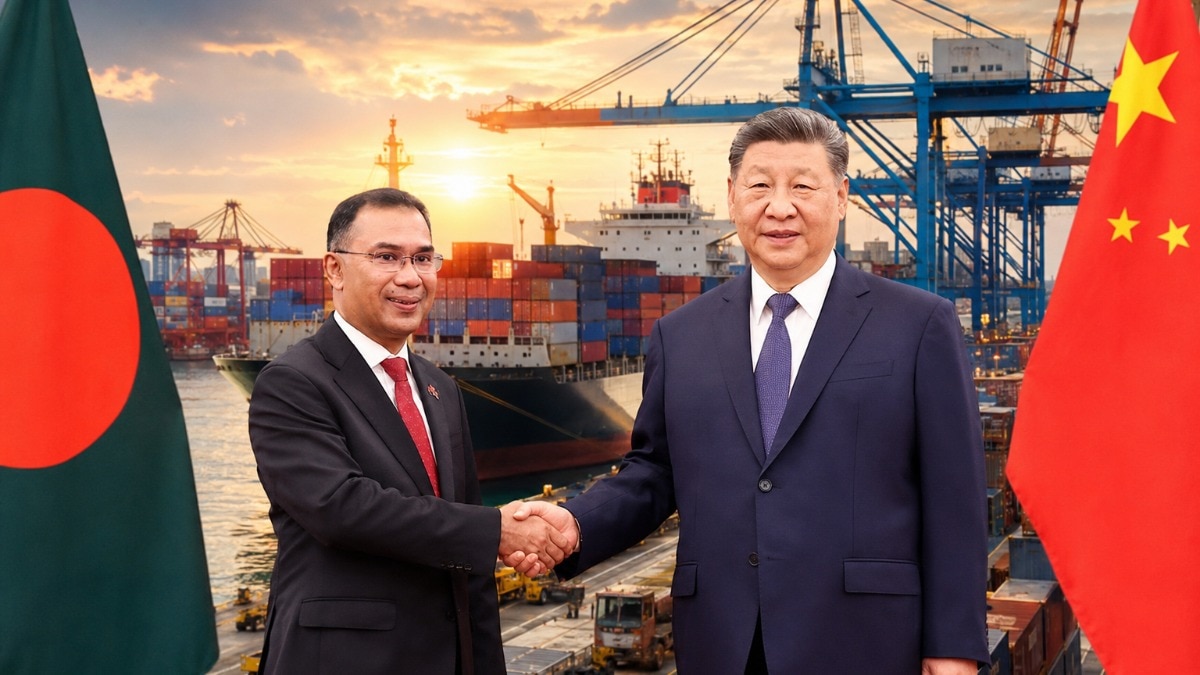
The Financial Express, Dhaka — Bangladesh and China prepare to launch a new two-tier diplomacy and defence dialogue that signals a further deepening of ties between Dhaka and Beijing following Prime Minister Tarique Rahman's recent visit to China — marking a strategic elevation in the bilateral relationship ahead of Bangladesh's LDC graduation.
The proposed model of dialogue was discussed on Sunday during a meeting between Bangladesh State Minister for Foreign Affairs Humaiun Kabir and Chinese Ambassador in Bangladesh Yao Wen at the foreign ministry in Dhaka.
🏛 Two-Tier Dialogue Structure
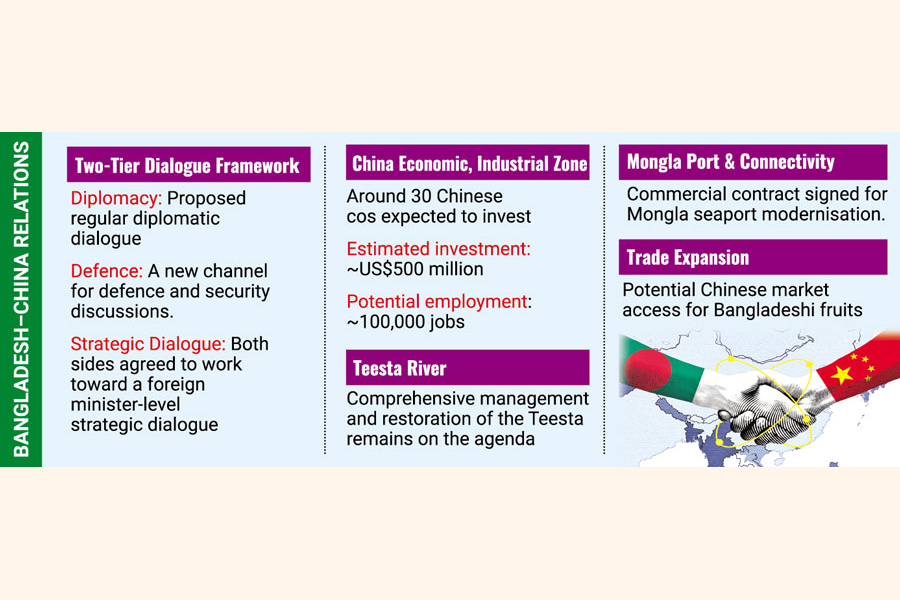
The two sides also agreed to work towards launching a foreign minister-level strategic dialogue, as Bangladesh seeks to give greater institutional depth to its relationship with its largest trading partner and a major development and infrastructure partner. The two-tier structure involves:
- 🏛 Tier 1: Foreign minister-level strategic dialogue (highest level)
- 🏛 Tier 2: Diplomacy and defence dialogue (working level)
The proposed diplomacy and defence dialogue could add a new dimension to a relationship that has traditionally been driven by trade, infrastructure, and development cooperation — introducing a security and strategic component that reflects the broader regional dynamics.
🇧🇩 Bangladesh Position on China Partnership
Kabir described China as a "trusted friend and valued strategic partner" and reaffirmed Bangladesh's commitment to the one-China principle. He said Dhaka was pleased with the renewed momentum in bilateral relations and the elevation of ties to what the two governments describe as a "China-Bangladesh Community with a Shared Future".
The developments follow Rahman's recent visit to China, during which the two countries advanced cooperation on infrastructure, trade, and investment — with the visit producing several concrete deliverables including the China Economic and Industrial Zone (CEIZ) groundbreaking.
💰 CEIZ Investment and Job Creation
Yao briefed Kabir on the outcomes of the prime minister's China visit, including:
- 🏢 China Economic and Industrial Zone (CEIZ) groundbreaking
- 🏢 Mongla seaport modernisation — commercial contract signed
- 🏢 Mongla export-processing zone — possible Chinese cooperation
According to the Chinese side, the CEIZ is expected to attract:
- 💰 ~30 Chinese companies to invest in the zone
- 💰 Investment of roughly $500 million
- 👥 Estimated 100,000 jobs for Bangladeshis
The CEIZ investment represents a strategically significant Chinese FDI commitment — positioning the industrial zone as a major employment generator and manufacturing hub for Chinese companies seeking a Bangladesh production base.
🌏 Teesta River Cooperation
The two sides also discussed the long-running issue of the Teesta river, with cooperation on the comprehensive management and restoration of the river again featuring in their talks. For Dhaka, the Teesta remains one of the most politically sensitive issues in its relationship with India. Bangladesh has for years sought a comprehensive agreement on the sharing and management of the river, while China has previously offered to participate in a major water-management project in the Teesta basin.
The Chinese offer on Teesta management provides Bangladesh with an alternative partnership option for the river basin — particularly relevant given the stalled India-Bangladesh Teesta water-sharing agreement that has remained unresolved for over a decade.
🌾 Agricultural Export Opportunities
The meeting also covered the possible export of Bangladeshi jackfruit and guava to the Chinese market — opening potential agricultural export channels that would diversify Bangladesh's export basket beyond RMG. The agricultural export discussion aligns with the broader strategic objective of expanding Bangladesh's agricultural and processed food exports to major Asian markets.
🌏 China-Bangladesh-Myanmar Economic Corridor
The two sides discussed the proposed China-Bangladesh-Myanmar economic corridor — a trilateral connectivity initiative that would link southwestern China to the Bay of Bengal via Myanmar and Bangladesh. The corridor concept has been under discussion for several years but has been constrained by political instability in Myanmar following the 2021 military coup.
The corridor, if developed, would position Bangladesh as a strategically important transit point for Chinese trade with South Asia and the Bay of Bengal region — complementing the Bangladesh-China-India-Myanmar (BCIM) Economic Corridor framework that has been part of China's Belt and Road Initiative (BRI).
👥 Rohingya Crisis Cooperation
The meeting also covered cooperation over the Rohingya crisis — with China historically playing a mediating role between Bangladesh and Myanmar on the Rohingya repatriation issue. The continued Chinese engagement on the Rohingya file reflects Beijing's broader regional strategic interests in maintaining stability in its neighbourhood.
📊 Strategic Context: Bangladesh's Major Power Balancing
Bangladesh has increasingly sought to diversify its economic and strategic partnerships while maintaining its longstanding diplomatic principle of balancing relations among major powers. The Bangladesh-China strategic dialogue launch comes amid:
- 🇺🇸 US-Bangladesh trade deal: $15 billion energy product purchase commitment
- 🇺🇸 US-Bangladesh Boeing aircraft: $3.7 billion Biman order
- 🇺🇸 US nuclear cooperation: SMR discussions
- 🇯🇵 Japan-Bangladesh EPA: signed framework in 2026
- 🇶🇦 Qatar Sammilito Bank: strategic partner discussions (separate report)
- 🇮🇳 India-Bangladesh CEPA: under discussion despite trade tensions
- 🇩🇪 Germany-Bangladesh: UK duty-free access retention after LDC graduation
The Bangladesh strategic partnership diversification reflects the country's broader diplomatic posture of maintaining balanced relations with all major powers — positioning Dhaka as a strategically important partner for Washington, Beijing, Tokyo, New Delhi, and European capitals without exclusive alignment with any single power.
🌏 Strategic Implications
The Bangladesh-China two-tier dialogue launch carries several strategic implications:
- ✅ Two-tier dialogue structure: foreign minister + working level engagement
- ✅ CEIZ $500M investment: 30 Chinese companies, 100,000 jobs
- ✅ Mongla port modernisation: Chinese commercial contract signed
- ✅ Teesta river cooperation: alternative to stalled India agreement
- ✅ Agricultural export access: jackfruit and guava to Chinese market
- ✅ China-Bangladesh-Myanmar corridor: trilateral connectivity
- ✅ Rohingya crisis cooperation: Chinese mediation continued
- ✅ "Community with a Shared Future": elevated bilateral framework
- ⚠️ Major power balancing: US-China strategic competition context
- ⚠️ India sensitivity: Teesta and CEIZ may concern New Delhi
- ⚠️ Myanmar instability: constrains trilateral corridor progress
The Bangladesh-China strategic dialogue launch represents a significant elevation in bilateral relations — positioning China as Bangladesh's most comprehensive strategic partner across trade, investment, infrastructure, defence, and regional cooperation. The $500 million CEIZ investment and 100,000 jobs commitment provides a concrete economic anchor for the elevated partnership — while the Teesta river cooperation and trilateral corridor discussions add strategic depth. As Bangladesh navigates the LDC graduation transition beginning November 2026, the diversified major power partnerships with China, the US, Japan, and others provide the country with strategic optionality in the post-preferential-tariff environment.
This news was originally published by The Financial Express. For the full original report, please visit: https://thefinancialexpress.com.bd/economy/bd-china-set-to-launch-new-strategic-diplomacy
Related on BangladeshExport
📬 Get Bangladesh Trade News in your inbox
Weekly digest of export industry news, policy updates, and market analysis.
📰 Related Stories