Good Harvest, Heavy Losses: Bangladesh Aus Paddy Farmers Face Tk 4,000-5,000 Loss Per Bigha Despite Bumper Crop
Daily Star's Mostafa Shabuj and Sukanta Halder document how Aus paddy farmers in Naogaon face losses of Tk 4,000-5,000 per bigha despite good yields, as ample rice stocks from 12.68 lakh tonnes of FY26 imports push prices down by Tk 300-400 per maund year-on-year.
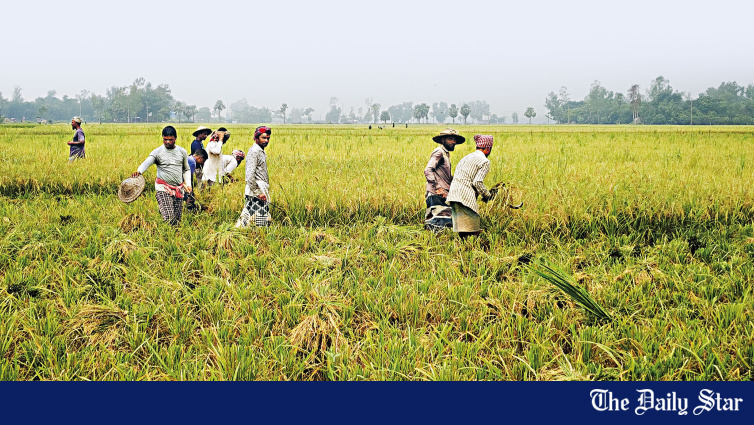
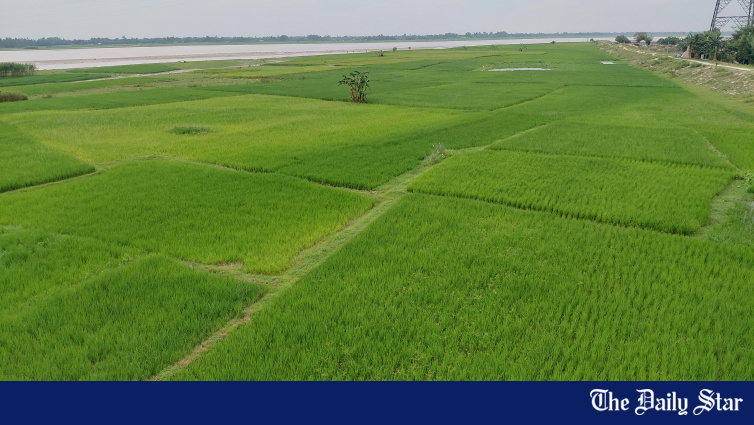
Naogaon, September 25, 2026 — For Rasel Hossain, this year's Aus harvest should have been a source of relief. Instead, the farmer from Uttargram village in Naogaon's Mohadevpur upazila is counting his losses. Rasel cultivated Aus on about 11 bighas of land this year, spending Tk 14,000 to Tk 15,000 per bigha in production costs. His yield ranged from 12 to 16 maunds per bigha (1 maund = 37.32 kg).
🌾 At the current average market price of Tk 725 per maund, his earnings would be around Tk 11,000 per bigha.
💬 “At this rate, I am incurring a loss of Tk 4,000 to Tk 5,000 per bigha,” he said.
📊 The Scale Of Farmer Losses
Like Rasel, Aus paddy farmers across Bangladesh are facing losses despite a good harvest, with:
- 📈 Prices falling by Tk 300 to Tk 400 per maund from a year ago.
- 📈 Production costs remaining high — at Tk 26 to Tk 27 per kg.
- 📈 Some farmers selling wet paddy at half price to repay loans taken for fertiliser, pesticides and irrigation.
💰 Market Price Decline
A visit to local markets in Naogaon's Mohadevpur upazila found Aus paddy selling for:
- 💰 This year (September 2026): Tk 650 to Tk 750 per maund
- 💰 Last year (September 2025): Tk 1,000 to Tk 1,200 per maund
- 💰 Year-on-year decline: Tk 300 to Tk 400 per maund (approximately 30-35% drop).
💬 Trader's Perspective
Shamsur Rahman, a seasonal paddy trader in Mohadevpur, said: “Last year, Aus sales started at Tk 1,000 per maund and later climbed to Tk 1,200 to Tk 1,300. This year, I am buying it at only Tk 700 to Tk 750 per maund.”
Explaining the low prices, Shamsur added: “Major mill owners are not purchasing paddy right now, and the government stopped procurement in the last few months. That is driving prices down.”
💬 Mill Owner's Perspective
Nurul Islam, a mill owner visiting Mohadevpur from Bogura's Sherpur upazila, said a large stock remains unsold in his warehouse. “Also, a lack of sunlight has made it difficult to dry paddy,” he added — highlighting a logistical challenge that affects the entire drying and storage chain.
💬 Agriculture Marketing Officer's Statement
Acknowledging the high costs and low market prices, Sohag Sarkar, Naogaon District Agricultural Marketing Officer, said production costs for Aus paddy reached Tk 26 to Tk 27 per kg this year — causing farmers to suffer losses at current selling prices.
💬 “We report the production costs to the government and submit weekly market price updates. However, we cannot fix local prices independently without government intervention,” Sohag added.
📊 Why Prices Are Falling: Ample Stocks
Rice millers blame weak demand on large stocks built up following excess rice imports during the interim government's tenure. Key data:
- 📦 Food grain stocks (September 12, 2026): 23.41 lakh tonnes — up from 18.67 lakh tonnes a year earlier.
- 📦 Stock increase: approximately 4.74 lakh tonnes year-on-year.
- 📦 Rice imports in FY 2025-26: 12.68 lakh tonnes — per Directorate General of Food data.
The combination of:
- ⚠ Large carryover stocks from imports
- ⚠ Good domestic Aus harvest
- ⚠ Reduced government procurement
- ⚠ Weak consumer demand
...has created a perfect storm for Aus paddy farmers — with prices falling well below the cost of production.
🌾 Understanding Aus Paddy
Aus is one of Bangladesh's three main rice seasons:
- 🌾 Aus (March-July): Pre-monsoon rice, traditionally the lowest-yielding but increasingly important.
- 🌾 Aman (July-November): Monsoon rice, the second largest harvest.
- 🌾 Boro (December-April): Irrigated dry-season rice, the largest harvest.
Aus paddy is particularly vulnerable to price volatility because:
- 📋 It is the smallest of the three harvests — with limited market power.
- 📋 It often competes with carryover stocks from the larger Boro harvest.
- 📋 Government procurement for Aus is typically limited compared to Boro and Aman.
💰 Production Cost Breakdown
According to the Naogaon District Agricultural Marketing Officer, Aus paddy production costs reached Tk 26-27 per kg this year. The major cost components include:
- 🌿 Land preparation: tractor hire, fuel, labour.
- 🌿 Seeds: improved variety seeds.
- 🌿 Fertiliser: urea, TSP, DAP, MOP — particularly relevant given the recent fertiliser supply concerns.
- 🌿 Pesticides: for pest control during cultivation.
- 🌿 Irrigation: diesel or electric pump costs — particularly affected by the September 20 fuel price hike.
- 🌿 Labour: for transplanting, weeding, and harvesting.
- 🌿 Threshing and bagging: post-harvest processing.
With selling prices at Tk 17-20 per kg (Tk 650-750 per maund / 37.32 kg per maund) versus production costs of Tk 26-27 per kg, farmers are losing approximately Tk 7-10 per kg — or about 25-35 per cent of their production costs.
💼 Why This Matters For Bangladesh's Food Security
The current situation carries several risks for Bangladesh's long-term food security:
- ⚠ Farmer debt — many farmers took loans for inputs and now cannot repay.
- ⚠ Reduced future planting — if farmers incur losses, they may reduce Aus cultivation next year.
- ⚠ Increased rural-urban migration — as farmers seek alternative livelihoods.
- ⚠ Reduced agricultural investment — with farmers unable to invest in the next season's inputs.
- ⚠ Long-term supply reduction — if Aus production falls, total rice supply could tighten.
📜 Government Policy Options
To address the situation, the government has several policy options:
- 🏛 Resume government procurement — buying Aus paddy at minimum support prices to stabilise the market.
- 🏛 Reduce rice imports — particularly private-sector imports that compete with domestic production.
- 🏛 Provide input subsidies — particularly for fertiliser, irrigation, and diesel.
- 🏛 Direct income support — cash transfers to affected farmers.
- 🏛 Strategic reserve management — releasing stocks gradually rather than accumulating them.
- 🏛 Export promotion — exploring markets for surplus rice exports.
🌏 Wider Context: Bangladesh's Rice Sector
Bangladesh is one of the world's largest rice producers:
- 🌾 Annual rice production: approximately 38-40 million tonnes.
- 🌾 Per capita rice consumption: approximately 130-140 kg per year — among the highest in the world.
- 🌾 Rice as % of calorie intake: approximately 60-70 per cent of total caloric intake.
- 🌾 Self-sufficiency: Bangladesh is largely self-sufficient in rice production — though imports supplement domestic supply.
- 🌾 Farmer population: approximately 30 million people depend on rice farming.
Any disruption to farmer economics — particularly through low prices — has cascading effects on rural employment, food security, and the broader economy.
📜 Looking Ahead
For Rasel Hossain and millions of Aus paddy farmers across Bangladesh, the current situation represents a critical juncture. The combination of:
- 💰 High production costs (Tk 26-27 per kg)
- 💰 Low selling prices (Tk 17-20 per kg)
- 💰 Losses of Tk 4,000-5,000 per bigha
- 💰 Ample stocks depressing demand
- 💰 Limited government procurement
...creates an unsustainable situation that requires urgent policy attention. Without intervention, the Aus season could become a recurring financial trap for farmers — with long-term implications for Bangladesh's food security and rural economy.
The coming weeks will reveal whether the government responds with procurement, subsidies, or other support measures — or whether Aus farmers will be left to absorb the losses and reconsider their planting decisions for the next season.
This news was originally published by The Daily Star. For the full original report, please visit: https://www.thedailystar.net/business/agriculture/news/good-harvest-heavy-losses-4272921
📬 Get Bangladesh Trade News in your inbox
Weekly digest of export industry news, policy updates, and market analysis.
📰 Related Stories
✍️ More from System Administrator