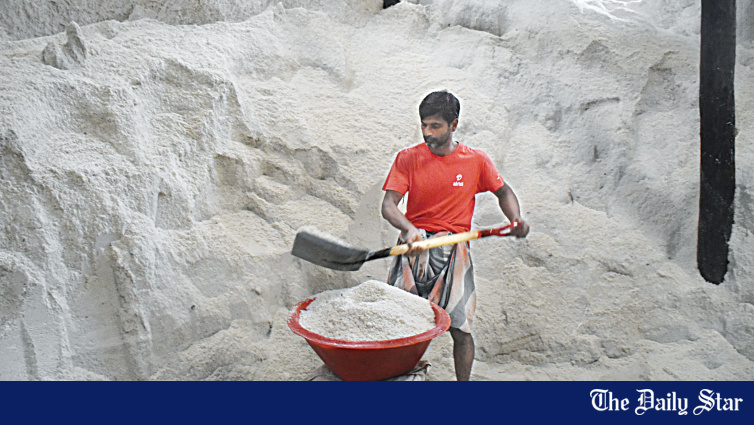
Non-Existent Firm Imports 363 Tonnes Cigarette Raw Materials: Tk 2,450 Crore Revenue At Risk
NBR's Central Intelligence Cell detects illicit import of 363 tonnes of acetate tow in the name of non-existent trading firm Unique Traders, with potential government revenue loss of Tk 2,450 crore. Four other non-existent firms also identified.
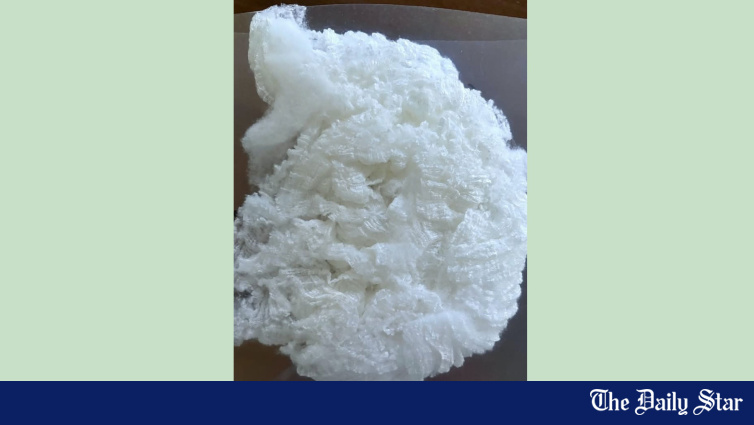
Chattogram, September 25, 2026 — The National Board of Revenue's (NBR) intelligence wing has detected the possible import and illicit marketing of around 363 tonnes of cigarette filter-making raw materials in the name of a non-existent trading firm, potentially putting around Tk 2,450 crore in government revenue at risk. The case highlights systemic vulnerabilities in Bangladesh's import control and tax collection mechanisms.
🔍 The Central Intelligence Cell (CIC) of the NBR has also found information on imports of cigarette raw materials in the names of four other non-existent firms. Officials said letters have been sent to the respective banks seeking details of their import transactions and bank accounts.
📋 The Seizure: 48 Tonnes At Chattogram Custom House
Recently, the CIC seized a consignment of 48 tonnes of acetate tow — a raw material used in making cigarette filters — which was awaiting clearance at Chattogram Custom House. Key details:
- 📦 Imported by: Unique Traders of Motijheel
- 📦 Import date: August 18, 2026
- 📦 Clearing agent: Faiz Trading Company Ltd
- 📦 Firm status: Did not exist at its stated address during field inspection
The clearing and forwarding agent has ensured payment of Tk 16.44 crore in import-stage duties and taxes for clearance of the consignment.
💰 Revenue Impact Calculation
According to a CIC calculation, the same raw material could have generated around Tk 324 crore in revenue if it had been used to manufacture cigarettes locally. The calculation is based on:
- 📊 8,937 cigarette sticks can be produced from one kilogramme of acetate tow (per valuation documents from two cigarette manufacturers).
- 📊 48,143 kg of acetate tow in the seized consignment could produce approximately 43.02 crore sticks — about 4.30 crore packets (assuming 10 sticks per packet).
Revenue scenarios:
- 💰 Medium-segment cigarettes: retail price Tk 92 per packet, VAT + supplementary duty ~82% of retail price — potential revenue Tk 324 crore.
- 💰 High-segment cigarettes: retail price Tk 160 per packet — potential revenue Tk 564 crore.
📊 The Full 363-Tonne Import Picture
Import documents show that Unique Traders imported a total of 363 tonnes of cigarette raw materials during the 2025-26 fiscal year. The CIC is now investigating:
- 🔍 The actual use of the imported materials.
- 🔍 The supply chain — who received and processed the materials.
- 🔍 VAT evasion — whether VAT was paid on sales of finished products.
Based on the revenue calculation for the 48-tonne seizure, the full 363 tonnes could represent approximately Tk 2,450 crore in potential government revenue — a staggering figure that underscores the scale of the illicit trade.
📜 Regulatory Context: August 24 Gazette
💬 “Under the gazette issued on August 24, no trading firm is allowed to import cigarette raw materials. As Unique Traders imported the consignment before the gazette was issued, it was technically eligible for clearance. But we seized it after receiving information about the firm and the consignment,” a CIC official told The Daily Star, requesting anonymity.
💬 “As no importer came forward, the C&F agent contacted us and paid the applicable import-stage revenue,” the official said.
He said the firm has also been asked to provide details of where the 363 tonnes of raw materials cleared in the past were sold and pay VAT on those sales.
💬 “Who used these raw materials and who is using them is now being investigated,” he added.
🏛 Field Inspection Findings
In a field inspection report submitted on August 19, Munawar Mursaleen, deputy director of the Customs, Excise and VAT Commissionerate, Motijheel, said that the firm did not exist at its stated address.
💬 “Although the firm submitted returns for the last two tax periods, it did not show any sales in those returns,” he said in the report.
This pattern — a registered firm that files tax returns but reports zero sales while simultaneously importing significant quantities of goods — is a classic indicator of shell company operations used for tax evasion purposes.
📋 Bangladesh's Illicit Cigarette Trade Problem
Importing cigarette raw materials in the names of non-existent firms to evade VAT and manufacture illicit cigarettes is not a new phenomenon. The case underscores a broader challenge for Bangladesh's tobacco tax administration:
- 🚬 Bangladesh's tobacco tax revenue is a significant source of government income — with supplementary duty on cigarettes being among the highest in the region.
- 🚬 Illicit cigarette trade undermines this revenue base by manufacturing and selling cigarettes outside the formal tax system.
- 🚬 Shell company imports of raw materials are a key mechanism for supplying the illicit manufacturing chain.
- 🚬 BAT and other manufacturers have repeatedly called for stronger enforcement against illicit trade to protect legitimate tax-paying businesses.
🏛 NBR's Enforcement Response
The NBR's Central Intelligence Cell has been intensifying its enforcement against illicit trade practices, including:
- 🔍 Field inspections of importer addresses — to verify the existence of trading firms.
- 🔍 Bank account investigations — to trace financial flows and identify beneficial owners.
- 🔍 Supply chain tracing — to identify the ultimate users of imported raw materials.
- 🔍 Import document verification — cross-referencing import records with tax registration data.
- 🔍 Coordination with customs — at Chattogram and other ports to identify suspicious consignments.
💼 Wider Implications For Bangladesh's Revenue Mobilisation
The Tk 2,450 crore potential revenue loss from a single shell company operation is significant in the context of Bangladesh's broader revenue mobilisation challenges:
- 📊 Bangladesh's tax-to-GDP ratio is approximately 7-8 per cent — among the lowest in Asia.
- 📊 NBR's annual revenue collection target for FY27 is approximately Tk 5.0 lakh crore.
- 📊 VAT gap — the difference between potential and actual VAT collection — is estimated at 30-40 per cent.
- 📊 IMF pressure — the new IMF credit programme is likely to include conditions on revenue mobilisation reform.
The scale of revenue leakage from shell company operations like the Unique Traders case underscores the urgency of these reform efforts.
📜 Previous Investigation Context
The Daily Star notes that this is not the first investigation into illicit cigarette raw material imports. On June 1, 2024, The Daily Star published an investigative report titled “Councillor's illegal cigarette trade” on the issue — suggesting a pattern of enforcement that periodically uncovers similar operations.
The persistence of these operations despite previous enforcement actions suggests that the underlying business model remains profitable — and that more systematic regulatory reforms may be needed to address the root causes.
🏛 What Reforms Are Needed?
To address the systemic vulnerabilities exposed by the Unique Traders case, several reforms could be considered:
- 🔹 Real-time importer verification — cross-referencing import registrations with physical address verification before consignment clearance.
- 🔹 Beneficial ownership disclosure — requiring all importing firms to disclose their ultimate beneficial owners.
- 🔹 End-use monitoring — for raw materials that can be used in illicit manufacturing (cigarette filter materials, etc.).
- 🔹 Enhanced CIB integration — linking import data with tax return data to flag firms reporting zero sales while importing significant quantities.
- 🔹 Bank account monitoring — enhanced scrutiny of financial transactions for firms importing sensitive commodities.
- 🔹 Penalty enhancement — stronger penalties for shell company operations to increase deterrence.
- 🔹 Digital tracking system — for cigarette raw materials from import to manufacturing to retail.
📜 Conclusion
The Unique Traders case represents a significant revenue leakage risk for the Bangladesh government — with Tk 2,450 crore in potential revenue from a single shell company operation. The fact that the CIC has identified four additional non-existent firms engaged in similar operations suggests the problem is systemic rather than isolated.
For the NBR, the case provides both a challenge and an opportunity — a challenge in terms of the scale of enforcement needed to address the problem, but an opportunity to demonstrate the government's commitment to revenue mobilisation reform ahead of the IMF credit programme negotiation.
The coming weeks will reveal whether the CIC's investigation can trace the full supply chain of the 363 tonnes of imported raw materials — and whether the NBR can recover the revenue that has been lost through this and similar operations. For Bangladesh's broader fiscal health, the outcome will be a critical test of the government's enforcement capability.
This news was originally published by The Daily Star. For the full original report, please visit: https://www.thedailystar.net/business/economy/news/non-existent-firms-imports-put-tk-2450cr-revenue-risk-4282281
📬 Get Bangladesh Trade News in your inbox
Weekly digest of export industry news, policy updates, and market analysis.
📰 Related Stories


✍️ More from System Administrator