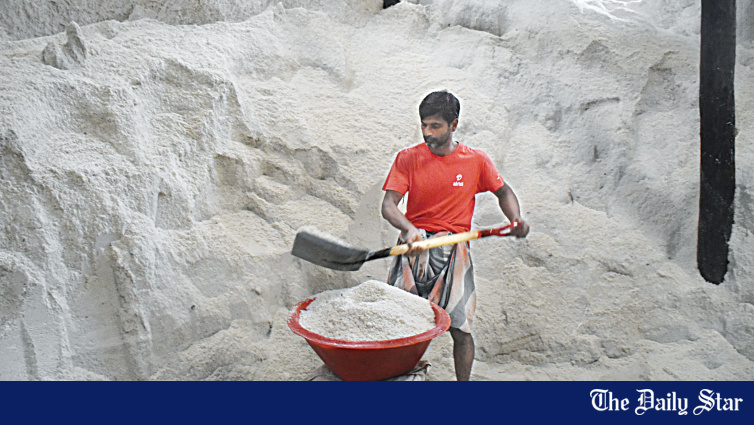
Phulbari Coalmine Development Under Profit-Sharing Plan With Landowners: Bangladesh Government
Bangladesh plans to develop the long-stalled Phulbari coalmine in Dinajpur through open-pit mining with profit-sharing for landowners. The mine holds 572 million tonnes of bituminous coal and could replace 75% of Bangladesh's annual coal imports.
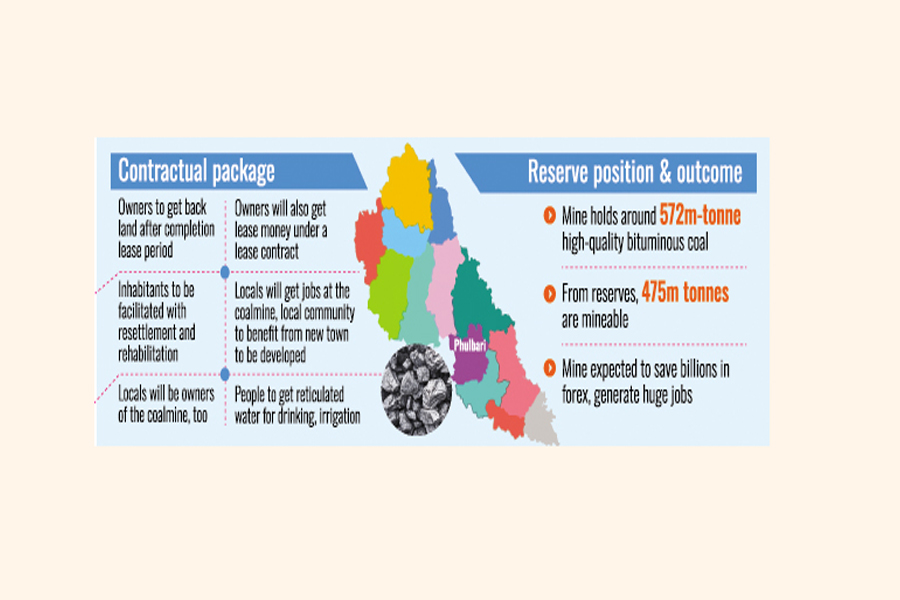
Dinajpur, September 24, 2026 — A comprehensive package deal is outlined for coal extraction from the long-stalled Phulbari coalmine in Dinajpur through open-pit mining method under a profit-sharing arrangement with the landowners. The current push comes in fuel-crunch time following calls from experts and businesses to cut costly coal imports and ensure the country's future energy security.
⛏ Under terms of contract, local people in and around the coalmine area, including Phulbari, Parbatipur, Birampur and Nawabganj upazilas, will get back their lands on completion of the lease period apart from their resettlement and rehabilitation. A senior official of the Energy and Mineral Resources Division (EMRD) under the Ministry of Power, Energy and Mineral Resources (MPEMR) elaborated on the mining arrangement while talking to The Financial Express on Thursday.
👥 Local Ownership Model
Locals will be the owner of the coalmine, instead of mere beneficiary from rehabilitation, under a new planned structure to develop the coalmine — a significant shift from previous coalmine development models in Bangladesh.
The EMRD already held a meeting with different stakeholders of the country's coal sector, including the coal-fired power plants, recently to discuss elaborately the plan to extract coal from Phulbari coalmine.
📊 Phulbari Coal Reserve At A Glance
- ⛏ Total coal reserve: around 572 million tonnes of high-quality bituminous coal.
- ⛏ Mineable reserves: 475 million tonnes.
- ⛏ Coal quality: high-quality bituminous coal — suitable for power generation.
- ⛏ Annual production potential at full capacity: 15.2 million tonnes per year.
- ⛏ Location: Phulbari, Parbatipur, Birampur and Nawabganj upazilas, Dinajpur district.
💰 The Profit-Sharing Arrangement
Under the profit-sharing plan, the government will disburse a portion of profit to be attained from the coalmine to landowners. The owners of land will also get lease money from their leased land in the area where the coalmine will be developed under a land-lease agreement.
Local people will also get jobs in the proposed Phulbari coalmine and local community will benefit from:
- 🏘 New town and village development
- 🏢 New housing
- 🔌 Uninterrupted electricity supply
- 💧 Reticulated water for drinking and irrigation
💬 “The final plan to develop the coalmine will be adopted after further consultation,” said the MPEMR official.
💰 Why This Matters: Reducing Bangladesh's Coal Import Bill
Market insiders have said the Phulbari coalmine could save billions in foreign exchange and generate thousands of jobs, once it is developed. Developing the country's most potential coalmine having the largest reserve is a part of the government's 10-year energy plan to cut dependence on imported primary fuels like LNG, coal and petroleum products, which have strained reserves amid global price volatility.
- 💵 Bangladesh's annual coal imports: approximately 20 million tonnes.
- 💵 Coal import cost (FY 2024-25): US$1.19 billion.
- 💵 Phulbari's potential to replace imports: up to 75 per cent of annual coal imports.
- 💵 Annual forex savings potential: approximately US$890 million per year.
The coal from the mine might fuel new coal-fired power plants, reducing reliance on gas fired and oil-fired power plants crippled by fuel shortages.
⛏ Bangladesh's Existing Coal Sector
Sources say Bangladesh has five coalmines but coal extraction is limited to only one at Barapukuria in northern Dinajpur by utilizing underground coalmining method. Key facts:
- ⛏ Barapukuria Coal Mining Company Ltd (BCMCL) — the only operational coalmine.
- ⛏ Cumulative extraction since 2005: around 15 million tonnes over 21 years.
- ⛏ Annual average extraction: approximately 700,000 tonnes.
- ⛏ Total national coal reserves: around 2.0 billion tonnes in five coalmines.
- ⛏ Equivalent in gas terms: approximately 70 trillion cubic feet (Tcf) of gas.
For context, Bangladesh's current proven natural gas reserves are approximately 7-8 Tcf — meaning the country's coal reserves represent a substantial untapped domestic energy source that could significantly extend the country's energy security horizon.
🏢 The Asia Energy / GCM Resources Connection
They mention that Asia Energy Corporation (Bangladesh) Pty Ltd (Asia Energy), a subsidiary of UK-based GCM Resources plc, intends to develop and operate the mine. The company has:
- 📝 Carried out a feasibility study — some years ago.
- 📝 Submitted a scheme of development — to the government.
- 📝 Proposed a coal-fired power plant with up to 1,000-megawatt capacity at the mine site.
Project progress, however, paused in the wake of protests by the locals and environmentalists, ostensibly for a lack of such comprehensive arrangements. The new profit-sharing model is intended to address those historical concerns.
💼 Expert Reactions
💬 Energy adviser of the Consumers' Association of Bangladesh (CAB), Prof M Shamsul Alam, underscored the necessity of utilising local coal “in environmentally sound and economically feasible method”. He stressed:
- 🔹 Transparency and corruption-free coal extraction
- 🔹 Proper compensation and profit of landowners
- 🔹 Direct consultation with landowners on profit, lease money, or other proposed benefits
- 🔹 Clear determination of coal price and government royalty ahead of Phulbari coalmine development
💬 Energy expert Professor M Tamim opined for carrying out an independent study through a third party to determine engineering and environmental challenges before initiating open-pit coalmining in Phulbari.
💬 “Whoever develops the coalmine, knowing these challenges and working for their remedies are necessary,” said Mr Tamim, who is currently Vice-chancellor of Independent University, Bangladesh (IUB).
🌏 The Historical Phulbari Protests Context
The Phulbari coalmine has been one of Bangladesh's most controversial energy projects. The original plan, proposed by Asia Energy in the mid-2000s, faced massive local protests in 2006 that resulted in deaths of protesters and led to the project's effective suspension for nearly two decades.
The protests centred on several concerns:
- ⚠ Forced displacement of tens of thousands of local residents.
- ⚠ Environmental damage from open-pit mining — particularly to local water tables.
- ⚠ Inadequate compensation for land acquisition.
- ⚠ Foreign ownership of a strategic national resource — given Asia Energy's UK parentage.
- ⚠ Loss of agricultural land — in a region known for rice production.
The new profit-sharing model is an attempt to address these historical concerns and create local ownership of the project — rather than treating local communities as mere bystanders or compensation recipients.
💼 Strategic Context: Bangladesh's Energy Security
The Phulbari coalmine development push comes at a critical moment for Bangladesh's energy security:
- ⛽ West Asia conflict — pushing up LNG and oil import costs.
- ⛽ September 20 fuel price hike — Tk 20 per litre across all petroleum products.
- ⛽ Power-energy subsidy burden — Tk 480 billion allocated in FY27.
- ⛽ IMF pressure — for further subsidy rationalisation.
- ⛽ LNG terminal disruptions — as evidenced by the September 24 Maheshkhali FSRU disruption.
- ⛽ Declining domestic gas reserves — accelerating the need for alternative energy sources.
Against this backdrop, developing Phulbari's substantial coal reserves represents one of Bangladesh's most strategic options for reducing energy import dependence — even as the country simultaneously pursues renewable energy expansion.
🏛 Open-Pit Mining: Environmental Considerations
Open-pit coal mining — the proposed extraction method for Phulbari — has significant environmental implications that need to be addressed:
- 🌊 Water table depression — open-pit mining requires extensive dewatering, affecting local water availability.
- 🌊 Topsoil loss — though modern mining includes topsoil preservation and restoration.
- 🌊 Dust and air pollution — during excavation and transport.
- 🌊 Noise pollution — from mining equipment.
- 🌊 Land subsidence risk — in surrounding areas.
- 🌊 Coal ash management — if power plants are co-located.
However, open-pit mining also offers advantages over underground mining:
- ✅ Higher extraction efficiency — typically 90%+ versus 30-50% for underground mining.
- ✅ Lower per-tonne extraction cost — due to economies of scale.
- ✅ Higher safety standards — compared to underground mining.
- ✅ Faster extraction rates — allowing higher annual production volumes.
The trade-off between environmental impact and extraction efficiency is at the heart of the Phulbari debate — and is why Professor Tamim's call for an independent third-party study is significant.
📜 Looking Ahead
The government's new profit-sharing model represents a meaningful evolution in Bangladesh's approach to natural resource development. By:
- 🔹 Making locals owners rather than mere beneficiaries
- 🔹 Offering profit-sharing in addition to lease money
- 🔹 Promising resettlement and rehabilitation
- 🔹 Committing to community development — housing, electricity, water, jobs
- 🔹 Consulting stakeholders — before finalising the plan
... the government is attempting to address the historical grievances that have blocked Phulbari's development for two decades.
Whether the new model will succeed where previous attempts failed will depend on:
- 📝 The credibility of consultation with affected communities
- 📝 The transparency of profit-sharing arrangements
- 📝 The rigour of environmental impact assessments
- 📝 The quality of resettlement and rehabilitation programmes
- 📝 The government's political will to see the project through
For Bangladesh's energy security — and for the country's balance of payments — getting Phulbari right could be transformative. The potential to save nearly US$1 billion per year in coal imports, while creating thousands of jobs and developing domestic energy capacity, makes Phulbari one of the most strategically important energy projects in Bangladesh's recent history.
This news was originally published by The Financial Express. For the full original report, please visit: https://thefinancialexpress.com.bd/economy/phulbari-coalmining-under-profit-sharing-with-landowners
📬 Get Bangladesh Trade News in your inbox
Weekly digest of export industry news, policy updates, and market analysis.
📰 Related Stories


✍️ More from System Administrator