Bangladesh Approves 150,000 Tonnes Salt Imports Before Peak Season: Local Farmers And Refiners Concerned
Daily Star's Jagaran Chakma reports the Bangladesh government approved 150,000 tonnes of unrefined salt imports weeks before the November-May production season, citing weather disruption risks. Farmers warn imports could depress local prices and discourage cultivation.
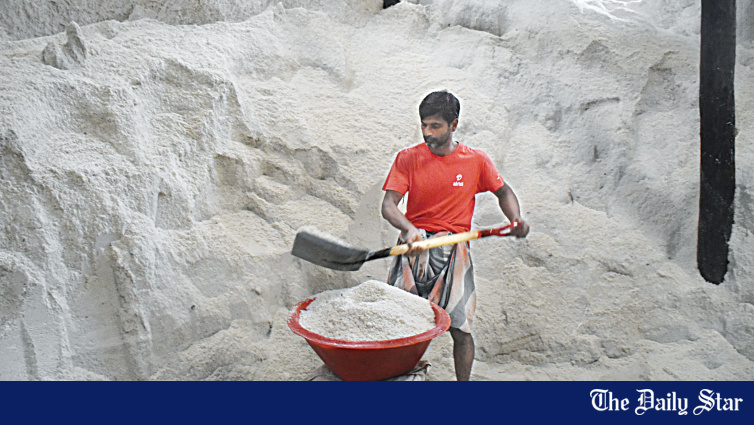
Dhaka, September 25, 2026 — Bangladesh has approved imports of 150,000 tonnes of unrefined salt just weeks before the new domestic production season, raising concerns among farmers and refiners over the need for the purchases and their impact on local producers.
🧂 The government says the imports are a precaution against a possible supply shortfall after weather disruptions hit production in Cox's Bazar, the country's main salt-producing region. But farmer representatives and industry executives say existing stocks are sufficient and cheaper imports could depress local prices.
📜 The Import Approval Details
The Office of the Chief Controller of Imports and Exports issued the approval on September 23 following recommendations from the ministries of commerce and industries. Key details:
- 🧂 Import volume: 150,000 tonnes of unrefined salt
- 🧂 Beneficiaries: 251 registered and operational salt mills identified by the Bangladesh Small and Cottage Industries Corporation (BSCIC)
- 🧂 Application deadline: October 1, 2026
- 🧂 Required documents: Renewed import registration certificates, trade licences, Bangladesh Salt Mill Owners Association membership certificates, and Tk 5,000 fee
💬 Salt Farmer Welfare Association's Concerns
Gias Uddin, general secretary of the Salt Farmer Welfare Association, said existing stocks could meet domestic demand for at least two months.
💬 “Even without imports, the existing stock can easily meet demand for four months,” Gias told The Daily Star.
He estimated that farmers and millers together held more than 10 lakh tonnes of crude salt, although official stock figures may differ. He warned that imports during the peak production season could push down local prices and discourage cultivation.
💬 “If farmers do not get a fair price, they will stop producing salt,” he said.
💬 ACI Consumer Brands Executive's View
Md Quamrul Hassan, executive director and chief operating officer (COO) of ACI Consumer Brands, said BSCIC data showed around 600,000-700,000 tonnes of salt in stock. Key points from his analysis:
- 📅 New production season: begins in November and normally runs until May.
- 🌡 Weather dependency: Production is highly weather-dependent — even a single day of rain can cause a week-long production loss.
- 📊 Annual salt demand: around 20 lakh tonnes, including industrial and edible salt.
- 📊 Edible salt demand: estimated at 700,000-750,000 tonnes.
- 💰 Cost advantage of imports: Imported salt — particularly from India — can be cheaper to refine because of its higher sodium chloride content.
- 💰 Estimated forex outflow: Importing 150,000 tonnes could result in a foreign-exchange outflow of at least $6 million.
Hassan also questioned the allocation of import permits among the 251 mills, alleging that some registered mills have limited production or demand.
🏢 Bangladesh Vacuum Salt Manufacturers' Association Request
The Bangladesh Vacuum Salt Manufacturers' Association, whose members supply around 70 per cent of the country's salt demand, had sought an additional allocation of at least 50,000 tonnes of crude salt but was not granted the request, Hassan said.
🏢 Bangladesh's Branded Salt Manufacturer Landscape
A senior executive of a branded salt manufacturer, who declined to be named, said five major companies account for around 70 per cent of total demand:
- 🏢 ACI Salt Limited
- 🏢 Molla Salt Triple Refinery Limited
- 🏢 Confidence Salt Limited
- 🏢 Meghna Group of Industries
- 🏢 City Group
🏛 BSCIC Salt Cell's Defense Of Imports
Sorwar Hossen, chief of the Salt Cell at BSCIC, said import decisions are based on supply conditions and the risk of shortages. He provided the following supply-demand data:
- 📊 Last year's production: 1.945 million tonnes
- 📊 Estimated demand (initial): 2.715 million tonnes
- 📊 Theoretical shortfall: approximately 770,000 tonnes
- 📊 Demand revised to: 2.534 million tonnes based on actual consumption
💬 “Even then, theoretically, there is a gap between production and demand,” Sorwar said.
He said supplies generally remain comfortable until mid-December, while new-season production takes time to build up. Last year, only 253 tonnes were produced in November against monthly demand of about 221,000 tonnes — illustrating the production gap in the early months of the season.
🌏 Bangladesh's Salt Industry: Cox's Bazar Hub
Bangladesh's salt industry is concentrated in Cox's Bazar — the country's main salt-producing region. Key features:
- 🧂 Production method: Solar evaporation of seawater in coastal salt beds.
- 🧂 Production season: November to May — during the dry season.
- 🧂 Annual production: approximately 1.95 million tonnes (last year).
- 🧂 Annual demand: approximately 2.5 million tonnes (revised).
- 🧂 Production shortfall: approximately 600,000 tonnes annually.
The industry employs hundreds of thousands of small-scale salt farmers in Cox's Bazar and adjacent coastal areas — making salt pricing a critical livelihood issue.
💰 The Import Cost-Benefit Analysis
The 150,000-tonne import decision involves several trade-offs:
- ✅ Benefits of imports:
- 💰 Bridge supply gap during November-December low-production period.
- 💰 Prevent consumer price spikes during lean season.
- 💰 Maintain industrial salt supply for chemical and textile industries.
- ⚠ Costs of imports:
- 💰 Foreign exchange outflow of approximately $6 million.
- 💰 Risk of depressing local prices during peak production season.
- 💰 Disincentive to local salt cultivation if imports compete with local supply.
- 💰 Potential loss of livelihood for small-scale salt farmers.
💼 Why Local Salt Farmers Are Concerned
For local salt farmers, the timing of the imports is the most concerning aspect. Approving imports just weeks before the November-May production season means:
- 💵 Imported salt will be available when local production hits the market — creating direct competition.
- 💵 Local prices could fall as both imported and newly-produced salt compete for buyers.
- 💵 Farmers may not recover production costs — particularly if imported salt is cheaper due to higher purity.
- 💵 Next year's production could be affected — if farmers exit the sector due to losses.
Gias Uddin's warning that “if farmers do not get a fair price, they will stop producing salt” is therefore not hyperbole — it reflects the structural risk of import timing on the long-term sustainability of the domestic salt industry.
🌏 Bangladesh's Salt Self-Sufficiency Strategy
Bangladesh has historically pursued a strategy of salt self-sufficiency — supporting local production through:
- 🏛 BSCIC's Salt Cell — coordinating production, supply, and imports.
- 🏛 Tariff protection — against cheaper imported salt.
- 🏛 Research and development — to improve salt production techniques.
- 🏛 Storage infrastructure — to enable carryover of stocks from production season to lean season.
- 🏛 Farmer support programmes — including credit, technical assistance, and price stabilisation.
The 150,000-tonne import approval represents a partial departure from this self-sufficiency strategy — reflecting the government's concern about supply security in the face of weather disruptions.
💼 Wider Implications For Bangladesh's Agricultural Trade Policy
The salt import decision is part of a broader pattern in Bangladesh's agricultural trade policy — where the government periodically approves imports to address short-term supply concerns, sometimes at the expense of longer-term domestic production incentives. Similar dynamics have been observed in:
- 🌾 Onion imports — with periodic approvals disrupting local onion farmer economics.
- 🌾 Rice imports — with government-to-government deals during supply shortfalls.
- 🌾 Edible oil imports — with Bangladesh heavily dependent on imported soybean and palm oil.
- 🌾 Sugar imports — with periodic approvals to supplement local production.
- 🌾 Maize imports — for the poultry feed industry.
In each case, the trade-off between short-term consumer protection and long-term producer incentives is a difficult policy balance — and one that Bangladesh's agricultural policymakers continue to grapple with.
📜 Looking Ahead
The 150,000-tonne salt import approval is now set to be executed through the 251 BSCIC-registered mills, with applications due by October 1, 2026. The actual import quantum that materialises will depend on:
- 📋 Import permit applications from the 251 registered mills.
- 📋 Global salt prices — particularly for Indian salt.
- 📋 Shipping and freight costs — including the impact of the September 20 fuel price hike.
- 📋 Foreign exchange availability — for letter of credit opening.
For local salt farmers and refiners, the hope is that the imported volume will be modest enough to bridge the supply gap without significantly depressing local prices — allowing the November-May production season to proceed without disruption.
For consumers, the hope is that the imports will prevent any supply-driven price spikes during the lean season — maintaining affordable salt prices through the year.
The coming months will reveal whether the government's precautionary import decision strikes the right balance — or whether it ends up undermining the long-term sustainability of Bangladesh's domestic salt industry.
This news was originally published by The Daily Star. For the full original report, please visit: https://www.thedailystar.net/business/economy/news/salt-imports-raise-concerns-among-local-producers-4282316
📬 Get Bangladesh Trade News in your inbox
Weekly digest of export industry news, policy updates, and market analysis.
📰 Related Stories

✍️ More from System Administrator