Bangladesh Leather Industry Needs To Move Up Value Chain: Commerce Secretary Outlines Roadmap
Commerce Secretary Md Ataur Rahman Khan announces action-oriented roadmap for the leather sector at the 10th Bangladesh Leather and Footwear Expo 2026, with Bangladesh producing 27 crore sq ft annually but still exporting mostly raw and processed leather.
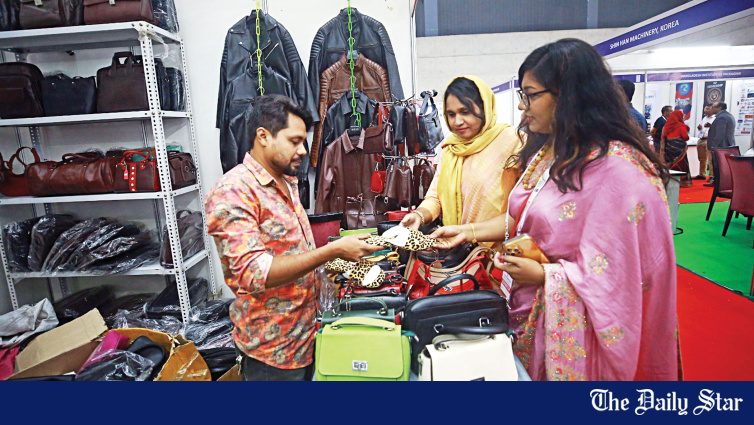
Dhaka, September 25, 2026 — Bangladesh needs to move further up the leather value chain to unlock its export potential, Commerce Secretary Md Ataur Rahman Khan said yesterday, as the government prepares an action-oriented roadmap to address the sector's longstanding problems. He made the remarks at the opening of the 10th Bangladesh Leather and Footwear Expo 2026 at the International Convention City Bashundhara in Dhaka.
👖 The announcement comes at a critical moment for Bangladesh's leather industry — which has substantial production capacity but remains locked at the lower end of the global value chain, exporting mostly raw and processed leather rather than finished consumer products.
📊 Bangladesh Leather Industry At A Glance
- 👖 Annual leather production: around 27 crore square feet
- 👖 Small footwear factories: around 5,500
- 👖 Global footwear producer ranking: 8th largest in the world
- 👖 Global footwear consumer market ranking: 9th largest in the world
- 👖 Major export destinations: Italy, South Korea, Japan, China, Hong Kong, Taiwan
🏛 The Value Chain Challenge
Despite producing 27 crore square feet of leather annually, much of Bangladesh's export potential remains untapped because the country continues to depend heavily on exports of raw and processed leather rather than higher-value finished products. This means:
- ⚠ Bangladesh earns significantly less per unit of leather exported — compared to competitors that export finished footwear and leather goods.
- ⚠ Value addition happens in other countries — where Italian, Chinese, and Vietnamese manufacturers turn Bangladeshi leather into premium branded products.
- ⚠ Bangladesh misses out on the higher margins available in finished leather goods, footwear, and accessories.
📜 The Government's Roadmap
The government is preparing a roadmap to address the sector's longstanding problems and help businesses move further up the value chain, Ataur said. The roadmap will:
- 📝 Focus on both domestic market and export growth
- 📝 Be published in draft form on the commerce ministry's website to seek feedback from industry stakeholders
- 📝 Be overseen by a high-level committee headed by the commerce minister
💬 “Following the prime minister's directives, the commerce ministry is working on an action-oriented roadmap for the sector,” Ataur said.
A high-level committee headed by the commerce minister has already been formed to oversee the development of the leather industry, he added.
💼 The Challenge: Producing Higher-Value Products
The challenge is not simply producing leather, according to the commerce secretary, but turning more of it into products that command higher prices in global markets. Bangladesh already exports:
- 👖 Footwear
- 👖 Travel bags
- 👖 Belts
- 👖 Wallets
- 👖 Other leather goods
But industry stakeholders say there is considerable scope to expand these exports and enter new markets, he said. The country has the raw materials and a growing pool of technical expertise. The government wants to use these advantages to:
- 🛍 Encourage greater consumption of locally made leather products in the domestic market.
- 🛍 Expand exports of finished leather goods.
🏛 Compliance, Technology, And Traceability
Meeting the requirements of international buyers, however, will require improvements in:
- ⚖ Environmental compliance — particularly important given the historical environmental issues at Hazaribagh tanneries (now relocated to Savar).
- ⚖ Social compliance — including labour standards and workplace safety.
- ⚖ Technology adoption — to improve productivity and product quality.
- ⚖ Traceability — allowing buyers to verify the source and production conditions of leather.
The commerce ministry is therefore working on:
- 📜 A framework for responsible business conduct
- 📜 A national traceability framework
- 📜 Separate traceability systems for priority sectors
🎓 Industry-Academia Linkage For Technology Transfer
Better links between factories and institutions that teach and research leather technology could also help address the industry's technology gap.
💬 “Students and researchers in leather technology need to be connected more effectively with tannery owners and entrepreneurs,” Ataur added.
This call for stronger industry-academia linkage reflects a broader pattern in Bangladesh's industrial policy — where the government is increasingly focused on closing the gap between technical education and industry needs.
💼 The Production Base
The industry has a sizeable production base to build on. Bangladesh has:
- 🏭 Around 5,500 small footwear factories across the country.
- 🏭 The status of the world's 8th-largest footwear producer.
- 🏭 The status of the world's 9th-largest footwear consumer market.
Yet a large share of the country's leather still leaves the country as processed material rather than as finished consumer products. This is the central inefficiency the government's roadmap seeks to address.
🌏 Export Markets And International Buyer Engagement
Bangladeshi leather is mainly exported to:
- 🇮🇹 Italy — Europe's leather manufacturing hub.
- 🇰🇷 South Korea
- 🇯🇵 Japan
- 🇨🇳 China
- 🇭🇰 Hong Kong
- 🇹🇼 Taiwan
At the same time, local footwear manufacturers are receiving orders from international brands, while domestic demand is rising, encouraging several companies to expand production. This dual demand — from international brands and domestic consumers — creates a favourable environment for industry growth.
🏢 The 10th Bangladesh Leather And Footwear Expo 2026
The three-day expo is organised by:
- 🏢 Bangladesh Tanners Association
- 🏢 Leather Engineers and Technologists Society of Bangladesh
- 🏢 Limra Trade Fairs and Exhibitions Pvt Ltd
It began yesterday and will run until September 26. More than 250 local and international companies are taking part in the event — making it one of the largest gatherings of leather industry stakeholders in South Asia.
💼 Why The Leather Sector Matters For Bangladesh's Export Economy
Bangladesh's leather sector is strategically important for several reasons:
- 👖 Export diversification — reducing dependence on the RMG sector.
- 👖 Domestic raw material base — with significant livestock population supporting leather production.
- 👖 Labour-intensive manufacturing — creating significant employment opportunities.
- 👖 Value chain potential — from raw hides to finished branded products.
- 👖 Sector-specific industrial parks — including the Savar Tannery Industrial Estate.
However, the sector has historically underperformed its potential — with several constraints limiting growth:
- ⚠ Environmental compliance issues — particularly at the historic Hazaribagh tanneries.
- ⚠ Limited value addition — with most exports being raw or processed leather rather than finished goods.
- ⚠ Lack of internationally recognised certification — particularly for environmental and labour compliance.
- ⚠ Technology gap — with limited adoption of modern leather manufacturing technology.
- ⚠ Limited brand presence — in international markets for Bangladeshi leather goods.
🌏 International Comparisons: What Bangladesh Can Learn
Bangladesh can learn from the experiences of other leather-exporting countries:
- 🇮🇹 Italy — the world's leading leather goods manufacturer, with strong brand presence and design capability.
- 🇻🇳 Vietnam — has emerged as a major footwear exporter, particularly for international brands.
- 🇮🇳 India — has developed a strong leather cluster in Tamil Nadu, with integrated value chains.
- 🇧🇷 Brazil — has developed a strong leather processing industry with environmental compliance.
Each of these countries has moved up the value chain by investing in design, technology, brand development, and compliance — the same areas Bangladesh's roadmap seeks to address.
📜 Conclusion: A Critical Juncture For Bangladesh's Leather Industry
The commerce secretary's announcement of an action-oriented roadmap marks a critical juncture for Bangladesh's leather industry. With:
- 📝 A high-level committee under the commerce minister
- 📝 A draft roadmap to be published for stakeholder consultation
- 📝 A focus on environmental compliance and traceability
- 📝 Stronger industry-academia linkage
- 📝 Both domestic market and export growth targets
...the government is signalling a serious commitment to addressing the leather sector's longstanding constraints.
For Bangladesh's export economy, the success of this roadmap could unlock significant new value — transforming the leather sector from a raw material exporter into a manufacturer of branded finished goods. The coming months of stakeholder consultation and roadmap development will be critical in determining whether the leather industry can finally move up the value chain and realise its full export potential.
This news was originally published by The Daily Star. For the full original report, please visit: https://www.thedailystar.net/business/economy/news/leather-industry-needs-move-the-value-chain-4282291
📬 Get Bangladesh Trade News in your inbox
Weekly digest of export industry news, policy updates, and market analysis.
📰 Related Stories
✍️ More from System Administrator