RCEP Approves Ad Hoc Accession Working Group For Bangladesh: World's Largest Trade Bloc Moves Forward
At the 5th RCEP Ministers' Meeting in Manila on September 21, 2026, the trade bloc approved a working group to advance Bangladesh's accession alongside Chile, Hong Kong China, and Sri Lanka. RCEP accounts for 30% of global GDP and 25% of global trade.
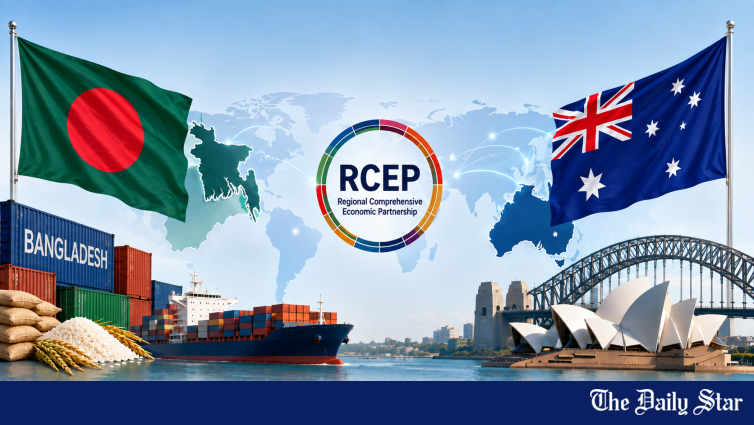
Manila/Dhaka, September 25, 2026 — Bangladesh's accession process to the Regional Comprehensive Economic Partnership (RCEP) has moved a step forward, with the trade bloc approving the establishment of an Ad Hoc Accession Working Group to advance the process. The decision was taken at the fifth RCEP Ministers' Meeting in Manila, Philippines, on September 21.
🌏 The meeting approved a recommendation from the RCEP Joint Committee to establish the working group for Bangladesh, Chile, Hong Kong China, and Sri Lanka — in line with the “Next Steps for RCEP Accession Process” adopted by the committee.
💬 Joint Statement From Ministers
In a joint statement, the ministers reaffirmed that the RCEP Agreement remains open and inclusive and welcomed progress on the accession agenda. The ministers' joint statement is significant because it provides political endorsement of the accession process — signalling that RCEP members are committed to expanding the bloc beyond its original 15 members.
🌏 RCEP: The World's Largest Trade Bloc
RCEP comprises the 10 ASEAN countries:
- 🇧🇳 Brunei
- 🇰🇭 Cambodia
- 🇮🇩 Indonesia
- 🇱🇦 Laos
- 🇲🇾 Malaysia
- 🇲🇲 Myanmar
- 🇵🇭 Philippines
- 🇸🇬 Singapore
- 🇹🇭 Thailand
- 🇻🇳 Vietnam
Along with five Asia-Pacific partners:
- 🇨🇳 China
- 🇯🇵 Japan
- 🇰🇷 South Korea
- 🇦🇺 Australia
- 🇳🇿 New Zealand
The 15-member bloc accounts for approximately:
- 📊 30 per cent of global GDP
- 📊 25 per cent (one-fourth) of global trade
- 📊 30 per cent of the world's population — approximately 2.3 billion people
according to a previous assessment by Bangladesh's commerce ministry.
💼 Bangladesh Commerce Ministry's Statement
The commerce ministry, in a statement, said the latest move had taken Bangladesh's process of joining the world's largest free trade agreement one step forward.
Bangladesh's accession could help address some of the challenges the country will face after graduating from the least developed country (LDC) category, including:
- 🌏 Maintaining preferential market access
- 🌏 Strengthening integration with global supply chains
- 🌏 Attracting foreign direct investment (FDI)
📊 The Economic Case For Bangladesh's RCEP Membership
Bangladesh earlier took the initiative to join RCEP mainly because it will lose some preferential trade benefits in ASEAN markets after graduating from the LDC category in 2026.
The commerce ministry has already completed an assessment of Bangladesh's potential accession to RCEP. According to the ministry document, the assessment found that Bangladesh's accession could yield the following economic benefits:
- 💰 Exports could increase by $3.26 billion
- 💰 Foreign direct investment (FDI) could increase by 3.36 per cent
📜 RCEP Timeline: From Signing To Accession
- 📅 November 2020: RCEP was signed after years of negotiation.
- 📅 January 2022: RCEP entered into force for the original 15 members.
- 📅 July 1, 2023: RCEP became open for accession by other states or separate customs territories.
- 📅 2024-2025: Bangladesh, Chile, Hong Kong China, and Sri Lanka formally applied for accession.
- 📅 September 21, 2026: RCEP Ministers approve Ad Hoc Accession Working Group for all four applicants.
💼 Why RCEP Matters For Bangladesh's LDC Graduation
Bangladesh's LDC graduation in 2026 will result in the loss of several preferential trade benefits, including:
- ⚠ EU Everything But Arms (EBA) preference — duty-free, quota-free access to the EU market.
- ⚠ UK Generalised Scheme of Preferences (GSP) preference — similar to EBA.
- ⚠ Australia's preferential tariff treatment for LDCs.
- ⚠ Canada's preferential tariff treatment for LDCs.
- ⚠ Japan's GSP treatment for LDCs.
- ⚠ Other developed-country GSP schemes for LDCs.
While Bangladesh has been negotiating alternative arrangements — including a possible EU FTA — joining RCEP would provide preferential access to Asia-Pacific markets, which collectively represent over 30 per cent of global GDP.
🌏 The ASEAN Trade Angle
ASEAN is one of Bangladesh's most important trade and investment partners:
- 💰 ASEAN-Bangladesh trade (FY26): approximately $5-6 billion annually.
- 💰 Major ASEAN trade partners: Singapore, Malaysia, Thailand, Indonesia, Vietnam.
- 💰 FDI from ASEAN: Singapore and Malaysia are among the top sources of FDI into Bangladesh.
- 💰 Labour migration: Malaysia is a major destination for Bangladeshi workers.
Joining RCEP would deepen these existing economic relationships — particularly by reducing tariffs and non-tariff barriers on Bangladeshi exports to ASEAN markets.
💼 The China Angle: Strategic Implications
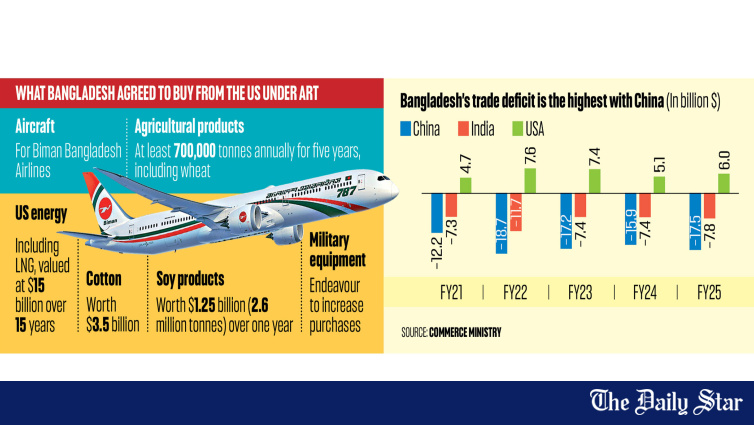
RCEP includes China — which is Bangladesh's largest import source ($18.19 billion in FY25). Joining RCEP would:
- 🇨🇳 Lock in preferential tariff access for Chinese imports — which Bangladesh would need anyway given its import dependence.
- 🇨🇳 Reduce input costs for Bangladeshi manufacturers sourcing from China.
- 🇨🇳 Open Chinese market access for Bangladeshi exports — particularly RMG, leather, jute, and pharmaceuticals.
- 🇨🇳 Strengthen China-Bangladesh supply chain integration.
However, joining RCEP also has strategic implications for Bangladesh's relationship with the United States — particularly given the ART's non-market economy clause that effectively bars Bangladesh from new FTAs with non-market economies like China.
🏛 The ART-RCEP Compatibility Question
Bangladesh's simultaneously pursuing RCEP accession while signing the ART with the US raises an important compatibility question:
- ⚖ The ART bars Bangladesh from “new free trade agreement or preferential economic agreement with a non-market country” that undermines the ART.
- ⚖ RCEP includes China — which is on the US Commerce Department's non-market-economy list.
- ⚖ Whether Bangladesh's RCEP accession would violate the ART will depend on the specific tariff preferences granted to China and the legal interpretation of “undermines the ART.”
This compatibility question is one of the more delicate trade diplomacy issues Bangladesh will need to navigate in the coming months — as both the RCEP accession process and ART implementation move forward.
📊 What $3.26 Billion In Additional Exports Means
The commerce ministry's assessment that Bangladesh's exports could increase by $3.26 billion upon joining RCEP represents approximately:
- 📊 6-7 per cent increase over Bangladesh's current annual exports of approximately $48-50 billion.
- 📊 Significant diversification away from traditional Western markets (US, EU, UK).
- 📊 Improved RMG exports to ASEAN, China, Japan, and South Korea.
- 📊 New export opportunities for leather, jute, pharmaceuticals, and agricultural products.
💼 Implications For Bangladesh's Export Economy
For Bangladesh's export economy, RCEP membership would have several strategic implications:
- 💼 Market diversification — reducing dependence on US and EU markets.
- 💼 Supply chain integration — with East Asian manufacturing networks.
- 💼 Tariff reduction — on industrial inputs sourced from RCEP members.
- 💼 Rules of origin cumulation — allowing Bangladeshi manufacturers to use inputs from any RCEP member while qualifying for preferential tariffs.
- 💼 FDI attraction — with foreign investors gaining access to RCEP markets through Bangladesh.
- 💼 Trade facilitation — through RCEP's customs and trade facilitation provisions.
📋 What Happens Next In The Accession Process?
With the Ad Hoc Accession Working Group now approved, the next steps in Bangladesh's RCEP accession process will likely include:
- 📝 Working group meetings — to review Bangladesh's accession application and request additional information.
- 📝 Bilateral market access negotiations — with individual RCEP members on tariff concessions.
- 📝 Rules of origin alignment — ensuring Bangladesh's customs procedures align with RCEP requirements.
- 📝 Domestic legal preparation — including any necessary amendments to Bangladesh's trade and tariff laws.
- 📝 Stakeholder consultation — with industry associations and trade bodies on potential impacts.
- 📝 Final accession protocol — once all negotiations are complete.
The full accession process typically takes 2-3 years — meaning Bangladesh could potentially join RCEP by 2028-2029, depending on the pace of negotiations.
📜 Conclusion
The approval of the Ad Hoc Accession Working Group marks a meaningful milestone in Bangladesh's RCEP accession journey — moving the process from informal interest to formal engagement with the trade bloc.
For Bangladesh, RCEP membership represents a strategic hedge against the loss of LDC preferences — while also opening significant new trade and investment opportunities in Asia-Pacific markets. The challenge now will be to navigate the accession process efficiently while managing the compatibility questions raised by the simultaneous ART commitment to the United States.
The coming months will be critical in determining whether Bangladesh can successfully balance these competing trade commitments — and emerge as a more integrated participant in the global trading system.
This news was originally published by The Daily Star. For the full original report, please visit: https://www.thedailystar.net/business/economy/news/rcep-approves-working-group-advance-bangladeshs-bid-4282306
📬 Get Bangladesh Trade News in your inbox
Weekly digest of export industry news, policy updates, and market analysis.
📰 Related Stories

✍️ More from System Administrator