Bangladesh Retailers Lose Up To 30% Sales After Early Closure Order
Energy-saving 8pm shop closure wipes out evening peak sales; Apex Footwear says 60% of domestic sales occur after 8pm, with Mustafa Mart revenue crashing from Tk 3 lakh to Tk 70,000/day
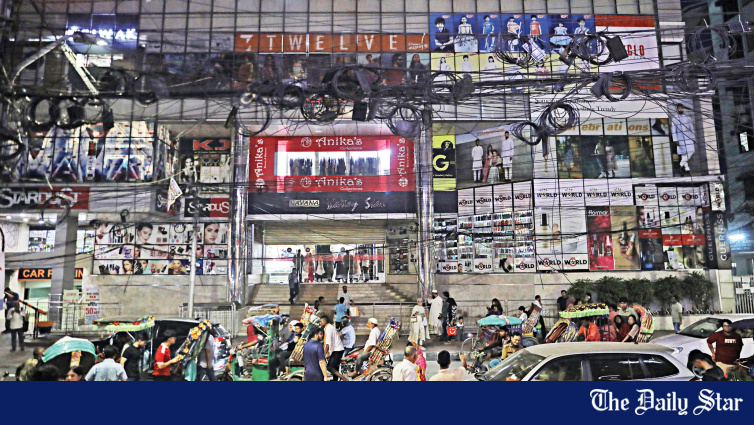
🛍 Closing shopping malls earlier to save electricity amid an energy shortage has wiped out up to 30 percent of retail sales, according to traders, who say customers are particularly used to buying footwear, fashion items and daily necessities after sunset. In August, the authorities instructed shops, markets and shopping malls across the country to close by 8 pm, bringing the deadline forward from 10 pm. The shorter shopping hours came at a time when retailers were already dealing with prolonged inflationary pressure, which had weakened people's purchasing power and hit sales.
📊 Yet businesses still have to pay the same, if not more, for shop rents, staff salaries and other operating costs, putting further pressure on already shrinking profit margins. "Sales have fallen over the past month, putting significant pressure on cash flows," said Khalid Mahmood Khan, co-founder and managing director of Kay Kraft, a popular fashion retailer. He estimated that sales in the fashion and lifestyle sector have fallen by around 25 percent to 30 percent over the past month because of the combined impact of inflation and reduced shopping hours.
💰 Impact By Company: Revenue Declines
- 👞 Apex Footwear: 60% of sales normally after 8pm; domestic business down 20-30%
- 🛍 Kay Kraft: Fashion/lifestyle sales down 25-30%
- 🛍 Lotto Bangladesh (240 outlets): Sales down ~20%
- 🛍 Mustafa Mart: Revenue down ~30%; one outlet crashed from Tk 3 lakh to Tk 70,000/day
- 📅 Closure order timeline: 6pm (April) → 7pm → 10pm (Eid) → 7pm → 9pm (June 11) → 8pm (August)
📜 Bangladesh's Evening Shopping Culture
Khalid said people in Bangladesh generally feel more comfortable shopping after sunset, especially during hot weather. Reducing shopping hours is disrupting a long-established lifestyle pattern. The cultural dimension of Bangladesh's retail sector is important to understand — unlike Western markets where daytime shopping dominates, Bangladesh's hot climate, traffic patterns and social customs have created a retail economy where evening hours (6pm-10pm) are the peak sales period. The 8pm closure order effectively eliminates the majority of peak shopping time.
👞 Apex Footwear: 60% Of Sales After 8pm
Apex Footwear, one of the country's major footwear brands, says about 60 percent of its domestic sales normally take place after 8 pm. Firoze Mohammad, chief executive officer of the company, said domestic business had fallen by 20 percent to 30 percent following the latest restriction on operating hours. "Closing shops at 8 pm is having a very significant impact on our business," he said. The 60% figure for post-8pm sales is striking — it means that the 8pm closure order eliminates the majority of Apex's domestic revenue-generating hours, explaining the 20-30% overall sales decline.
🛍 Lotto Bangladesh: 20% Sales Decline Across 240 Outlets
Kazi Jamil Islam, managing director of Lotto Bangladesh, which operates 240 outlets, said the company's sales fell by around 20 percent within a month of the latest restriction. "Our major sales take place between 7 pm and 9 pm," he said, adding that rents and other operating costs had remained unchanged despite the decline in sales. The unchanged cost structure — same rents, same salaries, same utilities — while revenue declines by 20-30% means that retailers' profit margins are being compressed from both sides: declining revenue and static costs.
💰 Mustafa Mart: Revenue Crashes From Tk 3 Lakh To Tk 70,000
International retail chain Mustafa Mart has also seen a sharp decline in business since the latest restriction. BM Saleh Musa, manager (accounts and finance) at Mustafa Mart Pvt Ltd, said customers generally feel more comfortable shopping between 6 pm and 10 pm. "Our revenue has declined by around 30 percent over the past month compared with the regular sales level of the previous month," he said, adding that at one outlet, daily revenue fell from around Tk 3 lakh to Tk 70,000. "Even after 8 pm, salesmen are compelled to turn away customers who want to make purchases," Saleh said.
The Mustafa Mart example — daily revenue falling from Tk 3 lakh to Tk 70,000, a 77% decline at a single outlet — illustrates the devastating impact of the closure order on individual retail operations. The image of salesmen turning away customers who want to make purchases after 8pm captures the absurdity of the situation: willing customers with money to spend are being turned away by government order.
📜 Repeated Changes To Operating Hours
According to businesses, the repeated changes to operating hours have made it harder for retailers to plan sales and staffing. In April, the government initially ordered shops, markets and shopping malls to close by 6 pm as part of energy-saving measures. The deadline was later relaxed to 7 pm following pressure from business groups and temporarily extended to 10 pm during Eid-ul-Azha. It was then restored to 7 pm before being extended to 9 pm from June 11. The latest order cut the closing time to 8 pm. The five changes to operating hours over five months — 6pm, 7pm, 10pm, 7pm, 9pm, 8pm — have made business planning impossible for retailers who need to forecast staffing, inventory and promotional schedules.
🌏 Strategic Context: Energy Saving Vs Economic Activity
For Bangladesh's broader economic management, the retail closure order reflects the tension between energy conservation imperatives and economic activity preservation. The government's energy-saving objective — reducing electricity consumption during evening peak demand — is legitimate given the gas supply crisis that has constrained power generation. However, the economic cost of the closure order — 20-30% revenue decline across the retail sector — may exceed the energy savings achieved, particularly if the energy saved from shop lighting and air conditioning is modest relative to the economic value of the foregone retail transactions.
A more targeted approach — focusing energy conservation on industrial consumers during peak hours while allowing retail operations to continue — would preserve retail revenue while achieving similar energy savings. The coming weeks will reveal whether the government adjusts the closure policy in response to retailer complaints — or whether the 8pm deadline persists through the critical pre-winter shopping season, further compressing retail sector margins at a time when the broader economy is already under significant pressure.
This news was originally published by The Daily Star. For the full original report, please visit: https://www.thedailystar.net/business/economy/news/retailers-lose-30-sales-after-early-closures-4275861
Related on BangladeshExport
📬 Get Bangladesh Trade News in your inbox
Weekly digest of export industry news, policy updates, and market analysis.
📰 Related Stories