Early Cultivation On Charlands Strains Bangladesh Fertiliser Supply: Rangpur Region Farmers Face Shortages
With no significant flooding in Rangpur region this year, large areas of char land remained above water, allowing early Aman rice and vegetable cultivation — but this surge in early cultivation has pushed up fertiliser demand, creating shortages in Kurigram, Lalmonirhat, Rangpur and other districts.
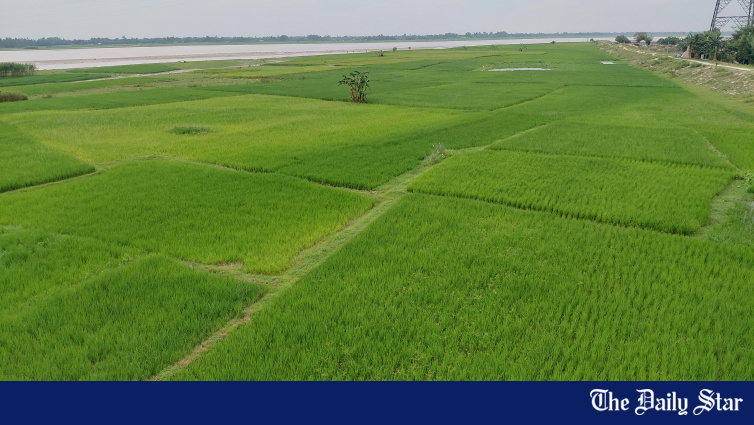
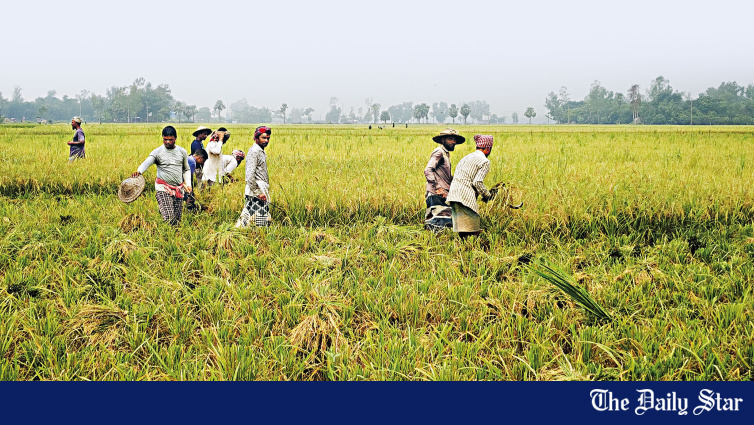
Rangpur, September 25, 2026 — With no significant flooding in the rivers across the Rangpur region this year, large areas of char land have remained above water, allowing farmers to cultivate Aman rice, vegetables and other crops earlier than usual. The early cultivation of additional char land, however, has pushed up demand for fertiliser, creating shortages in several riverbank and char areas.
🌾 Farmers in some places have protested and blocked roads, demanding adequate fertiliser supplies. The situation illustrates how unusual weather patterns — in this case, the absence of expected flooding — can create cascading effects on Bangladesh's agricultural input supply chain.
🌊 Why Rangpur's Rivers Stayed Below Flood Level
Agriculture officials said a large portion of char land that normally remains submerged during floods was brought under cultivation this year as river water did not remain high for long. The additional cultivation has created higher-than-usual demand for fertiliser, particularly along the Brahmaputra and Dudhkumar rivers in Kurigram.
Rakibul Hasan, executive engineer of the Kurigram Water Development Board, provided the following river water level data:
- 🌊 Brahmaputra River: Did not cross the danger level in Kurigram this year, resulting in no flooding along its banks.
- 🌊 Dudhkumar River: Crossed the danger level once, but receded within a day.
- 🌊 Teesta River: Crossed the danger level three times in Lalmonirhat, Nilphamari, Rangpur and Kurigram — but receded within 12 hours each time.
- 🌊 Result: No major flooding occurred in the region this year.
🌾 Farmers' Voices From The Charlands
Baktar Ali, 65, a farmer from Anantapur village on the Brahmaputra river bank in Kurigram's Ulipur upazila, said he usually started cultivation in the first week of October. This year, he began in early September because there was no floodwater.
💬 “I have planted early Aman on seven bighas this year, compared with five bighas last year. I need to apply fertiliser regularly, but I am not getting it according to my needs. So I have to keep visiting dealers' shops and wait,” he said.
He said almost all farmers in the area had cultivated early Aman and vegetables on additional land, increasing fertiliser demand. Without adequate fertiliser, achieving the expected yield would be difficult, he added.
Hasmat Ali Sheikh, 70, of Char Parbati in Kurigram Sadar, said he cultivated crops on five bighas last year but has brought eight bighas under early Aman and vegetable cultivation this year.
💬 “Previously, fertiliser was available in the open market. Now we have to collect it from dealers. We have to travel about 10 kilometres from the char to reach a dealer, but even there we do not get enough,” he said.
Azahar Ali, 55, of Gunaiyer Kuti area in Bhurungamari upazila, said farmers had started cultivation almost a month earlier this year. The area is known for vegetable production, which requires considerable amounts of fertiliser.
💬 “If we cannot apply fertiliser to vegetable fields on time, production will be severely affected,” he said.
Khairul Islam, 60, of Char Mahipur in Gangachara upazila of Rangpur, said the [article continues with more farmer voices].
📊 The Scale Of Char Land In Bangladesh
Bangladesh's char lands — riverine islands and sandbars formed through sedimentation — represent a significant but underutilised agricultural resource:
- 🌾 Total char land area: estimated at approximately 1.5-2.0 million hectares across the country.
- 🌾 Major char regions: Rangpur (Brahmaputra, Teesta), Kurigram (Brahmaputra, Dudhkumar), Jamalpur (Brahmaputra), Sirajganj (Jamuna), Pabna (Padma).
- 🌾 Cultivation pattern: Typically cultivated post-monsoon when flood waters recede — usually from October onwards.
- 🌾 Key crops: Aman rice, wheat, maize, mustard, vegetables, pulses, and spices.
- 🌾 Farmer population: millions of small-scale farmers depend on char land cultivation.
📜 Bangladesh's Fertiliser Distribution System
Bangladesh's fertiliser distribution system operates through multiple channels:
- 🏛 BCIC (Bangladesh Chemical Industries Corporation) — the state-owned fertiliser distributor.
- 🏛 Dealer network — BCIC-licensed fertiliser dealers at the union/upazila level.
- 🏛 Sub-dealer network — retailers at the village level.
- 🏛 Government subsidy — fertiliser prices are partially subsidised to support farmers.
- 🏛 Allocation system — based on historical demand patterns, which may not adequately account for char land cultivation surges.
The current shortage highlights a structural weakness in the allocation system — which is based on historical demand rather than real-time supply-demand matching.
💰 Major Fertiliser Types And Their Uses
- 🌿 Urea — nitrogen fertiliser, the most widely used in Bangladesh.
- 🌿 TSP (Triple Super Phosphate) — phosphorus fertiliser for root development.
- 🌿 MOP (Muriate of Potash) — potassium fertiliser for plant health and disease resistance.
- 🌿 DAP (Diammonium Phosphate) — combined nitrogen and phosphorus fertiliser.
- 🌿 Gypsum — sulphur and calcium supplement, particularly for rice.
- 🌿 Zinc sulphate — micronutrient fertiliser for zinc-deficient soils.
🌏 Why This Matters For Bangladesh's Food Security
Bangladesh's food security depends heavily on the Rangpur region — one of the country's most productive agricultural areas:
- 🌾 Rangpur's contribution to national rice production: approximately 15-20 per cent.
- 🌾 Major crops: Aman rice, Boro rice, wheat, maize, potato, vegetables, tobacco.
- 🌾 Cropping intensity: among the highest in the country — with multiple crops per year.
- 🌾 Char land productivity: highly fertile due to annual sediment deposits — but vulnerable to flooding and erosion.
Any disruption to fertiliser supply in the Rangpur region has direct implications for Bangladesh's food security — particularly for rice, the country's staple food.
💼 Government Response
The Bangladesh government has been taking several measures to address fertiliser supply challenges:
- 🏛 Increased fertiliser imports — particularly urea, TSP, and MOP.
- 🏛 Enhanced monitoring — of fertiliser distribution to prevent hoarding and black marketing.
- 🏛 Dealer verification — ensuring dealers are selling fertiliser at government-fixed prices.
- 🏛 Mobile fertiliser shops — in some areas to improve accessibility for remote farmers.
- 🏛 Fertiliser dealer commission increases — announced by the government to improve dealer viability.
💼 The Climate Change Dimension
The Rangpur region's unusual weather pattern — with no significant flooding this year — may reflect broader climate change impacts on Bangladesh's hydrology:
- 🌊 Changing monsoon patterns — with more variable rainfall distribution.
- 🌊 Upstream river management — including dam operations in India affecting downstream flows.
- 🌊 Sediment dynamics — changing the formation and stability of char lands.
- 🌊 El Niño/La Niña effects — on regional weather patterns.
While the absence of flooding has created an unexpected opportunity for char land cultivation, it also illustrates how climate variability can disrupt established agricultural input supply systems.
📜 Looking Ahead
For the Rangpur region's farmers, the immediate priority is securing adequate fertiliser supplies to support their early cultivation. Without timely fertiliser application:
- ⚠ Yields will be reduced — affecting both farmer incomes and national food production.
- ⚠ Crop quality may suffer — particularly for vegetables that are nutrient-intensive.
- ⚠ Farmer debt could increase — as cultivation costs rise without corresponding yield increases.
- ⚠ Food prices may rise — if production falls short of demand.
For Bangladesh's agricultural policymakers, the situation underscores the need for a more responsive fertiliser allocation system — one that can adapt to changing cultivation patterns driven by climate variability and market dynamics.
The current shortage also reinforces the case for:
- 🔹 Real-time fertiliser demand monitoring — using digital tools to track farmer requirements.
- 🔹 Flexible allocation systems — that can redirect supplies to areas with surging demand.
- 🔹 Buffer stocks — at district and upazila levels to respond to short-term shortages.
- 🔹 Digital farmer registration — to improve targeting of fertiliser subsidies.
- 🔹 Improved forecasting — of cultivation patterns based on weather and flood predictions.
The coming weeks will be critical in determining whether the government's response can prevent the fertiliser shortage from escalating into a broader agricultural crisis — with implications for both farmer livelihoods and national food security.
This news was originally published by The Daily Star. For the full original report, please visit: https://www.thedailystar.net/business/news/early-cultivation-charlands-strains-fertiliser-supply-4281091
📬 Get Bangladesh Trade News in your inbox
Weekly digest of export industry news, policy updates, and market analysis.
📰 Related Stories
✍️ More from System Administrator