Rangpur Farmers Turn to Organic Fertiliser as Soil Health and Supplies Bite
About 16,000 farmers across five northern districts now produce and sell vermicompost as demand doubles this year
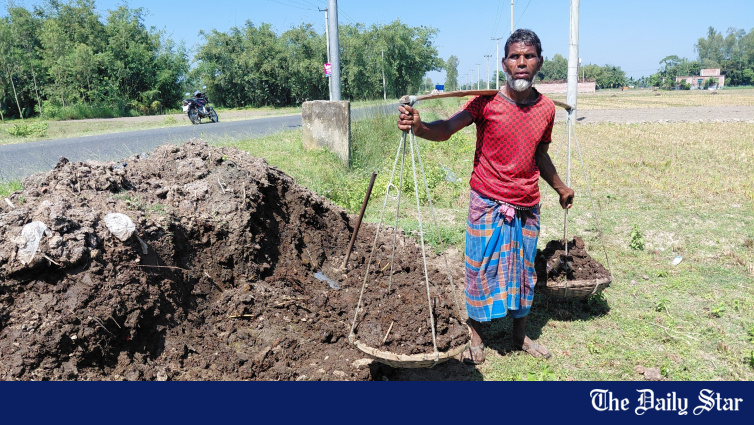
🌾 Farmers across the Rangpur region are increasingly making and using organic fertiliser, finding it a practical way to improve soil fertility while reducing their dependence on chemical fertiliser. The shift is particularly visible among farmers growing winter vegetables — some preparing organic fertiliser at home, others buying it from fellow farmers and local markets — and the growing demand has created a small but expanding market for those who produce and sell it.
👨🌾 Nagendra Nath Roy, 65, of Chandonerhat village in Rangpur's Gangachara upazila, relied mostly on chemical fertiliser for his 16 bighas last year; this year he has switched to mostly organic fertiliser prepared at home or bought from other farmers. The fertility of the soil has declined, which is why I have had to use organic fertiliser. Besides, chemical fertiliser is not available in the market in the quantities we need, he said. Mozammel Haque, 70, of Tajpur village in Lalmonirhat Sadar upazila, is using twice as much organic fertiliser this year as last, with a farmer's honesty about the trade-off: crop yields are lower when organic fertiliser is used alone, but it improves soil fertility — and since they cannot collect enough to meet their needs, farmers still rely considerably on chemical fertiliser.
📊 According to the Department of Agricultural Extension (DAE), farmers in Lalmonirhat, Kurigram, Rangpur, Gaibandha and Nilphamari are producing, using and selling organic fertiliser in growing numbers — with around 16,000 farmers across the five districts benefiting from commercial production, each capable of producing up to 10 tonnes a year, using part on their own fields and selling the surplus for additional income. Vermicompost — made with earthworms that break down cow dung and other decomposable matter — is the most common form, and it can be produced at home from readily available materials.
💰 From input cost to income stream
💹 For Azaharul Islam, 55, of Chawratari village in Lalmonirhat Sadar upazila, vermicompost has become a source of income as well as fertiliser. Producing for six years at around 10 tonnes annually, he uses about three tonnes himself and sells the rest — and demand has doubled this year. It costs Tk 7-8 to produce per kg. Last year, I sold it for Tk 14-15 per kg. This year, the price has risen by Tk 4-5, he said — unit economics that turn a waste stream into a margin. Maneshwar Barman, 65, of Mahipur village in Gangachara upazila, has used vermicompost for four years for potatoes and winter vegetables, noting that producing it does not require much money or labour; we just need to be careful during the process. All farmers should learn to produce it themselves, he added — buying costs more than twice what producing does.
⚙ The official position: complement, not replacement
🔬 The experts are careful not to oversell. Dr Abu Bakar Saiful Islam, additional director of the DAE in Rangpur, said chemical fertiliser quickly supplies essential nutrients, while organic fertiliser improves soil structure, water-holding capacity and long-term fertility — recommending about 60-70 kg of organic fertiliser per bigha alongside appropriately dosed chemical fertiliser to achieve expected yields. The department was working to increase local production, training and market access, he said, with crop-specific management, soil testing and balanced fertiliser use the keys to controlling costs while preserving soil fertility. Safinur Rahman, a soil scientist at the Rangpur regional office of the Soil Resource Development Institute, said several areas in northern Bangladesh suffer from low soil organic matter, acidity and nutrient imbalances: fertiliser must be applied according to soil test results and crop needs, and combined use of chemical and organic fertiliser can help maintain soil health and productivity.
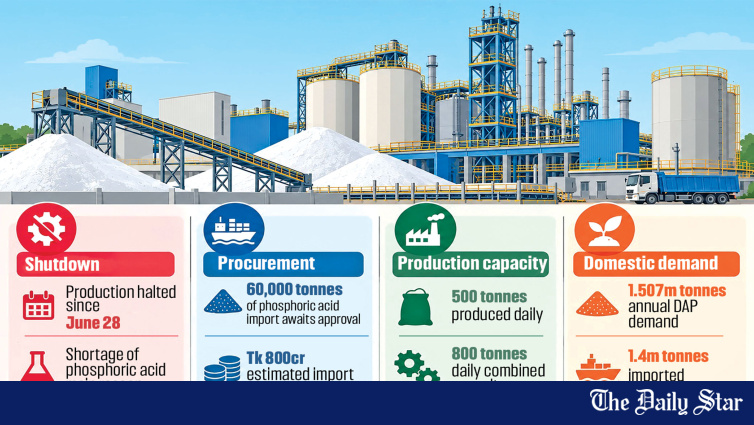
🗺 The movement arrives at a telling moment in the national fertiliser story. With the country's only DAP plant idle for months over a raw-material import bottleneck and global fertiliser prices rising on Middle East tensions, chemical fertiliser availability and affordability have become genuine farm-level constraints — the shortage Nagendra Nath Roy cited from his own village market. A farmer-driven practice that cuts import dependence by converting local waste into soil nutrition is, in effect, an informal import-substitution strategy built one compost pit at a time.
💡 The agronomic case compounds over time. Northern Bangladesh's soils are among the country's most intensively cultivated, and decades of chemical-only application have thinned organic matter — the very decline farmers describe in interviews. Organic matter is the soil's water bank, nutrient sponge and structure-builder; restoring it raises the efficiency of every kilogram of chemical fertiliser that follows, meaning the blended approach the DAE recommends both raises yields today and lowers the input bill tomorrow.
🔭 What would scale this from a five-district movement into a national habit is familiar groundwork: extension training on vermicomposting at the union level, soil-testing services that reach actual smallholders, modest credit for commercial producers like Azaharul Islam, and market information so sellers and buyers can find each other beyond the village. The Rangpur farmers have demonstrated the demand side — doubled, priced up, and employment-generating; the policy side now needs only to stop being the missing ingredient.
This news was originally published by The Daily Star. For the full original report, please visit: https://www.thedailystar.net/business/agriculture/news/rangpur-farmers-turn-organic-fertiliser-boost-soil-fertility-4306891
📬 Get Bangladesh Trade News in your inbox
Weekly digest of export industry news, policy updates, and market analysis.
📰 Related Stories