Bangladesh's Only DAP Fertiliser Plant Idle 4 Months on Raw Material Shortage
Government approval delays a $64.8 million phosphoric acid import as prices jump from $750 to $1,079 per tonne
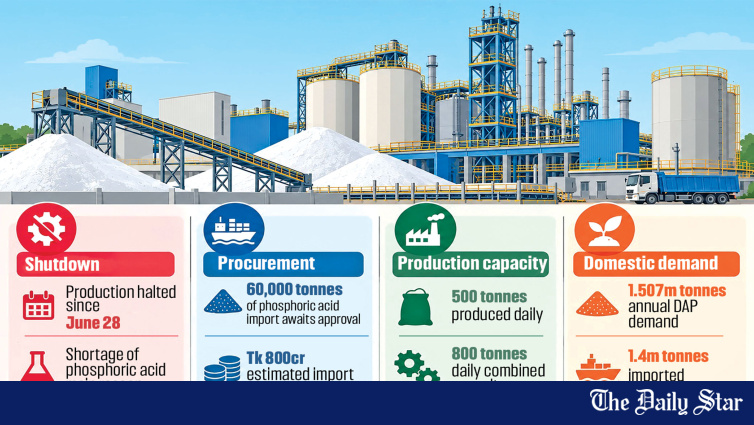
🌾 The country's only diammonium phosphate (DAP) fertiliser factory has been shut for nearly four months due to a shortage of phosphoric acid — a key raw material — with a government approval delay holding up fresh imports. The DAP Fertilizer Company Limited (DAPFCL), located in Anwara upazila of Chattogram, suspended production on June 28, and not a tonne of the nutrient has come off its lines since.
💰 The procurement saga behind the shutdown is now a case study in slow crisis response. The Bangladesh Chemical Industries Corporation (BCIC) floated a tender to procure 60,000 tonnes of phosphoric acid in three lots of 20,000 tonnes each, with the estimated cost at $64.8 million — around Tk 800 crore. The lowest bids for the three lots came in at $1,079, $1,087 and $1,071.90 per tonne, but the purchase is still awaiting government approval. Officials said phosphoric acid prices had risen since March amid tensions in the Middle East, a major market for the chemical; Bangladesh purchased the raw material at around $750 per tonne at the beginning of this year.
🏭 Mainul Haque, managing director of DAPFCL, told The Daily Star that the factory had set a production target of around 100,000 tonnes for the current fiscal year but had been unable to produce any fertiliser over the past four months. We have been sourcing ammonia from KAFCO and Chattogram Urea Fertilizer Company Limited (CUFL), but phosphoric acid depends on imports and is procured through tenders. BCIC conducts the tender process, and we do not know why it has yet to complete the import of the raw material, he said. Md Moniruzzaman, BCIC's director (commercial, production and research), confirmed the proposal to purchase 60,000 tonnes at the lowest bids had been forwarded through the Ministry of Industries and was awaiting government approval.
⚡ The fuel side of the equation is comparatively healthy: Moniruzzaman noted the government has been supplying gas to most fertiliser factories to keep production running, with CUFL, KAFCO, Shahjalal and Ghorashal all receiving gas, and Jamuna receiving it until Sunday. Factory officials added that DAPFCL had also remained shut for at least a month in April and May due to gas shortages — but the current shutdown is caused by raw material absence, and even after import approval is secured, it could take another one and a half to two months for production to resume.
📉 What the plant and the numbers mean
📏 The stakes are visible in the plant's profile. DAPFCL typically produces around 500 tonnes of fertiliser a day using imported phosphoric acid and ammonia supplied by KAFCO and CUFL, with two production units holding a combined capacity of 800 tonnes per day. In commercial operation since 2006 under BCIC, which operates under the Ministry of Industries, it was established to meet domestic demand for nitrogen- and phosphorus-based fertilisers. Yet Bangladesh still relies heavily on imports: annual demand for DAP stands at around 1.507 million tonnes, of which approximately 1.4 million tonnes are imported — the domestic plant covers barely a tenth.
🗺 The four-month shutdown therefore lands on a supply system already dominated by foreign purchases, at a time when world fertiliser prices have been rising on the same Middle East tensions driving the country's fuel import bill. Every month of domestic capacity idled means more DAP bought at spot prices, in dollars, under shipping timelines no farmer's season respects.
🗳 Fertiliser, seasons and food security
🌱 DAP is the phosphorus workhorse of Bangladeshi agriculture, applied at transplanting and sowing for rice, maize and vegetables; its timely availability at union-level dealerships directly shapes yields. Bangladesh's fertiliser distribution system works because imports are timed months ahead of crop seasons, so a mid-year raw-material failure translates into thinner domestic supply precisely when rabi and boro planning needs certainty. Officials report no immediate crisis in farmer-level availability — imports are covering the gap — but the margin between adequate and short is measured in weeks of shipping and thousands of dollars per day of price movement.
🧪 The approval bottleneck is the systemic lesson. A state-owned tender, competitively bid, price-vetted, forwarded through the proper ministry — and then parked at the approval stage for months while a factory sits idle — is a governance failure with a price tag now approaching Tk 800 crore plus the FX cost of replacing lost output with imports. Procurement rules exist to protect public money, but a process that cannot distinguish a routine raw-material buy from a corruption risk, in less time than a crop season, has traded one form of loss for a larger one.
🔭 The fastest meaningful fix is administrative: fast-track approval for the pending tender, contract the shipping immediately, and audit afterwards if needed. The strategic fix is longer-term — strategic raw-material reserves for the fertiliser industry, forward contracts to smooth phosphoric acid price spikes, and a standing expedited-procurement lane for agricultural inputs. With 1.5 million tonnes of annual demand and food inflation already a household burden, Bangladesh cannot afford to let its only DAP plant stay idle for want of a signature.
This news was originally published by The Daily Star. For the full original report, please visit: https://www.thedailystar.net/business/economy/news/countrys-only-dap-fertiliser-plant-remains-shut-4-months-4307311
📬 Get Bangladesh Trade News in your inbox
Weekly digest of export industry news, policy updates, and market analysis.
📰 Related Stories