Bangladesh RMG Net Earnings Rebound 10% in April-June 2026 Amid Energy Cost Pressures
BB quarterly review shows 10% net export recovery despite looming energy challenges
Sakhawat Prince
Bangladesh's net readymade garment (RMG) export earnings rebounded strongly in the fourth quarter of FY26, rising 10.38% quarter-on-quarter to $6.23 billion in April–June, driven by a sharp recovery in knitwear shipments, according to Bangladesh Bank's latest Quarterly Review of Readymade Garments. The Q4 net figure was up from $5.64 billion in January–March, and rose 20% year-on-year from $5.17 billion in the same quarter of FY25.
Gross RMG export earnings also increased 9.79% quarter-on-quarter to $10.10 billion in the fourth quarter, up from $9.20 billion in Q3. The figure was 10.78% higher than a year earlier. The recovery was overwhelmingly led by knitwear: knitwear exports rose 19.21% quarter-on-quarter to $5.50 billion from $4.61 billion, while woven garment exports increased only 0.31% to $4.60 billion from $4.58 billion — essentially flat. The strong performance in knitwear helped the sector recover from a relatively weak third quarter that had been clouded by gas supply disruptions and softer order books from European buyers.
The broader merchandise export picture mirrored the RMG recovery. Bangladesh's merchandise exports rebounded sharply in June, rising nearly 26% year-on-year to $4.20 billion. However, the late surge was insufficient to prevent a slight decline in overall export earnings for the full fiscal year. Exporters said the sharp June growth was partly attributable to a low base effect, as exports had been weaker in June last year because of extended Eid-ul-Adha holidays, while most Eid holidays fell in May this year.
Despite the quarterly recovery, exporters remain concerned about energy and power shortages, which they fear could weigh on apparel shipments in the coming months. Mahmud Hasan Khan Babu, president of the Bangladesh Garment Manufacturers and Exporters Association (BGMEA), said that besides energy shortages, high interest rates and weaknesses in logistics, Bangladesh will face further challenges because of the free trade agreements between the European Union and India and Vietnam. "However, if the domestic challenges can be addressed, the country's exports will perform better in the new fiscal year than in the previous one," he added.
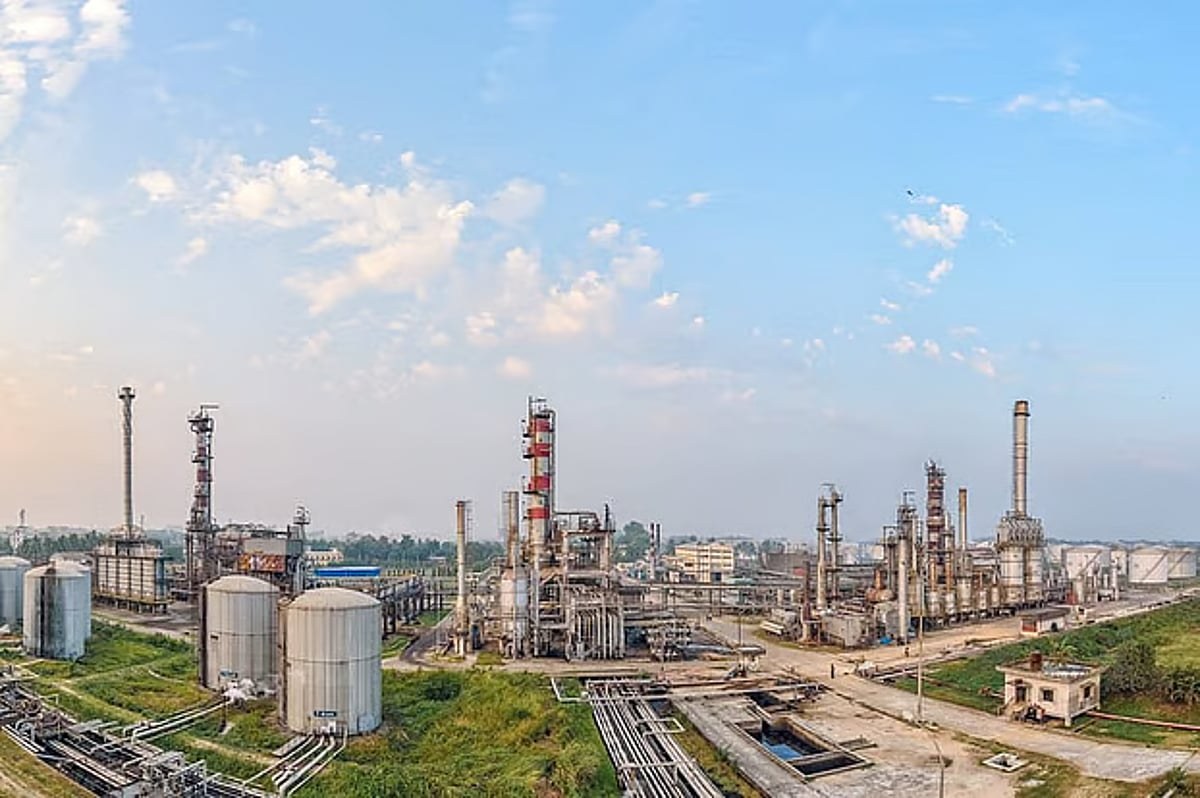
Gas shortages have already severely disrupted textile production, industry insiders said, despite recent government assurances of improved supply. Showkat Aziz Russell, president of the Bangladesh Textile Mills Association (BTMA), said more than 900 of its over 1,800 member mills are shut due to gas supply disruptions. "Not only textile mills, but also gas-dependent steel, paper, particle board and ceramic industries are facing severe production disruptions due to the prolonged gas crisis," he said — a striking figure that suggests roughly half of the country's primary textile capacity is currently offline.
On the value-addition front, the Q4 data showed a modest improvement. The RMG sector imported $3.87 billion worth of raw materials in the fourth quarter, including cotton, synthetic and viscose fibres, yarn, fabrics and garment accessories. These imports accounted for 38.32% of total RMG export earnings, resulting in a value addition of 61.68% — slightly higher than the 61.35% recorded in the previous quarter. The incremental gain in domestic value addition reflects ongoing substitution of imported fabrics with locally produced knit textiles, though the woven segment remains heavily dependent on imported fabrics, particularly from China.
For the full fiscal year, however, the sector's performance remained subdued. Total RMG export earnings reached $38.97 billion in FY26, up only 0.96% from the previous fiscal year — a marked deceleration from the double-digit growth rates the sector had posted in the years immediately following the pandemic. The sector contributed 7.82% to Bangladesh's nominal GDP during FY26, highlighting its continued importance to the economy and external trade.
Geographically, the United States, Germany, the United Kingdom, Spain, France, the Netherlands, Italy, Canada and Belgium remained the major destinations for Bangladeshi apparel. Together they accounted for $7.24 billion, or 71.69%, of total RMG export earnings in the fourth quarter. The concentration in a narrow band of mature markets underscores both the sector's established brand relationships in the West and the limited progress made in diversifying into newer markets in Asia, Latin America or the Gulf.
The government and Bangladesh Bank have introduced several measures to support the sector amid rising production costs and global uncertainty. These include the Pre-shipment Credit Refinancing Scheme, the Tk 50 billion revolving Green Transformation Fund, the Tk 100 billion Export Facilitation Pre-finance Fund, and the Export Development Fund. Together, these facilities are intended to ease working capital pressure on exporters facing higher interest rates and longer buyer payment cycles.
Bangladesh Bank said the near-term outlook for apparel exports remains moderately positive, supported by potential recovery in demand and improvements in compliance. The central bank's cautious framing — emphasising "potential" recovery and "improvements" in compliance rather than firm forecasts — signals that the Q4 rebound is being treated as encouraging but not yet decisive. With FY27 set to begin under the shadow of persistent gas shortages, tightening monetary policy and intensifying competition from Vietnam and India in the EU market following their respective trade agreements, the durability of the Q4 recovery will be tested early in the new fiscal year.
This news was originally published by The Business Standard. For the full original report, please visit: https://www.tbsnews.net/economy/rmg/rmg-net-earnings-rebound-10-april-june-amid-looming-energy-cost-pressures-1525126
Related on BangladeshExport
📬 Get Bangladesh Trade News in your inbox
Weekly digest of export industry news, policy updates, and market analysis.
📰 Related Stories