Garment Accessories Makers Seek BB Review Of Back-To-Back LC Procedures
Chattogram Garments Accessories Association submits 7-point proposal to BB Governor seeking direct document submission to banks and removal of mandatory party acceptance
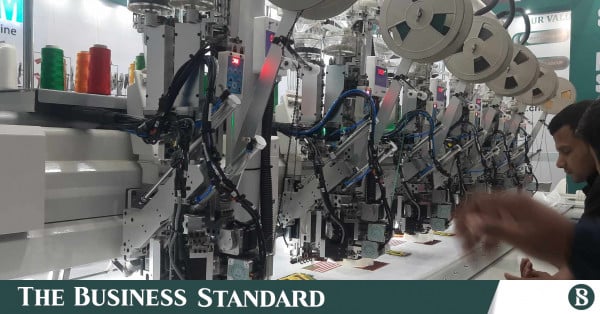
👕 The Chattogram Garments Accessories Association (CGAA) has urged Bangladesh Bank to simplify the documentation and payment process for back-to-back letters of credit (LCs), citing prolonged delays that squeeze the working capital of deemed exporters and create systemic inefficiencies in the ready-made garment (RMG) supply chain. The intervention highlights a long-overlooked friction point in Bangladesh's apparel export ecosystem — the administrative burden placed on accessory manufacturers who supply packaging and trim materials to RMG exporters.
📊 In a letter to the central bank governor on 9 September, the association said manufacturers of garment accessories and packaging materials face prolonged delays because delivery challans, commercial invoices and other LC documents often have to pass through garment factories before reaching banks. The letter was signed by Jamil Ahmed, acting president of CGAA and managing director of Britannia Label BD Ltd.
📜 The Document Movement Problem
The association said that even when deemed exporters prepare all LC-required documents, they cannot always submit them directly to the concerned bank. Instead, documents are first sent to the garment factory for an authorised person's signature or "party acceptance", after which the factory submits them to the bank. The bank may then return them to the factory for another approval or acceptance before payment or maturity is processed.
The cycle — deemed exporter to garment factory to bank, then back to factory and back to bank — creates multiple approval touchpoints, each of which can take days or weeks depending on the factory's internal processes. For deemed exporters who operate on thin margins and depend on timely LC realisation to fund their next production cycle, the delays create a working capital squeeze that constrains capacity utilisation and growth.
CGAA said the repeated movement of documents between deemed exporters, garment factories and banks causes processing delays, duplicate verification and approval, delayed payment or maturity, blocked working capital and cash-flow pressure. It also raises banking and administrative costs and can result in discrepancy charges for procedural issues beyond suppliers' control.
- 📜 CGAA letter to BB Governor: September 9, 2026
- 👥 Acting President: Jamil Ahmed (also MD Britannia Label BD Ltd)
- 📊 Issues cited: Document movement delays, duplicate approvals, blocked working capital, discrepancy charges
- 🏛 Reference framework: ICC UCP 600 (Uniform Customs and Practice for Documentary Credits)
- 📊 Proposal count: 7-point reform agenda
🏛 UCP 600 Compliance Questioned
The association has sought a policy review of whether the practice complies with the International Chamber of Commerce's UCP 600, the internationally recognised rules governing documentary credits. UCP 600 — the Uniform Customs and Practice for Documentary Credits — is the global standard for LC transactions, providing rules for document examination, discrepancy handling and payment obligations. CGAA's reference to UCP 600 signals a sophisticated regulatory argument: Bangladesh's current back-to-back LC procedures for deemed exporters may be adding local requirements that go beyond international standards.
CGAA argued that required documents should primarily be determined by the relevant LC. Where documents are properly prepared and compliant, additional post-delivery party acceptance or repeated approval should not be mandatory unless specifically required by the LC, law or Bangladesh Bank directives. The argument effectively challenges the prevailing practice of garment factories acting as intermediaries between deemed exporters and banks — a practice that has no clear basis in UCP 600.
💰 CGAA's Seven-Point Reform Proposal
CGAA asked Bangladesh Bank to review the practice and issue clear guidelines for commercial banks. Its seven-point proposal includes allowing deemed exporters to submit documents directly to banks; removing mandatory party acceptance unless explicitly required by the LC; requiring banks to examine documents strictly under LC terms and, where applicable, UCP 600; and notifying suppliers of discrepancies within prescribed rules and timeframes.
It also called for an end to repeated submission of documents to garment factories solely for internal approval, no discrepancy fees for bank processing delays or issues beyond suppliers' control, payment or maturity within the prescribed timeframe for compliant documents, and a uniform, simplified, digital and time-bound SOP for back-to-back LCs involving 100% deemed exporters.
- ✅ Allow deemed exporters to submit documents directly to banks
- ✅ Remove mandatory party acceptance unless LC explicitly requires it
- ✅ Banks to examine documents strictly under LC terms and UCP 600
- ✅ Notify suppliers of discrepancies within prescribed timeframes
- ✅ End repeated document submission to garment factories for internal approval
- ✅ No discrepancy fees for bank processing delays or issues beyond suppliers' control
- ✅ Uniform, simplified, digital and time-bound SOP for back-to-back LCs
🤝 Call For Multi-Stakeholder Discussion
CGAA said a practical solution could be developed through discussions among Bangladesh Bank, commercial banks, garment manufacturers and deemed exporters. It requested an open discussion to identify the root causes and establish a transparent, faster procedure. The multi-stakeholder approach is significant — it acknowledges that any reform of back-to-back LC procedures must balance the interests of banks (which bear credit risk), garment factories (which depend on accessory supply for their export commitments) and deemed exporters (which need timely payment to sustain operations).
The association said reducing unnecessary document movement, duplicate approvals, payment delays and unjustified charges would help deemed exporters manage working capital and cash flow more effectively while improving export-sector efficiency. The broader export efficiency argument is critical — every day of delay in LC realisation for an accessory manufacturer translates into working capital that cannot be deployed for the next order, creating a cascading drag on the entire RMG supply chain.
🌏 Strategic Context For Bangladesh's RMG Sector
For Bangladesh's RMG sector — which accounts for over 84% of merchandise exports and depends on a vast ecosystem of backward linkage industries including accessories, packaging, labels, threads and trims — the back-to-back LC friction has systemic implications. Accessory manufacturers are typically smaller than the garment factories they supply, with thinner working capital buffers and less bargaining power in payment negotiations. The current LC procedures amplify this power asymmetry by giving garment factories effective control over the timing of deemed exporters' LC realisation.
The procedural reform CGAA is seeking would not change the underlying commercial relationship between accessory suppliers and garment factories — but it would remove a structural friction point that has constrained the growth and competitiveness of Bangladesh's accessory manufacturing ecosystem. A more efficient back-to-back LC procedure would enable accessory manufacturers to operate at higher capacity utilisation, reinvest in technology upgrades and potentially scale exports directly to international buyers — diversifying Bangladesh's RMG value chain beyond the assembly-only model.
💵 What Comes Next
The coming weeks will reveal whether Bangladesh Bank takes up CGAA's proposal and convenes the multi-stakeholder discussion the association has requested. The central bank's recent track record on procedural reform — including the introduction of KPI frameworks for bank CEOs and the easing of foreign borrowing rules for BIDA-registered firms — suggests a willingness to address structural inefficiencies in the financial system.
If BB implements the seven-point proposal, the impact would extend beyond accessory manufacturers to the broader RMG supply chain. Faster LC realisation, reduced document movement and predictable payment timelines would improve the cash conversion cycle for hundreds of small and medium deemed exporters — freeing up working capital that could be reinvested in capacity expansion, technology adoption and product diversification. For Bangladesh's broader export competitiveness, particularly amid intensifying competition from Vietnam, Cambodia and India, every procedural efficiency gain contributes to maintaining the country's position in global apparel value chains.
This news was originally published by The Business Standard. For the full original report, please visit: https://www.tbsnews.net/economy/rmg/garment-accessories-makers-seek-bangladesh-bank-review-back-back-lc-procedures-1541801
Related on BangladeshExport
📬 Get Bangladesh Trade News in your inbox
Weekly digest of export industry news, policy updates, and market analysis.
📰 Related Stories