Bangladesh Withdraws Bond Facility for Yarn Import to Boost Local Textile Mills
NBR order requires yarn importers to furnish bank guarantee for 10-30 count yarn imports, which account for 60%+ of total yarn imports. BTMA welcomes move; BGMEA and BKMEA object. Could shift Tk30,000cr ($2.5B) annual yarn imports to local mills.
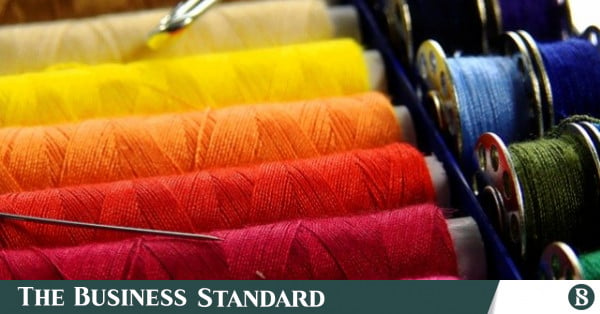
🧵 Dhaka, Bangladesh — The Bangladesh government has withdrawn the direct duty-free bond facility for yarn import of 10-30 counts — a category that accounts for more than 60% of Bangladesh’s total yarn imports — in a move that textile millers have hailed but garment exporters have strongly protested.
📊 According to an NBR order issued on Monday (7 September), yarn importers will have to furnish a bank guarantee equivalent to the import value of the yarn, along with a certificate from the relevant trade association, instead of receiving the direct duty-free facility under the bonded warehouse system for yarn of 10 to 30 counts.
📊 Cotton yarn of 10-30 counts is mainly used by knitwear manufacturers and accounts for more than 60% of Bangladesh’s total yarn imports.
🏛 Inter-Ministerial Decision
💬 “An inter-ministerial government decision led to the issuance of this order,” a senior NBR official told The Business Standard on condition of anonymity. “The move will ensure greater transparency and accountability in yarn imports and help reduce irregularities,” he said.
📊 BTMA Welcomes Move
📊 Textile mill owners have welcomed the move, saying it does not mean exporters will lose duty-free access to raw materials. Rather, the new system will strengthen accountability.
📊 Importers will be able to bring in yarn against a bank guarantee, which will be released upon proof that it was used to make products for export, they said, adding that the move will curb irregularities and help local mills compete more effectively.
⚠ BGMEA and BKMEA Object
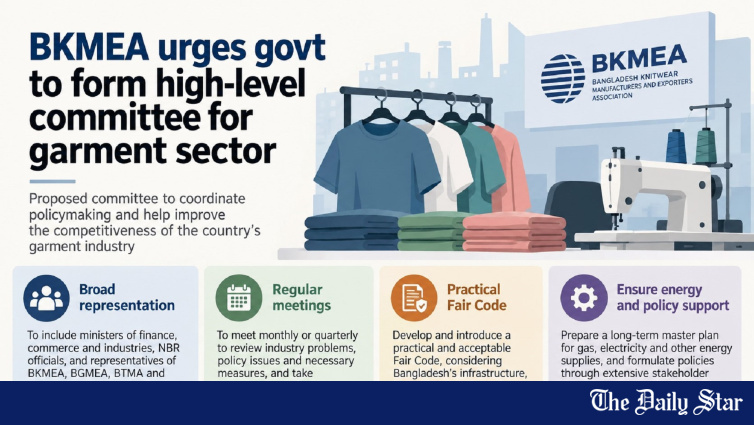
📊 However, the two leading apparel industry associations — the BGMEA and the BKMEA — have objected to the decision, saying the meeting cited as the basis for the order did not discuss or approve such a measure.
💰 Tk 30,000 Crore Annual Yarn Imports from India
📊 According to the Bangladesh Textile Mills Association (BTMA), Bangladesh imported around Tk 30,000 crore ($2.5 billion) worth of yarn from the global market in fiscal 2025-26, most of it from India.
💬 “Following this decision, a large portion of the Tk 30,000 crore worth of yarn imported annually could instead be supplied by local spinning mills. This will increase domestic value addition,” a senior BTMA official told TBS on condition of anonymity.
📊 Bonded Warehouse System and Misuse Allegations
📊 Under the bonded warehouse system, export-oriented industries can import raw materials duty-free for use in making goods for export. Duties must be paid if those goods are sold in the domestic market.
📊 Industry sources allege that some exporters have been misusing the facility by:
- 💰 Importing yarn and fabric duty-free
- 💰 Selling them on the local market
- 📊 Using approved wastage allowance of up to 32% to divert material
- 📊 Using buyer-nominated or free-of-cost import provisions
📊 As a result, manufacturers are importing large quantities instead of sourcing yarn from local mills, reducing domestic value addition.
🛢 Gas Crisis Compounds Industry Challenges
📊 The sector is also facing a fresh gas crisis, which has pushed up production costs. At the same time, neighbouring India, Bangladesh’s largest source of imported yarn, has been providing various forms of support to its textile mill owners.
📊 These pressures have left Bangladesh’s textile industry, backed by around $22 billion in investment, increasingly vulnerable.
📊 BTMA Statement: Turning Point for Spinning Industry
📊 The BTMA welcomed the NBR’s move, describing it as a potential turning point for the struggling spinning and textile industries. It said the measure could:
- 📈 Increase local value addition
- 🚫 Curb misuse of bonded facilities
- 📈 Shift demand towards locally produced yarn
- 📈 Allow idle and partially operating mills to increase production
- 👥 Create employment
- 💰 Help banks recover stalled investments
- 💰 Reduce NPLs in banking sector
- 💰 Address unrealised export proceeds (~$7 billion estimated)
💬 Razeeb Haider: LDC Graduation Preparation
💬 “It is a timely decision that will make the local industry more competitive,” said Razeeb Haider, Managing Director of Outpace Spinning and a former BTMA director.
💬 He said withdrawing the facility would boost demand for locally produced yarn and increase domestic value addition across the textile and readymade garment supply chain. “It will help Bangladesh prepare for LDC graduation, which mandates 40%-60% value addition and two-stage transformation,” he told The Business Standard.
💬 Economist: Competitiveness Boost
💬 Abdur Razzaque, Chairman of Research and Policy Integration for Development (RAPID), said the textile industry is facing a severe crisis due to various factors, including the gas shortage.
💬 “This decision will help improve its competitiveness,” he said. “The capacity of the textile sector must be strengthened if Bangladesh is to remain competitive in the long term.”
🌏 Strategic Context: LDC Graduation and Value Addition
📊 For Bangladesh’s textile sector, the bond facility withdrawal comes at a critical moment ahead of LDC graduation:
- 📊 LDC graduation — mandates 40-60% value addition
- 📊 Two-stage transformation — required for preferential market access
- 💰 $22 billion investment — in textile sector at risk
- 💰 $2.5 billion annual yarn imports — potential shift to domestic
- 💰 $7 billion unrealised export proceeds — needs addressing
- 📋 Gas crisis — increasing production costs
- 🌏 India support — competitor providing industry support
📋 Implications for BGMEA and BKMEA
📊 For Bangladesh’s garment exporters (BGMEA and BKMEA members), the bond facility withdrawal creates several concerns:
- 💰 Working capital pressure — bank guarantee ties up capital
- 📊 Documentation burden — certificate from trade association required
- 📊 Local sourcing constraint — potential supply chain disruption
- 📊 Cost increase — if local yarn more expensive than imported
- 📊 Quality concerns — local yarn quality vs Indian imports
✅ For Bangladesh’s broader textile and apparel value chain, the bond facility withdrawal represents a significant policy shift that could reshape the dynamics between local textile mills and garment exporters. While the move supports the long-term goal of increasing domestic value addition ahead of LDC graduation, it also creates short-term challenges for garment exporters who must now navigate bank guarantee requirements and potential shifts in sourcing patterns.
🌏 For Bangladesh’s broader economic strategy, the decision reflects a growing recognition that export competitiveness cannot rely solely on cheap labour and duty-free imported inputs — it requires a strong domestic supply chain that captures more value within the country. As Bangladesh prepares for LDC graduation and the potential loss of preferential market access, strengthening the domestic textile sector through measures like the bond facility withdrawal could be critical to maintaining export competitiveness in the post-LDC era.
This news was originally published by The Business Standard. For the full original report, please visit: https://www.tbsnews.net/economy/industry/textile-millers-hail-withdrawal-duty-free-bonded-import-facility-10-30-count-yarn
Related on BangladeshExport
📬 Get Bangladesh Trade News in your inbox
Weekly digest of export industry news, policy updates, and market analysis.
📰 Related Stories