US Economy Loses 23,000 Jobs in July: Labor Market Weakness Poses Challenge for Trump, Fed
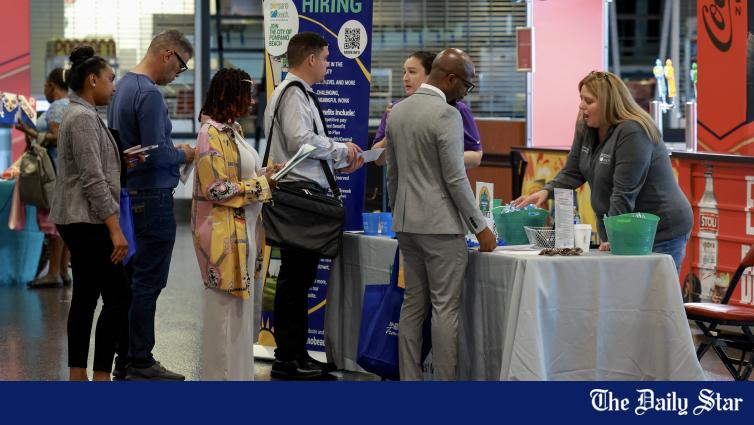
August 8, 2026 — The world's largest economy lost 23,000 jobs in July, data published by the US Bureau of Labor Statistics showed, signalling potential labor market weakness after months of steady growth — a development that poses challenges for both the Trump administration ahead of November's midterm elections and the Federal Reserve's interest rate deliberations.
📊 The Jobs Report in Numbers
The job losses came as a shock to markets. Economists polled by Dow Jones Newswires and the Wall Street Journal had anticipated 83,000 new jobs would be added in July — a swing of more than 100,000 from expectations. The BLS also revised down job growth in the previous two months by 103,000, showing the labor market to be less robust than previously reported. Based on the new figures, job growth hit a peak in March before declining in the next three months and entering negative territory in July.
- 📉 July jobs change: −23,000 (vs +83,000 expected)
- 📉 Previous months revised down: −103,000
- 📈 Unemployment rate: 4.1% (down from previous month)
- 📉 Labor force participation: Lowest since pandemic height
- 📈 Average hourly earnings: +3.2% YoY (below inflation)
- 📉 Retail trade jobs lost: −19,000
- 📈 Health care jobs added: +22,000
🏛️ Political Implications: Midterm Elections Loom
Republicans face a stiff test in November's midterm elections, with the state of the economy a key issue for Democrats who are seeking to wrest back control of both houses of Congress. Since taking office for his second term, Trump has unleashed a spate of policies aimed at reviving domestic manufacturing and curbing surging inflation. The negative jobs report gives Democrats fresh ammunition to question whether those policies are working.
White House economic advisor Kevin Hassett dismissed Friday's data as being based on a survey that is "very, very noisy." But the revision of previous months downward by 103,000 jobs makes it harder to dismiss the report as a one-month anomaly — the trend over the last four months has been clearly downward.
💰 Federal Reserve's Dual Challenge
Friday's data will also pose a question to the US Federal Reserve, which has been signalling it was preparing for a rate hike later this year. Policymakers at the Fed watch the labor market closely, as their dual mandate requires them to deliver maximum employment while ensuring inflation remains at a long-term target of two percent. The Fed has missed that target for five years, as inflation has battered US households since the pandemic.
Last month, the central bank held interest rates steady, but three regional Fed presidents dissented in favor of a rate hike. The weak jobs report complicates that calculus — raising rates to fight inflation becomes harder to justify when the labor market is already showing signs of weakness.
💬 Analyst Reactions
"This morning's report is a game changer in the sense that all of the recent focus has been on inflation and this report highlights the risks that are embedded in the labor market as well," said Chris Zaccarelli of Northlight Asset Management.
Kathy Bostjancic, chief economist at Nationwide, said the Fed would not be swayed by a single job report from its inflation focus. "The soft labor market report should lower market expectations for a Fed rate hike in the coming months, but the inflation reports will be the key focus for Fed officials," she said.
Diane Swonk, chief economist at KPMG, said persistent inflation and a potentially weak labor market could put the Fed in a tough spot when it meets to set rates next month. "The worst combination for the Fed is if inflation remains sticky while the labor market weakens," she said. "That would not take rate hikes off the table; it would make them more painful."
📈 Sector Breakdown: Where Jobs Were Lost and Gained
The bulk of the loss in July was attributed to the local government education sector, which sees thousands of teachers drop off payrolls in the summer months. Still, analysts had expected overall job growth, making the net loss more troubling than a seasonal education decline alone would suggest.
- 📉 Retail trade: −19,000 jobs (warehouse retailers like Costco, Sam's Club and general merchandise stores declining)
- 📉 Financial activities: Continuing downward trend, −121,000 jobs from May 2025 peak
- 📈 Health care: +22,000 jobs (slower than average but still positive — aging population driving demand)
- 📉 Local government education: Major contributor to July losses (seasonal)
💸 Wages Lagging Inflation
Average hourly earnings increased by 3.2 percent year-on-year, lagging inflation and therefore leaving workers with less income in real terms. This wage stagnation — combined with job losses — creates a compounding effect on consumer spending, which accounts for roughly 70 percent of US GDP. If consumers tighten their belts, the economic slowdown could accelerate.
🌏 Unemployment Rate: Why It Fell Despite Job Losses
The unemployment rate ticked down to 4.1 percent, likely a result of falling labor supply as the US economy grapples with an aging population and lower net migration. The unemployment rate has remained relatively steady through choppiness in the labor market, due to the overall drop in labor supply. Friday's figures showed the labor force participation rate — a key metric — had dropped to its lowest level since the height of pandemic-related closures.
This paradox — falling unemployment alongside job losses — highlights a structural challenge: the US labor market is shrinking not because workers are finding jobs, but because workers are leaving the labor force entirely. Whether due to retirement, discouragement, or reduced immigration, the shrinking participation rate masks underlying weakness that the headline unemployment number does not capture.
🌏 Implications for Bangladesh and Global Trade
For Bangladesh, the US labor market weakness carries significant implications. The United States is Bangladesh's largest single-country export market, with RMG exports reaching $4.01 billion in the first half of 2026 (despite a 5.75 percent year-on-year decline). If US consumer spending weakens due to job losses and wage stagnation, demand for imported apparel — including Bangladeshi garments — could soften further, compounding the challenges already facing the RMG sector from the gas crisis and weak Christmas shipments.
Additionally, the Fed's interest rate dilemma has direct implications for Bangladesh's currency and capital flows. If the Fed holds rates steady (or cuts) in response to labor market weakness, the dollar may weaken — providing some relief to the taka-dollar exchange rate. If the Fed raises rates despite the weak jobs data (due to sticky inflation), the dollar strengthens — putting additional pressure on emerging market currencies including the taka and increasing the cost of Bangladesh's dollar-denominated imports.
✅ What to Watch
Three indicators will determine whether July's job losses are a one-month blip or the start of a broader downturn: (i) whether the August jobs report confirms the negative trend or shows a rebound; (ii) whether the Fed raises rates at its next meeting despite the weak labor data; and (iii) whether US consumer spending data — particularly retail sales — begins to reflect the wage stagnation and job losses. For global markets and Bangladesh's export economy, the US labor market remains the single most important leading indicator to monitor.
This news was originally published by The Daily Star. For the full original report, please visit: https://www.thedailystar.net/business/news/us-unexpectedly-loses-jobs-blow-trump-ahead-midterms-4242696
📬 Get Bangladesh Trade News in your inbox
Weekly digest of export industry news, policy updates, and market analysis.
📰 Related Stories