Death of the Consumer Conglomerate? Unilever Bets Less Is More in Global Strategy Shift
Unilever sheds food assets to focus on beauty, personal care as investors favour focused companies
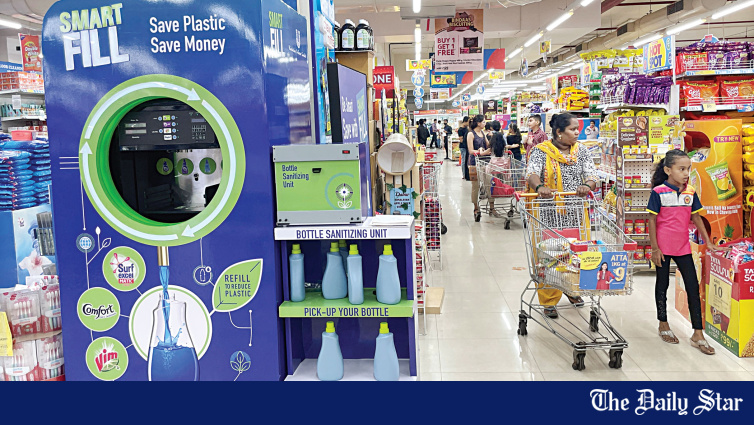
📊 Unilever is betting that shedding food assets and focusing on beauty, personal care, and home products will close a valuation gap with more focused rivals. The challenge is convincing investors that a simpler company can deliver higher returns, reported The Daily Star on August 26, 2026.
💰 Valuation Gap Drives Restructuring
The maker of Dove soap, Axe deodorant, and Cif cleaning products trades at 11.5 times enterprise value to core earnings, according to LSEG data. This compares unfavourably with 14.8 for Procter & Gamble, 17.5 for L'Oreal, and 22.7 for Coca-Cola. These multiples suggest investors place a premium on more focused consumer goods companies.
- 📊 Unilever EV/EBITDA: 11.5x
- 📊 Procter & Gamble: 14.8x
- 📊 L'Oreal: 17.5x
- 📊 Coca-Cola: 22.7x
📝 Food Business Merger
Unilever's deal in March 2026 to merge its food business with US spice maker McCormick will leave the British group with an almost 10% stake in the combined company, and its shareholders with a roughly 55% stake. The transaction reduces Unilever's exposure to a relatively high-margin business, increasing pressure on management to show that faster-growing beauty, personal care, and home products can make up the difference.
👥 Investor Concerns
Investors have two main concerns about the strategy shift:
- ⚠ Reduced exposure to high-margin food business
- 📈 Need to prove beauty/personal care can deliver higher growth
- 💰 Risk of "false dawns" from corporate turnarounds
- 📅 Need 3-4 quarters of strong volume growth to win over doubters
"Until you show me the evidence that you're turning this around, you're sitting on a very low multiple," said Dan Hanbury, a portfolio manager at Ninety One, a major investor in consumer goods companies.
🏛 End of the Conglomerate Model
Big industrial companies from General Electric to Siemens have spent years simplifying their structures to eliminate what investors call a "conglomerate discount" — a penalty applied to companies whose complexity is seen as weighing on efficiency and growth. This thinking has increasingly spread to consumer goods companies.
Where diversification was once seen as a strength that could cushion changes in consumer tastes, investors now increasingly favour category leaders that can focus investment, innovation, and marketing on a narrower set of products.
👕 Impact on Bangladesh Market
Unilever Bangladesh is one of the country's largest consumer goods companies, with products spanning from personal care to food items. The strategic pivot at the global level could influence the company's approach to the Bangladesh market, potentially leading to portfolio rationalisation and increased focus on core categories.
- 🌐 Unilever Bangladesh: Major FMCG player
- 👕 Products: Personal care, food, home care
- 📊 Possible portfolio rationalisation in Bangladesh
- 💰 Focus on high-growth, high-margin categories
🚀 CEO Fernando Fernandez Strategy
Under CEO Fernando Fernandez, Unilever has accelerated its retreat from food. The company spun off its ice cream business and struck a roughly $65 billion deal to combine its food division with McCormick. The issue is not that food is unprofitable — the business has historically generated attractive margins — but growth has lagged Unilever's beauty and personal care operations.
🌏 Broader Industry Trend
Unilever's shift is part of a broader trend in the FMCG sector where companies are spinning off or divesting non-core businesses to focus on categories where they have competitive advantages. This trend is reshaping the consumer goods landscape globally and in emerging markets like Bangladesh, where local and regional brands may capture market share in categories that global players deprioritise.
- 🌏 Global trend: FMCG companies focusing on core categories
- 👕 Spin-offs and divestitures accelerating
- 📊 Opportunities for local brands in Bangladesh
- 💰 Investor preference for focused companies
📊 Implications for Bangladesh Consumer Market
For Bangladesh's growing consumer market, Unilever's strategy shift could create opportunities for local and regional brands to capture market share in categories that global players may deprioritise. The FMCG sector in Bangladesh has been growing rapidly, driven by rising middle-class incomes and increasing urbanisation.
📊 Unilever's strategic pivot represents a fundamental shift in the consumer goods industry. For Bangladesh, where Unilever has a dominant market presence, this could reshape the competitive landscape and create opportunities for emerging local brands.
This news was originally published by The Daily Star. For the full original report, please visit: https://www.thedailystar.net/business/economy/news/death-the-consumer-conglomerate-unilever-bets-less-more-4256896
📬 Get Bangladesh Trade News in your inbox
Weekly digest of export industry news, policy updates, and market analysis.
📰 Related Stories