Oil Jumps More Than 2% After US Attack on Iran's Larak Island
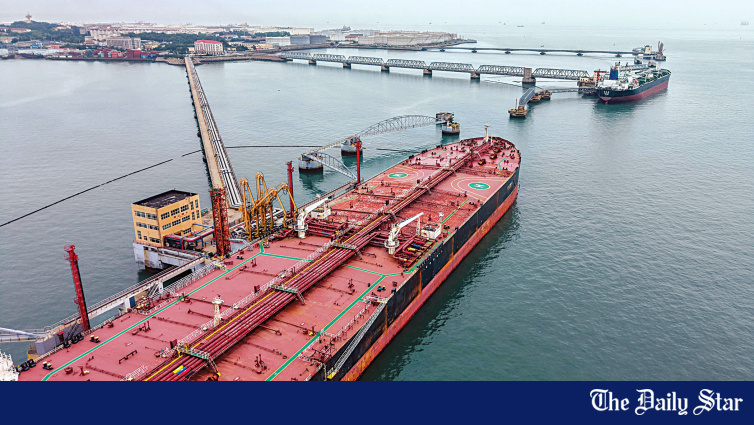
Reuters, Singapore — Oil prices were trading more than 2 percent higher on Monday after the US attacked an Iranian island in the Strait of Hormuz and drew retaliation from Tehran, as conflict in the Middle East extended into its sixth month — a geopolitical escalation that has direct implications for Bangladesh's energy import costs and broader external sector stability.
Brent crude futures climbed $2.51, or 2.85 percent, to $90.61 a barrel as of 0241 GMT, while US West Texas Intermediate crude was at $85.53, up $2.13, or 2.55 percent — marking a renewed surge in oil prices as the Middle East conflict entered a new escalation phase.
🇺🇸 US Strikes on Iran's Larak Island
US forces struck two launchers on Iran's Larak island in the Hormuz strait on Sunday — the first known American strikes on the Gulf nation since late July. In response, Iran attacked two US air bases in Jordan, Iranian media reported on Monday citing Iran's Revolutionary Guards.
"Looks like we are in another escalation phase. How long that lasts is impossible to determine. Could be days, could be weeks," IG market analyst Tony Sycamore said.
📊 Oil Price Movement
- 💰 Brent crude: $90.61 per barrel (up $2.51, +2.85%)
- 💰 WTI crude: $85.53 per barrel (up $2.13, +2.55%)
- 📊 August month performance: set to post small declines after falling 4% last week
- 📊 Last week: first weekly decline in three weeks
- 📊 Technical resistance: WTI $85.80-$85.90 (breakout could trigger further gains)
Technical charts showed that if the conflict escalated and pushed WTI above resistance at $85.80 to $85.90 a barrel, it would open the way for further gains, initially to last week's $87.69 high followed by July's $93.50 high, Sycamore said.
🚢 Strait of Hormuz: A Fifth of World Oil
Negotiations to end the conflict are at an impasse while mediators work to reopen the Strait of Hormuz, through which a fifth of the world's oil flowed before the war began at the end of February. The strategic significance of the Hormuz strait cannot be overstated:
- 🚢 20 percent of global oil flow transits through Hormuz
- 🚢 Vessel transits: dropped to 5 per day over the weekend (from typical 30+)
- 🚢 UKMTO reported: tanker struck by projectile on Saturday while inbound
- 🚢 Shipping caution: companies wary of attacks on ships
🇺🇸 US Sanctions Strategy on Iran
US Treasury Secretary Scott Bessent told Reuters on Sunday that the US is likely to issue new secondary sanctions weekly on Iran, with the aim of cutting the Islamic republic off entirely from the dollar-based financial system. The weekly sanctions cadence represents an escalation in the US economic pressure campaign on Tehran — with implications for any country or company engaged in Iran-related trade.
💰 Implications for Bangladesh
The Middle East escalation has direct implications for Bangladesh's energy import costs and broader macroeconomic stability:
- 💰 FY26 petroleum import bill: $10.63 billion (up 107% YoY) — already elevated
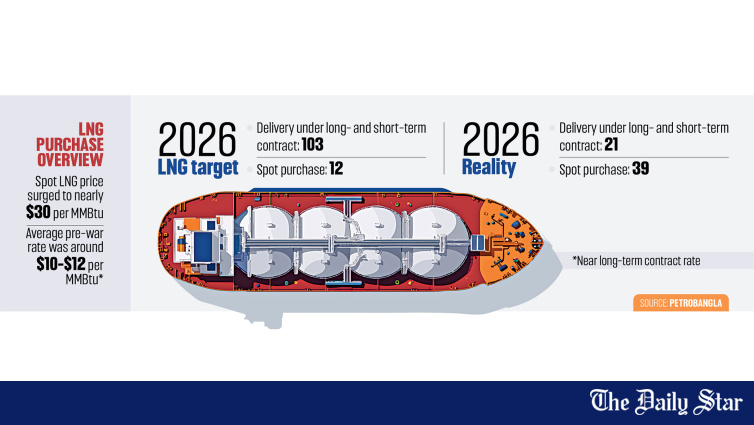
- 💰 LNG imports: 5.1 million tonnes in FY26
- 💰 JKM spot LNG prices: previously spiked above $35/MMBTU (3x 2022 benchmark)
- 💰 September LNG cargoes: 8 cargoes confirmed by Petrobangla
- 💰 Brent at $90.61: substantial increase from late August levels
- 💰 FX reserves pressure: higher oil imports will pressure $32.90 billion reserves
A sustained Brent price above $90 per barrel would significantly increase Bangladesh's petroleum import bill for FY27 — with each $10 per barrel increase translating to approximately $700-800 million in additional annual petroleum import costs, based on Bangladesh's FY26 import volume.
📊 Strategic Context: Six Months of Conflict
The US-Iran war that began in late February 2026 has now extended into its sixth month — with no clear path to resolution:
- 📅 Late February 2026: War began with US-Israel joint action against Iran
- 📅 March 2026: Urea prices spiked to $700/tonne (from $290-$320 pre-crisis)
- 📅 June 2026: Urea prices declined to ~$360/tonne
- 📅 21 July 2026: Excelerate Energy FSRU fire accident (Bangladesh gas crisis)
- 📅 August 2026: Iran war enters sixth month with no resolution
- 📅 31 August 2026: US strikes Iran's Larak Island — new escalation phase
🌏 Regional and Global Implications
The escalation also has broader regional and global implications:
- 🌏 Global oil markets: Brent back above $90 increases inflation pressure globally
- 🌏 Shipping insurance: premiums for Hormuz transits likely to rise further
- 🌏 Asian buyers: Bangladesh, India, Pakistan, China all exposed to higher LNG and oil prices
- 🌏 LNG spot prices: likely to follow oil higher, complicating Bangladesh's September cargo procurement
- 🌏 US sanctions cascade: weekly secondary sanctions could affect Bangladesh's Iran-linked trade exposure
💰 Petrobangla's Position
The oil price surge comes at a particularly challenging moment for Petrobangla's LNG procurement strategy. With 8 LNG cargoes already confirmed for September 2026 at previously negotiated prices, the immediate September supply outlook remains stable. However, the October-December cargo procurement cycle will need to navigate a significantly higher price environment if Brent sustains above $90 per barrel.
The combination of higher oil prices, shipping insurance premium increases, and US sanctions pressure on Iran creates a complex procurement environment for Petrobangla — with potential implications for the government's gas subsidy budget and the broader industrial sector recovery that depends on stable gas supply.
🌏 Strategic Implications
The oil price surge and Middle East escalation carry several strategic implications:
- ⚠️ Higher energy import bill: $700-800 million additional cost per $10 oil increase
- ⚠️ FX reserves pressure: higher imports reduce reserves coverage
- ⚠️ Inflation pass-through: higher energy costs feed into transport, manufacturing, food prices
- ⚠️ Industrial production risk: higher energy costs squeeze margins for gas-dependent industries
- ⚠️ Geopolitical alignment: US-Iran sanctions cascade could affect Bangladesh's foreign policy positioning
- 📊 LNG procurement complexity: October-December cargoes face higher price environment
The oil price surge therefore represents a strategic headwind for Bangladesh's broader macroeconomic stabilisation effort — coming at a moment when the country is already navigating the gas crisis, banking sector reform, LDC graduation preparation, and fiscal consolidation. The government and Bangladesh Bank will need to factor the elevated oil price trajectory into their FY27 monetary policy framework, fiscal planning, and external sector management — with the $90 per barrel Brent level representing a critical threshold that, if sustained, would materially affect Bangladesh's external position through the LDC graduation transition period.
This news was originally published by The Daily Star. For the full original report, please visit: https://www.thedailystar.net/business/news/oil-jumps-more-2-after-us-attack-irans-larak-island-4260991
📬 Get Bangladesh Trade News in your inbox
Weekly digest of export industry news, policy updates, and market analysis.
📰 Related Stories