NBR Ends Overlapping Import Consignment Crosscheck to Ease Trade
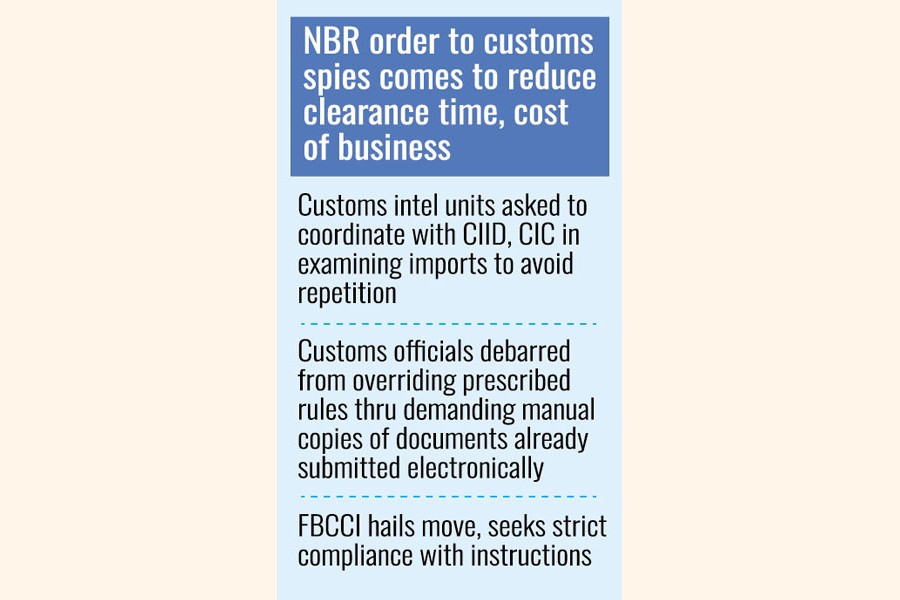
The Financial Express, Dhaka — Customs intelligence units are asked to coordinate examinations of import consignments to avert cumbersome crosscheck and thus reduce port clearance time and cost of business for importers — a strategically important trade facilitation measure that addresses a long-standing grievance of the Bangladeshi business community.
The National Board of Revenue (NBR) has issued the order for customs intelligence units to coordinate with the Customs Intelligence and Investigation Directorate (CIID) and the Central Intelligence Cell (CIC) in such work, as businesses often resent overlapping of trade scrutiny.
📜 Document Demand Restrictions
Customs officials have also been instructed:
- 📜 Not to seek documents beyond those specified in the Goods Declaration, Assessment and Re-assessment Rules 2024
- 📜 Cannot demand manual copies of documents already submitted electronically
- 📜 Coordinate examinations rather than separate document requests
📊 12 Urgent Instructions from NBR
The directives are part of 12 urgent instructions issued by the NBR to customs houses and stations across Bangladesh to ensure revenue security while expediting the clearance of imported goods. The directions on dos and don'ts, issued on 30 August 2026, include:
- 🔍 Strengthen risk-based examination
- 🛡️ Eliminate unnecessary procedures
- 🛡️ Avoid multiple physical examinations of the same consignment unless confirmed risk exists
- 📜 Limit document demands to Goods Declaration Rules 2024 specifications
- 📜 No manual copies of electronically submitted documents
- 🔍 Coordinate CIID and CIC examinations
- 📊 Regular ASYCUDA World System updates
- 📊 Selectivity criteria based on revenue risks
👥 Business Community's Long-Standing Demand
It was a long-pressed demand from the business community to simplify customs process and coordinate investigation processes rather than separately seeking documents from them. The NBR's intervention directly addresses:
- 👥 Multiple customs unit visits — previously required by CIID, CIC, and customs houses separately
- 👥 Document duplication — importers had to submit same documents to multiple agencies
- 👥 Clearance delays — overlapping examinations extended port dwell time
- 👥 Higher business costs — demurrage and detention charges from delays
- 👥 Corruption risk — multiple touchpoints created rent-seeking opportunities
📜 ASYCUDA World System Modernisation
The directions call for regular updating of the ASYCUDA World System selectivity criteria so that consignments can be selected for examination based on revenue risks. The ASYCUDA (Automated System for Customs Data) World System is the United Nations-backed customs management platform used by Bangladesh, and the selectivity criteria determine which import consignments are flagged for physical examination vs automated clearance.
Key improvements in selectivity criteria include:
- 📊 Risk-based examination — focusing on high-risk consignments
- 📊 Importer profile integration — using historical compliance data
- 📊 HS code-based targeting — prioritising sensitive product categories
- 📊 Country of origin risk — considering source market risk profiles
- 📊 Value threshold analysis — flagging unusually low or high value declarations
🏛 Goods Declaration Rules 2024 Compliance
The NBR's instruction that customs officials cannot seek documents beyond those specified in the Goods Declaration, Assessment and Re-assessment Rules 2024 is particularly significant. The 2024 rules defined the standard document set required for import declarations, including:
- 📜 Commercial invoice
- 📜 Packing list
- 📜 Bill of lading / airway bill
- 📜 Letter of credit (LC) documents
- 📜 Country of origin certificate
- 📜 Certificate of analysis (where applicable)
- 📜 Other product-specific certifications
By restricting customs officials to this defined document set, the NBR eliminates the discretionary power that had previously allowed individual officers to demand additional documents — a major source of corruption and clearance delays.
🌏 Strategic Context: Trade Facilitation
The NBR's customs coordination instructions align with broader trade facilitation reforms:
- 🌏 National Single Window — mentioned in LDC graduation roadmap discussions
- 🌏 RJSC electronic business registration — eBRS modernisation (separate FE report)
- 🌏 BSEC T+1 settlement — capital market infrastructure modernisation
- 🌏 BB electronic FX Market Module — forex operations automation (separate FE report)
- 🌏 World Bank Doing Business reform — trading across borders indicator
Together, these measures form a comprehensive digital transformation of Bangladesh's trade and business environment — positioning the country to improve its competitiveness ahead of the LDC graduation transition in November 2026.
📊 Strategic Implications for Port Operations
The end of overlapping import consignment crosscheck has significant implications for Bangladesh's port operations:
- 🚢 Chattogram Port: reduced dwell time for import containers
- 🚢 Clearance time reduction: faster release of import consignments
- 🚢 Demurrage cost reduction: lower detention charges for importers
- 🚢 Working capital efficiency: faster inventory turnover
- 🚢 Corruption reduction: fewer touchpoints for rent-seeking
- 🚢 Capacity enhancement: same port infrastructure handles more trade volume
🌏 Strategic Implications
The NBR's customs coordination instructions carry several strategic implications:
- ✅ End of overlapping crosscheck: single coordinated examination per consignment
- ✅ Document demand restrictions: limited to Goods Declaration Rules 2024
- ✅ Risk-based examination: ASYCUDA selectivity criteria focus on actual risks
- ✅ Port clearance acceleration: reduced dwell time at Chattogram Port
- ✅ Business cost reduction: lower demurrage and detention charges
- ✅ Corruption reduction: fewer discretionary touchpoints
- ✅ Business community demand addressed: long-standing grievance resolved
- ⚠️ Implementation enforcement: depends on customs station compliance
- ⚠️ ASYCUDA update frequency: criteria need regular refreshing
- ⚠️ Officer training: customs officials need reorientation
The NBR's customs coordination instructions represent a strategically important trade facilitation reform — addressing a long-standing business community grievance while improving the efficiency of Bangladesh's import clearance process. Combined with the broader digital transformation initiatives (RJSC eBRS, BB FX Module, BSEC T+1), the customs reform positions Bangladesh for a more competitive business environment through the LDC graduation transition period beginning November 2026 — when the country will need every advantage to maintain export competitiveness and attract investment in the post-preferential-tariff environment.
This news was originally published by The Financial Express. For the full original report, please visit: https://thefinancialexpress.com.bd/bangladesh/no-more-overlapping-import-consignment-crosscheck
📬 Get Bangladesh Trade News in your inbox
Weekly digest of export industry news, policy updates, and market analysis.
📰 Related Stories