MTB Marks 27 Years With NPL Ratio Below 7 Percent as Sector Tops 32
Mutual Trust Bank chief Syed Mahbubur Rahman credits prudent liquidity management and governance as sector-wide bad loans exceed a third of
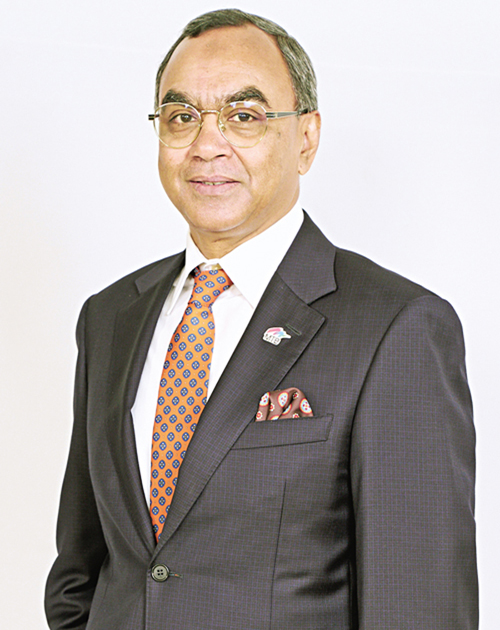
🏦 Mutual Trust Bank (MTB) PLC has maintained its resilience amid prolonged pressure on Bangladesh's banking sector by focusing on prudent liquidity management, sound governance, customer confidence and responsible banking, said its Managing Director and CEO, Syed Mahbubur Rahman. In an interview with The Financial Express ahead of the bank's 27th founding anniversary, he said MTB's advance-to-deposit ratio (ADR) remains around 69-70 percent, reflecting a cautious approach to liquidity and a commitment to maintaining adequate buffers even during periods of significant market stress.
🌏 The context he describes is unforgiving: the global and domestic economic environments have remained challenging since the COVID-19 pandemic, followed by the Russia-Ukraine war and the ongoing crisis in the Middle East, while at home, structural weaknesses accumulated over many years have compounded the pressure on the economy and the banking sector. Against that backdrop, MTB's numbers stand out — its non-performing loan (NPL) ratio is slightly above 6 percent, compared with more than 32 percent for the banking sector as a whole. Some of MTB's problem loans originated during 2014-2016, partly reflecting weaknesses in customer identification and due diligence practices prevalent at the time, the CEO acknowledged with notable candour.
💰 The repair bill is being paid deliberately: over the past three years, MTB has made provisions of nearly Tk 18 billion, and the bank remains committed to resolving its outstanding problem loans over the next two years. It also plans to strengthen its capital base, including approximately Tk 3.44 billion in Tier-1 capital and Tk 5.0 billion through a subordinated bond — a reminder that even healthy banks are rearming balance sheets for a difficult cycle.
🤝 Trust as the founding principle
📖 Explaining the significance of the bank's name, Rahman said the late Syed Manzur Elahi, MTB's founding chairman, chose the name Mutual Trust to reflect the fundamental principle underpinning banking: trust among customers, shareholders, employees, regulators and other stakeholders. Over the past 27 years, we have worked consistently to uphold that principle. At a time when the banking sector is facing considerable challenges, deposits continue to come to MTB. We believe this reflects the confidence our customers place in us, he said.
⚖ Governance gets equally direct treatment. The board establishes policies, sets strategic direction and provides oversight, while management remains responsible for execution and day-to-day operations — and the board does not interfere in operational matters such as recruitment, transfers, promotions or individual credit proposals, he added. The board has always emphasised that we should be prepared to earn less, if necessary, rather than compromise our principles. Ultimately, the respect and confidence of our customers are far more valuable than short-term gains, Rahman said — a formulation that reads as quiet commentary on a sector where board-level credit interference has historically been part of the NPL story.
📈 The macro problem behind weak credit demand
🔽 Addressing the imbalance between deposit growth and subdued credit demand, the MTB chief cited weak economic activity, persistently high inflation, energy constraints, pressure on household purchasing power and subdued private investment as jointly dampening demand for credit. He also highlighted the underlying fiscal challenge: when revenue mobilisation remains weak relative to the size of the economy, the government has to rely more heavily on borrowing, which places additional pressure on the domestic financial system and influences the allocation of funds between the public and private sectors.
💵 Banks cannot simply turn away deposits from customers who have entrusted them with their savings, he noted — so when sound private-sector lending is scarce, investment in government securities becomes the responsible avenue for deploying surplus liquidity. But the trade-off bites: declining yields amid persistently high inflation pressure returns and profitability. Declining net interest margins are a concern for the sustainability of banking, Rahman warned. Banks must remain competitive in mobilising deposits while ensuring that lending and investment generate adequate risk-adjusted returns. Without sustainable margins, it becomes increasingly difficult to build capital, absorb credit losses, invest in technology and continue supporting economic growth.
⚠ The crowding-out risk sharpens once recovery begins: if the economy regains momentum and credit demand picks up, the government's borrowing requirements and the financing needs of the private sector could increasingly compete for available resources — creating the risk of crowding out private investment, particularly if domestic borrowing continues to absorb a significant share of banking-sector liquidity. Sustainable growth therefore requires a stronger revenue base, more efficient public expenditure and an environment that encourages productive private investment, he argued.
🖥 Digital banking, with the lessons attached
💻 Digital banking presents an opportunity to expand financial inclusion and improve customer experience, and MTB is working with fintech companies and telecommunications operators to reach underserved customers, Rahman said. But his enthusiasm comes with a sector-shaped warning: strong regulatory supervision is essential to ensure digital banking does not repeat the problems experienced in the conventional sector, particularly the sharp rise in non-performing loans. Digital banking may change the delivery of financial services, but the fundamental risks of banking remain, he said — conventional and digital banks can coexist and complement each other, provided the system remains built on trust and financial stability.
🔭 As MTB refreshes its brand for a younger customer base, the CEO's summary of 27 years doubles as a sector prescription: trust takes years to build, but it must be earned every day. In a banking system where the average NPL ratio has crossed 32 percent, the difference between a 6 percent bank and the rest is not a business model — it is the daily, unglamorous discipline of saying no. That is the lesson Bangladesh's banking sector is now being taught at depositors' expense elsewhere.
This news was originally published by The Financial Express. For the full original report, please visit: https://thefinancialexpress.com.bd/bangladesh/mtb-banks-on-trust-and-prudent-liquidity-management
📬 Get Bangladesh Trade News in your inbox
Weekly digest of export industry news, policy updates, and market analysis.
📰 Related Stories