Bangladesh to Seek Lower JICA Loan Rates as Costs Rise to 3.5 Percent
ERD report prepared for PM Tarique's Tokyo visit also seeks 40-year terms and a three-year concessional window after LDC graduation
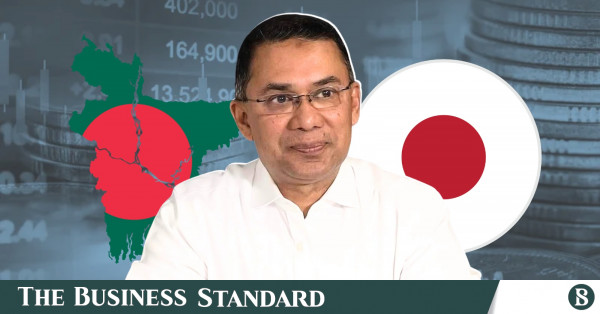
💰 Bangladesh will ask Japan to reconsider the interest rate on Japanese loans — which has risen to 3.5 percent — during Prime Minister Tarique Rahman's four-day visit to the country, alongside a request for 40-year loans with appropriate grace periods for priority infrastructure projects and an extension of concessional financing for three years beyond Bangladesh's graduation from the least developed country (LDC) category. The proposals are outlined in a government report on Bangladesh-Japan bilateral economic cooperation prepared ahead of the visit, which began as the prime minister left Dhaka early Monday for Tokyo.
📉 The proximate cause is JICA's pricing cycle. Economic Relations Division (ERD) officials said the Japan International Cooperation Agency's interest rates are revised every six months, and rose to 3.5 percent from 3.05 percent in October. The government fears the rate could rise further, increasing development financing costs, straining public finances and delaying project implementation. According to the ERD report, the trajectory has been steep: Bangladesh received highly concessional Japanese loans as an LDC, with interest rates at 0.1 percent until 2015 and below 1 percent until a few years ago, while JICA's standard rate for eligible LDCs and low-income countries rose from 0.7 percent in April 2020 to 3.5 percent from 1 October 2026, with a 30-year repayment period and 10-year grace period.
⚖ The technical stakes are captured by the grant element — the measure of how favourable a loan's terms are against market financing. The ERD report warns that higher interest rates reduce a loan's grant element, and if it falls below the required threshold, the loan may no longer qualify as concessional — which would move Japanese ODA from the development-finance column toward ordinary borrowing just as Bangladesh's international borrowing costs rise and debt-repayment pressure grows. Bangladesh will argue that Japanese ODA should retain its concessional character rather than approach market-based financing costs, while acknowledging changes in international interest rates and Japan's own financing conditions; continued access to concessional Japanese loans is considered essential given Bangladesh's current economic circumstances — high domestic borrowing costs, limited fiscal space, substantial infrastructure financing needs, and exchange rate and external-sector risks.
📋 The full negotiating agenda
- 🗳 A three-year extension of concessional financing after LDC graduation to smooth the transition, alongside Bangladesh's existing request for a three-year deferral of graduation itself.
- 🚀 More grant-based technical assistance from Japan to simplify project approval procedures and accelerate implementation — strengthening feasibility studies, project design and preparation.
- 🤝 A proposed Public-Private Partnership (PPP) Project Preparation Facility to attract Japanese private investment and technology to infrastructure, supporting feasibility studies, financial modelling and risk mitigation.
- 🏢 Improving the investment climate in economic zones by simplifying administrative and regulatory procedures, streamlining approvals and making one-stop services more effective.
- 💶 Drawing on Japan's experience in improving public investment efficiency and strengthening public financial management — better project selection, preparation, approval and implementation.
📘 The longer-tenor request deserves its own reading. Large infrastructure investments require substantial upfront funding while their economic benefits often take years to materialise, the government argues; longer repayment periods and lower interest rates would ease immediate repayment pressures and improve the financial sustainability of projects. In effect, Dhaka is asking Japan to match the cash-flow shape of the assets being financed — a metro line or port earns over forty years, so it should be financed over something closer to forty.
🌏 The context makes the ask credible rather than merely hopeful. Bangladesh is Japan's largest single recipient of bilateral ODA in recent years, and the trillion-yen private investment package dominating the visit's headlines makes Tokyo a stakeholder in the country's fiscal health, not just a lender: debt-stressed borrowers make poor supply-chain anchors. Japanese planners also know that as Bangladesh graduates, its borrowing will migrate toward costlier market sources — and that offering transitional terms is cheaper for both sides than watching a key Bay of Bengal partner slip into the regional pattern of debt distress.
🔭 What a win would look like: a rate reset toward the 3 percent floor or lower on new commitments, extended maturities on priority projects, a formal three-year concessional bridge after graduation, and a technical-assistance package that attacks the project-preparation weaknesses that have chronically slowed implementation. The summit will not settle every number, but the joint declaration's language on financing terms will signal whether Japan hears Dhaka's argument about the concessional character of its ODA. For a government managing tight finances into an LDC future, the difference between 3.5 percent and yesterday's terms is not a rounding error — it is the difference between projects that pay for themselves and projects that merely accumulate.
📈 The wider creditor landscape also frames Dhaka's timing. Japan is not Bangladesh's only financier — China, the World Bank and the Asian Development Bank all carry large portfolios — but JICA's terms historically set the benchmark against which others benchmarked their own offers. If Japanese lending drifts toward near-market rates, every development partner's calculus shifts in the same direction, raising Bangladesh's blended borrowing cost across the entire infrastructure pipeline. Holding the line in Tokyo is therefore not one negotiation but the anchor negotiation for the country's future cost of capital — which is why the request, though technical in form, is strategic in consequence.
This news was originally published by The Business Standard. For the full original report, please visit: https://www.tbsnews.net/bangladesh/bangladesh-seek-lower-jica-loan-rates-during-pms-japan-visit-1582916
Related on BangladeshExport
📬 Get Bangladesh Trade News in your inbox
Weekly digest of export industry news, policy updates, and market analysis.
📰 Related Stories