Big Shift Opens in Bangladesh Islamic Finance as Depositors Move to Conventional Banks
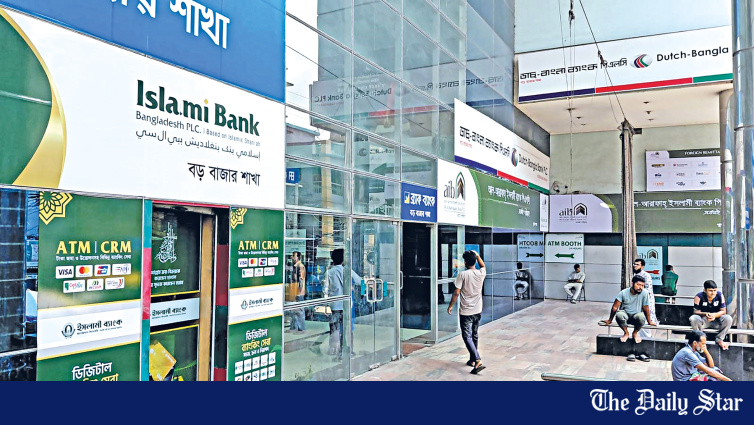
Ahsan Habib, Dhaka — A structural shift is underway in Bangladesh's Islamic finance landscape, with depositors moving their funds from full-fledged Islamic banks — many of which were hollowed out by corruption under the previous regime — to the shariah-based wings of conventional banks, in a reallocation that is reshaping the country's Shariah-compliant banking sector.
The shift has been documented in Bangladesh Bank's latest report on Islamic banking, which shows that while full-fledged Islamic banks have stagnated or contracted, conventional banks offering Islamic windows have seen their deposit base more than double in the past two years.
📊 The Numbers Behind the Shift
Bangladesh Bank data reveals the magnitude of the deposit movement:
- 📉 Full-fledged Islamic banks deposits: hovered at ~Tk 4 lakh crore through 2024-2025, before falling to ~Tk 3.9 lakh crore by June 2026
- 📉 Year-on-year growth: turned negative in late 2024, hitting -1.07 percent in June 2026
- 📉 June 2026 deposit fall: ~Tk 17,000 crore decline in a single month
- 📈 Conventional banks' Islamic windows: Tk 37,000 crore in March 2024, rising to ~Tk 78,000 crore by June 2026 (more than doubled)
- 📈 Islamic windows Q4 growth: ~11 percent YoY
- 📉 Full-fledged Islamic banks Q4 contraction: -5 percent YoY
"This steady growth in deposits of conventional banks can be primarily attributed to the unstable situation in the Islamic banking sector after the July 2024 uprising, which shifted the reliability and confidence of depositors more towards conventional banking," the central bank said in its latest report on Islamic banking.
👥 Jakir Hossain's Story: A depositor's journey
The depositor shift is captured in individual stories. Jakir Hossain, an employee of a renowned drug company, had a fixed deposit of Tk 10 lakh with an Islamic bank for several years. When some banks struggled to return depositors' funds in 2024 after the fall of the Awami League government and directors of the banks fled the country, he decided to withdraw his funds and keep them with a healthy conventional bank that has a shariah-based window.
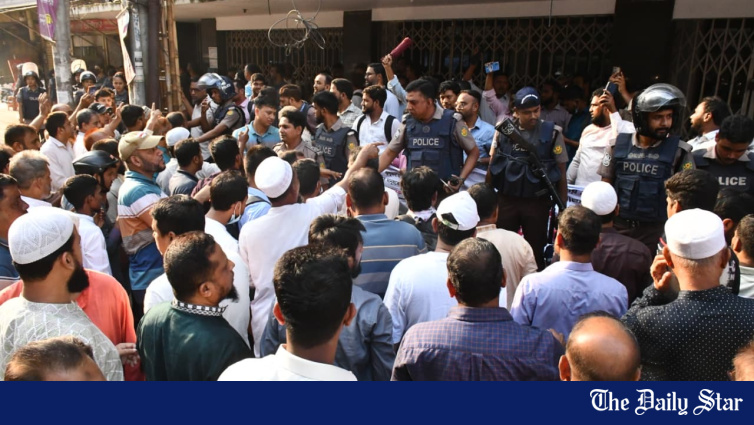
He was not alone. In the months after the 2024 mass uprising, the banking sector was revealed to have been hollowed out by years of corruption and plunder, with several Islamic banks among the worst affected. Directors fled the country, branches struggled to pay depositors, and panic withdrawals accelerated.
🏛 Historical Context: Islamic Banking in Bangladesh
Bangladesh's Islamic banking journey began in 1983 with the establishment of Islami Bank Bangladesh, with backing from the Islamic Development Bank. Several banks followed:
- 🏛 1983: Islami Bank Bangladesh (with IsDB backing)
- 🏛 Early 2000s: Al-Arafah Islami Bank, Social Islami Bank, Shahjalal Islami Bank
- 🏛 Later: EXIM Bank and First Security Bank converted from conventional operations
- 🏛 Subsequently: Union Bank, Global Islami Bank, Standard Bank joined full-fledged Islamic banking
Regulation also helped the sector expand. Islamic banks are required to hold far less in liquid reserves than conventional banks — 5.5 percent against 13 percent — allowing them to deploy a larger share of deposits. Over the following decade, that advantage showed up in the numbers: between 2016 and 2026, Islamic banking deposits grew roughly two-and-a-half times, while its financing book nearly quadrupled.
⚠️ Structural Imbalance and the S Alam Takeover
A decade of gathering deposits at a slightly slower pace than conventional banks while lending them out faster created a structural imbalance that made the sector more exposed when its underlying financing turned bad. By the mid-2010s, several of the largest shariah-based banks, including Islami Bank Bangladesh and First Security Islami Bank, had come under the effective control of the S Alam Group.
In 2022, reports surfaced that these banks had disbursed large loans to nine companies in violation of banking rules, with some loan applications using fake addresses. Bangladesh Bank appointed observers to Islami Bank Bangladesh and First Security Islami Bank. Deposit growth across Islamic banks fell from above 20 percent in 2021 to below 3 percent the following year. Excess liquidity in the sector also fell by more than 90 percent between late 2022 and early 2024.
🏛 BIBM Analysis: Principle vs Practice
"Internationally, Islamic banking is regarded as a resilient, sustainable, and risk-sharing financial system. However, we have not been able to demonstrate that in Bangladesh," said Md Mahabbat Hossain, Associate Professor at the Bangladesh Institute of Bank Management (BIBM).
In practice, he said, much of Bangladesh's Islamic banking does not involve genuine risk sharing. For example, when a bank finances a customer, it purchases an asset and immediately sells it to the borrower. The entire transaction can be completed within seconds, meaning the bank bears virtually no risk. What follows is essentially the creation of debt. "Therefore, the main difference from conventional banking lies in the debt creation process. In terms of actual economic impact, genuine risk sharing remains very limited," he said.
Syed Mahbubur Rahman, a former chairman of the Association of Bankers Bangladesh, said Islamic banks had remained relatively resilient during the 2008 crisis because of their underlying assets, but the problems in Bangladesh showed that banks had not followed those principles properly. "They invested without following proper rules and regulations, so the banks fell into trouble," he said.
👥 Sector Hollowed Out and the Sammilito Merger
When the Awami League government fell in August 2024, the damage surfaced quickly. Bangladesh Bank cut special liquidity support to nine ailing lenders, including six Islamic banks:
- 🏛 Islami Bank Bangladesh
- 🏛 First Security Islami
- 🏛 Social Islami
- 🏛 Global Islami
- 🏛 Union Bank
- 🏛 ICB Islamic Bank
The central bank later restructured the boards of 11 banks, six of them S Alam-dominated, while a government white paper devoted a full chapter to irregularities in the banking sector. Five of the weakest lenders — First Security Islami, Social Islami, Union Bank, Global Islami, and EXIM Bank — were eventually merged into Sammilito Islami Bank under the Bank Resolution Ordinance 2025.
Sammilito Islami began operations with Tk 35,000 crore in capital, including Tk 20,000 crore from the state and Tk 15,000 crore from depositors, becoming the country's largest and only state-owned shariah-based commercial bank. The bank is now trying to recover the assets left behind by the five lenders. Bangladesh Bank recently said that the merged bank has filed nearly 10,000 lawsuits to recover defaulted loans and has also taken initiatives under an exit policy and alternative dispute resolution.
📊 Strategic Implications
The Islamic finance shift carries several strategic implications for Bangladesh's banking sector:
- 🏛 Conventional banks winning: banks with established shariah windows are capturing the deposit flight from distressed Islamic banks
- 💰 Sammilito recovery: the 10,000 recovery cases filed by the merged bank will determine the pace at which lost depositor value is restored
- 🏛 Forensic audit outcomes: the comprehensive forensic audit findings could trigger criminal proceedings against former Islamic bank officials
- 👥 Shariah compliance credibility: the broader Islamic finance segment's credibility depends on the cleanup of the historical abuses
The shift also signals a maturing of Bangladesh's banking sector, where depositors are now differentiating between principle and practice — choosing Shariah-compliant products offered by institutions with sound governance over nominally Islamic banks with compromised track records. For Bangladesh Bank, the deposit movement validates the central bank's decision to force the Sammilito merger and signals that depositor confidence in the Shariah banking principle remains intact — provided it is delivered through institutions with credible governance.
This news was originally published by The Daily Star. For the full original report, please visit: https://www.thedailystar.net/business/news/big-shift-opens-islamic-finance-4258891
Related on BangladeshExport
📬 Get Bangladesh Trade News in your inbox
Weekly digest of export industry news, policy updates, and market analysis.
📰 Related Stories