Battery Rickshaws: Poor Regulation, Not The Vehicles, Is Bangladesh's Real Problem
With up to 10 million battery rickshaws nationwide employing millions, calls for blanket bans ignore both economic necessity and the regulatory vacuum that created the chaos
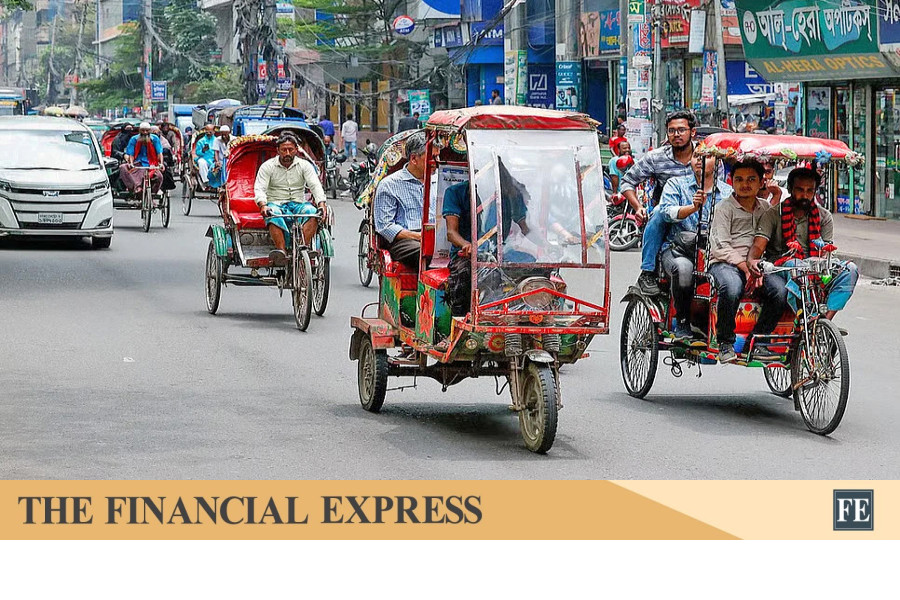
🛵 Battery-run rickshaws are easy to dislike. Mere minutes on social media is enough to see how intense the public backlash these days against them has become. These vehicles clog up lanes designated for faster traffic. Their drivers seem to understand only two things — twisting the handle and pulling forward — while everything else on the road becomes someone else's problem. An even more pressing concern is the use of narcotics by some drivers. Passengers are often unaware of this impairment until they have already climbed aboard and have to spend the rest of the ride bracing for whatever comes next.
📊 This frustration has also spilled over to the streets from social media. Last week, Gulshan Society organised a public gathering demanding action against battery-run rickshaws and relief from the congestion they create. Among the demands was the complete removal of these vehicles from the roads, along with alternative livelihoods for their drivers. From time to time, the authorities also launch drives to clear auto-rickshaws from the streets. But these efforts are usually localised and occur in sporadic bursts rather than as a sustained campaign.
⚖ The Legal And Technical Case Against Battery Rickshaws
Legally speaking, the case against these vehicles is strong. Battery-run rickshaws are illegal under the Road Transport Act of 2018 which bans battery- or motor-powered rickshaws, vans and similar three-wheelers. In November 2024, the High Court directed the authorities to take administrative measures to stop illegal battery-run rickshaws and easy-bikes in metropolitan areas and on highways. The order triggered protests by drivers across the country, including road and railway blockades. A Supreme Court chamber judge later ordered a status quo on the High Court directive, granting the drivers a temporary reprieve while the legal and political implications of an outright ban are weighed.
Even from a purely technical standpoint, the operation of these vehicles without licensing or permits makes little sense. Untrained drivers weaving through fast-moving traffic on Dhaka's roads and highways, ignoring whatever lane discipline exists, produce accidents on a regular basis. Most of these rickshaws do not even carry a rear-view mirror, so drivers switch lanes with no real awareness of what is coming from behind. This is a genuine road-safety concern that cannot be brushed aside.
👥 The Economic Reality: Up To 10 Million Vehicles, Millions Of Jobs
The question then arises why battery rickshaws keep multiplying instead of disappearing despite so many difficulties and so much opposition. The simple answer is intense demand. The majority of people avoid pedal rickshaws the moment motorised options turn up. Even the officials responsible for enforcing the law can often be seen using battery rickshaws for their daily commute. In a city where buses are overcrowded and walking long distances is hard in heat and rain, battery rickshaws fill a gap that no other mode fills as easily. Denial of that would mean denial of what happens on the streets every day.
But there is something more serious underneath all this, something that goes beyond public convenience. The proliferation of these vehicles is also a reflection of the country's economic troubles. Jobs are scarce, inflation is high and most people earn a living however they can — whether through a footpath stall or an auto-rickshaw. Official counts of these vehicles are hard to find, but CPD estimates put the national total at up to six million. Other estimates place the figure for Dhaka alone between 1.5 and 2.0 million, and the national total closer to 10 million. In a country of 160 million people, that translates into a meaningful share of the working-age population drawing income directly or indirectly from battery rickshaw operations.
- 🛵 CPD national estimate: Up to 6 million battery rickshaws
- 📊 Other estimates (national): Up to 10 million
- 📊 Dhaka city alone: 1.5-2.0 million
- 📜 Legal status: Illegal under Road Transport Act 2018
- 🏛 High Court directive: November 2024 (status quo granted)
- 👥 Total population dependent: Several million drivers + families
💰 Why Bans Are Counterproductive
The magnitude of the problem becomes even clearer when compared with the limited employment opportunities available elsewhere. Good jobs are nowhere to be found for the millions of unemployed people. Government positions are limited while private companies have little room to create new jobs as they struggle with high borrowing costs, energy shortages and weak business conditions. Foreign-funded organisations are also not creating jobs at the pace they once did. Established banks and businesses provide some decent positions, but they cannot employ even one per cent of the people who need work.
Against this harsh economic backdrop, administrative calls for sweeping bans on electric rickshaws are highly counterproductive. Such a move would inevitably turn public frustration towards the government itself. Public representatives and officials advocating action against these drivers rarely explain what would happen to them if their livelihoods were taken away. Nor do they offer any realistic alternative employment. This amounts to little more than a cheap political exercise aimed at appeasing the urban middle class and diverting attention from broader failures in economic management.
For an economy where the formal private sector is generating limited new jobs and where energy shortages, weak credit growth and high inflation have constrained industrial capacity expansion, the informal transport sector has emerged as an employer of last resort. Banning battery rickshaws without providing alternative livelihoods for the millions of drivers who depend on them would simply convert visible economic frustration (drivers operating on the streets) into invisible economic desperation (unemployed workers without income) — a politically destabilising trade-off that the interim government can ill afford as it navigates the run-up to LDC graduation in November 2026.
🏛 The Regulatory Vacuum That Created The Chaos
Not long ago, the state minister for LGRD and cooperatives announced a plan to ban these vehicles from main roads while allowing them on inner roads under strict registration limits and specific design standards. How much of this can realistically be implemented remains an open question. The country has a long history of drafting rules that look impressive on paper and then fail to enforce them consistently. This does not mean the current chaos on the roads should be allowed to continue indefinitely. The vehicles must be permitted to operate, but under strict discipline. Drivers need clear rules, including licensing, vehicle registration, technical standards, and enforcement of traffic laws.
More importantly, driving under the influence is already a punishable offence, and operating a rickshaw while under the influence of drugs puts lives at risk just as much as any other form of dangerous driving. Proper drug testing and enforcement should therefore be part of the regulatory system. Licensing drivers would help as well, not only by making enforcement easier but also by creating a potential source of government revenue. With genuine political will, bringing order to urban roads is entirely possible without destroying livelihoods.
💵 What A Sensible Regulatory Framework Would Look Like
A well-designed regulatory framework for battery rickshaws would include several components. First, vehicle registration with technical standards (speed limits, brake requirements, lighting, mirrors) would bring the fleet under formal oversight and enable enforcement against non-compliant vehicles. Second, driver licensing with basic training on road safety, traffic rules and passenger rights would professionalise the workforce and create a basis for accountability. Third, designated operational zones — keeping battery rickshaws off high-speed arterial roads while allowing them on inner roads — would balance traffic flow concerns with continued service availability.
Fourth, periodic inspection of vehicles for roadworthiness and drug testing of drivers would address the most serious safety concerns without imposing blanket prohibitions. Fifth, integration with formal public transport systems (bus stops, metro rail stations) would position battery rickshaws as feeder services rather than competitors — extending the reach of mass transit while maintaining first-mile/last-mile connectivity for passengers.
🌏 Broader Implications For Bangladesh's Economy
The battery rickshaw debate is symptomatic of a broader governance challenge facing Bangladesh: how to formalise and regulate economic activities that have grown up in the informal sector to meet genuine demand. Similar regulatory dilemmas exist in street vending, informal agro-processing, unregistered SMEs and other sectors that employ millions but operate outside formal regulatory frameworks.
For the interim government, the battery rickshaw case offers an opportunity to demonstrate a different approach to informal sector governance — one that combines regulatory discipline with economic pragmatism. Successful design and implementation of a sensible battery rickshaw regulatory framework could provide a template for broader informal sector formalisation, generating government revenue, improving service quality and protecting livelihoods simultaneously.
🤝 What Comes Next
The coming months will reveal whether the state minister's announced plan for main-road bans with inner-road registration can be operationalised — and whether the implementing agencies have the capacity and political will to enforce the framework consistently. The status quo on Bangladesh's streets is unsustainable: drivers operate without training, vehicles operate without standards, and passengers accept substandard service because no alternative exists. But sweeping bans without alternative livelihood provisions would simply convert one form of dysfunction into another.
The honest answer is that battery rickshaws are not the enemy — poor regulation is. Address the regulatory vacuum, formalise the sector, enforce basic safety and operational standards, and Bangladesh can convert a chaotic informal transport mode into a regulated, taxed and professionalised urban mobility service. The drivers keep their livelihoods, the passengers keep their mobility, the government gains revenue and oversight, and the urban middle class gains relief from the worst excesses of unregulated operation. That outcome is achievable — but only if political will matches regulatory ambition.
This news was originally published by The Financial Express. For the full original report, please visit: https://thefinancialexpress.com.bd/columns/battery-rickshaws-are-not-the-enemy-poor-regulation-is
📬 Get Bangladesh Trade News in your inbox
Weekly digest of export industry news, policy updates, and market analysis.
📰 Related Stories