Bangladesh to Retain Duty-Free Market Access to UK After LDC Graduation
UK assures 92% of goods will continue to qualify for duty-free access without separate trade agreement
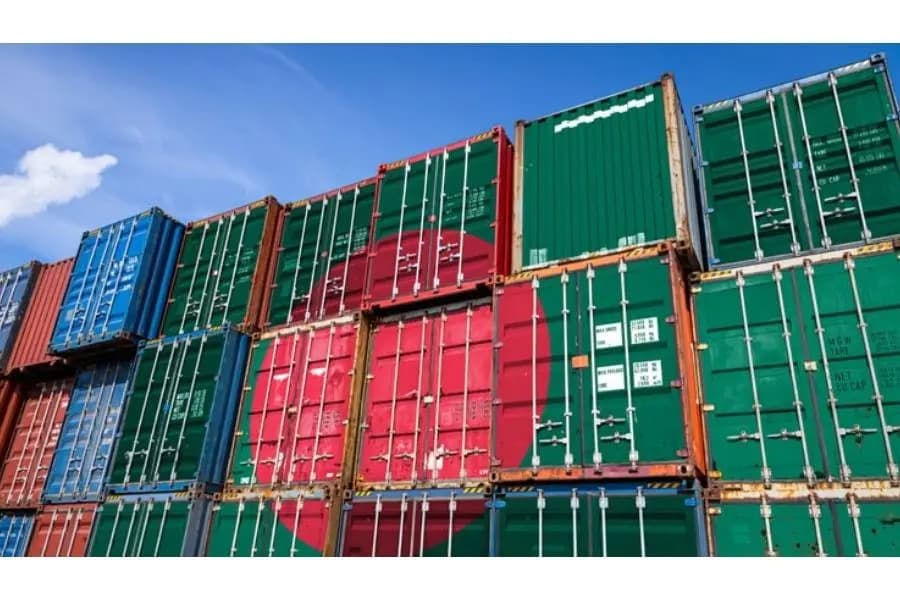
Bangladeshi exporters will continue to enjoy preferential access to the UK market after Bangladesh graduates from least-developed-country (LDC) status, the United Kingdom has formally assured Dhaka, providing a critical breathing space for the country's apparel sector as it prepares to lose a broader suite of preferential trade benefits under the World Trade Organization framework.
A letter from the British mission in Bangladesh, dated 19 August 2026 and signed by James Goldman, Deputy High Commissioner and Development Director at the British High Commission in Dhaka, was sent to Md Ataur Rahman Khan, Secretary of the Ministry of Commerce. The communication confirms that 92 per cent of goods will continue to qualify for duty-free access without the need for Bangladesh to negotiate a separate trade agreement with the UK — a procedural relief that removes the risk of a cliff-edge tariff shock at graduation.
Bangladesh currently enjoys tariff-free access for 99.8 per cent of goods exported to the UK under the UK's Developing Countries Trading Scheme (DCTS). Under the new arrangement, Bangladesh will retain its existing market access for three years after its LDC graduation, providing exporters with a transition period before moving to a new preferential arrangement. Following that transition period, Bangladesh will move to the Enhanced Preferences tier of the DCTS, under which 92 per cent of goods will continue to qualify for duty-free access without requiring further renegotiation.
Senior officials at the Ministry of Commerce said apparel and readymade garments — which dominate Bangladesh's exports to the UK — fall within the 92 per cent duty access list, so the reduction in the duty-free ratio from 99.8 per cent to 92 per cent will not materially affect Bangladesh's export trajectory. Commerce Secretary Md Ataur Rahman Khan termed it a significant assurance allowing Bangladesh to increase its capacity, diversify exports and find new markets during the transition window.
"We hope to get three years' extension to stay as LDC until November 2029, so the existing duty benefit will remain unchanged for next three years," he told the FE — a remark that signals Dhaka is positioning for a coordinated transition rather than a sudden graduation. Bangladesh is currently on track to graduate from LDC status in November 2026, but the country has been exploring whether the UN Committee for Development Policy's recommended extension mechanism might apply.
Trade economist Dr Masrur Reaz, chairman of Policy Exchange Bangladesh, described the British letter as a significant message from the High Commission that would give huge comfort to apparel exporters. He noted that when all other countries' preferential-trade benefits will expire with the LDC graduation, the UK will retain them. "The letter made it clear that there is no expiration date of UK's preferential trade benefit," he said, while urging Bangladesh to act seriously in the interim to sign free-trade agreements with major trade partners to lock in longer-term access.
Dr Mohammad Abdur Razzaque, Chairman of Research and Policy Integration for Development (RAPID), called the announcement welcome news for Bangladesh as it prepares for LDC exit. "The UK has provided considerable certainty by confirming that Bangladesh will retain its existing market access for three years after graduation and will then move directly into the Enhanced Preferences tier of the DCTS," he said. For Bangladesh, he emphasised, the most important aspect is the treatment of garments, which account for the overwhelming majority of the country's exports to the UK. "Market access for garments will remain unchanged under the Enhanced Preferences arrangement."
Equally important, Dr Razzaque noted, are the UK's revised rules of origin, which provide substantially greater flexibility in sourcing imported inputs and do not impose a double-transformation requirement. This is particularly relevant for Bangladesh's garment industry, given its dependence on imported fabrics and other intermediate inputs in several product categories. Crucially, the UK Government introduced these changes to its rules of origin autonomously, rather than as part of a bilateral negotiation — a gesture Dr Razzaque said demonstrates the UK's recognition of the adjustment challenges facing Bangladesh and other graduating LDCs.
The combination of the three-year transition period, subsequent access to Enhanced Preferences, and more liberal rules of origin considerably reduces the immediate market-access risks associated with Bangladesh's graduation. However, Dr Razzaque was emphatic that the assurance, while welcome, is not a substitute for domestic reform: "Preferential access by itself cannot guarantee export growth. The priority should be to improve competitiveness, diversify products, make effective use of the more flexible sourcing provisions, and ensure that exporters understand and utilise the DCTS rules."
Market access for garments covered by HS chapters 61 and 62 will remain unchanged under the Enhanced Preferences tier, according to the letter. The updated rules of origin will also ease compliance requirements for garment exporters, who will no longer be required to meet the existing "double transformation" requirement — which mandated that fabric be woven and then cut-and-sewn in the same country — to qualify for preferential market access. The new rules will provide exporters with greater flexibility to source inputs from a wider range of countries while retaining eligibility for preferential tariffs.
The British High Commission will also work with the Export Promotion Bureau (EPB) to organise a series of workshops for exporters and other trade stakeholders, focused on helping businesses better understand and utilise the benefits available under the DCTS, the letter reads. The capacity-building push comes at a useful moment: garment exports to the UK registered 0.91 per cent growth in the last fiscal year, while exports to the total EU zone contracted by 3.31 per cent — a divergence that underscores the strategic value of the UK channel as the EU preferential margin narrows under the Everything But Arms (EBA) transition arrangements.
This news was originally published by The Financial Express. For the full original report, please visit: https://thefinancialexpress.com.bd/economy/bd-to-retain-duty-free-mkt-access-to-uk-after-ldc-exit
📬 Get Bangladesh Trade News in your inbox
Weekly digest of export industry news, policy updates, and market analysis.
📰 Related Stories