Bangladesh Potato Exports Halve as Mideast War Drives Up Shipping Costs Fourfold
Potato exports through Chattogram port fell 49% to 20,604 tonnes in FY2025-26 from 40,543 tonnes in FY25. FX earnings dropped 37.8% to $8.89M. Container freight surged from $2,500 to $10,000 per container due to Iran war disruptions.
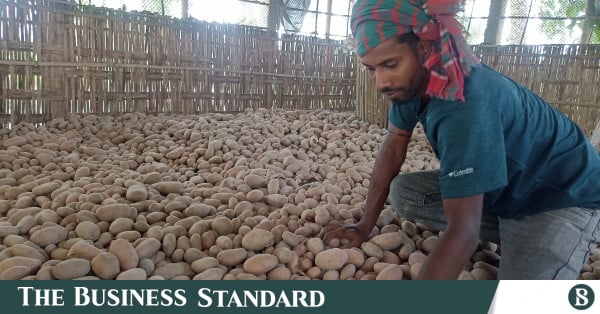
🥔 Chattogram, Bangladesh — Bangladesh’s potato exports through the sea route nearly halved in the 2025-26 fiscal year as the fallout from the Middle East war pushed up shipping costs, making shipments less competitive in international markets.
📊 Potato shipments through the country’s premier seaport fell by 19,939 tonnes year-on-year, a decline of 49%, according to data from the Plant Quarantine Centre at Chattogram Port.
💰 Export Volume and Earnings Decline
📊 According to the Plant Quarantine Centre and Export Promotion Bureau (EPB) data:
- 📊 FY25 exports: 40,543 tonnes
- 📊 FY26 exports: 20,604 tonnes (down 49%)
- 💰 FY25 earnings: $14.30 million
- 💰 FY26 earnings: $8.89 million (down 37.8%)
- 💰 Earnings decline: $5.41 million
📊 Foreign exchange earnings from potato exports also dropped by $5.41 million, or 37.8%, during the period, according to EPB data.
🚢 Container Freight Rates Quadrupled
💬 Exporters said container freight rates have increased nearly fourfold amid disruptions caused by geopolitical tensions, sharply raising the cost of shipping agricultural products over long distances.
💬 Mahbub Rana, President of the Chattogram Fresh Fruits, Vegetables and Products Exporters Association, told TBS that the ongoing Iran war and the broader global situation have caused shipping costs to rise abnormally.
💬 “Earlier, the freight for a container was around $2,500. Now it has risen to nearly $10,000,” he said, adding that the sharp increase in transportation costs has made potato exports increasingly difficult for exporters, resulting in lower shipments.
🌏 Export Destinations: Middle East and Malaysia
📊 According to Rana, Bangladesh mainly exports potatoes to:
- 🇦🇪 Middle Eastern countries — Saudi Arabia, UAE, Qatar, Oman, Bahrain, Kuwait
- 🇲🇾 Malaysia — Southeast Asian market
💬 However, bumper potato production in Egypt and Syria can also affect Bangladesh’s exports, as these countries supply larger volumes to Middle Eastern markets when domestic harvests are strong.
💬 “Alongside higher transportation costs, competition in the international market is another major reason behind the decline in Bangladesh’s potato exports,” Rana said.
📊 Supply Chain: Munshiganj, Rangpur, Bogura
📊 Exporters said most potatoes come from:
- 🌾 Munshiganj — major potato-growing district
- 🌾 Rangpur — northern potato belt
- 🌾 Bogura — major potato production hub
📊 Farmers typically harvest and supply potatoes in January and February, after which exports continue regularly until July. However, potatoes kept in storage often begin sprouting during the last six months of the year, affecting their quality and making them unsuitable for export.
❄ Cold Chain Challenges
💬 Exporter Md Forkan told TBS that maintaining the cold chain is one of the biggest challenges in potato exports. After potatoes are taken out of cold storage, grading, processing and packaging can take considerable time.
💬 During this period, potatoes remain at normal temperatures, making it difficult to preserve their quality even after they are loaded into refrigerated containers, he said.
🏭 Need for Modern Storage and Agro-Processing
📊 Exporters believe modern storage and agro-processing facilities are needed to sustain exports year-round. Key infrastructure gaps:
- ❄ Modern cold storage — prevent sprouting and quality degradation
- 🏭 Agro-processing facilities — value-added potato products
- 📊 Cold chain logistics — seamless temperature-controlled supply chain
- 📊 Grading and packaging — automated processing to reduce time at ambient temperature
- 📊 Refrigerated containers — adequate supply of reefer containers
🌏 Strategic Context: Bangladesh Agro-Exports
📊 For Bangladesh’s agro-export sector, the potato export decline reflects broader challenges:
- 🚢 Shipping cost vulnerability — agricultural exports particularly sensitive to freight rates
- 🌏 Geopolitical risk exposure — Middle East conflict directly affects Bangladesh’s agro-export competitiveness
- 📊 Competitive pressure — Egypt and Syria can undercut when their harvests are strong
- 🌾 Storage infrastructure gap — lack of modern cold chain reduces export window
- 📊 Single-route dependence — most exports through Chattogram port, limited alternative routes
- 📊 Market concentration — heavy dependence on Middle East and Malaysia
💰 Implications for Bangladesh Agro-Export Strategy
📊 For Bangladesh’s broader agro-export strategy, the potato export decline underscores several priorities:
- 🌾 Market diversification — reduce dependence on Middle East, explore Southeast Asia, Africa
- 🏭 Agro-processing investment — move from raw potato to processed products (chips, flakes, powder)
- ❄ Cold chain infrastructure — modern cold storage at production areas and ports
- 🚢 Alternative shipping routes — explore direct shipping to bypass Hormuz disruption
- 📊 Competitive intelligence — track Egypt/Syria harvest cycles to time exports
- 💰 Export incentive support — freight subsidy for agro-exporters during crisis periods
- 📊 BAPA FoodPro Expo follow-up — leverage food processing technology to add value
📋 Broader Trade Impact: Middle East War Effects
📊 The potato export decline is part of a broader pattern of Middle East war impacts on Bangladesh’s trade:
- 🛢 LNG supply disruption — Qatar cargoes suspended through Strait of Hormuz
- 💰 Spot LNG costs — $28+/MMBtu vs $10-12 pre-crisis
- 📊 Trade deficit widening — petroleum imports surged 83% in July 2026
- 🚢 Shipping cost increase — container freight 4x for agro-exports
- 🥔 Potato exports halved — 49% decline in volume, 37.8% in earnings
- 📊 Remittance corridor risk — Middle East hosts millions of Bangladeshi workers
✅ For Bangladesh’s broader agro-export community, the potato export decline serves as a stark reminder of how geopolitical events in distant regions can directly impact the livelihoods of farmers, exporters and workers in Bangladesh. The fourfold increase in container freight rates — from $2,500 to $10,000 per container — represents a structural challenge that will persist as long as the Middle East conflict continues to disrupt shipping through the Strait of Hormuz and surrounding waterways.
🌏 For policymakers, the potato export crisis reinforces the need for a comprehensive agro-export strategy that addresses infrastructure gaps (cold chain, agro-processing), market diversification (beyond Middle East), and crisis resilience (alternative shipping routes, freight subsidies). With Bangladesh’s agro-processing sector identified as a priority for export diversification beyond RMG, the potato export decline offers important lessons about the vulnerabilities of agricultural exports to geopolitical and logistical shocks — and the investments needed to build a more resilient and competitive agro-export ecosystem for the future.
This news was originally published by The Business Standard. For the full original report, please visit: https://www.tbsnews.net/economy/potato-exports-halve-mideast-war-drives-shipping-costs-1535341
📬 Get Bangladesh Trade News in your inbox
Weekly digest of export industry news, policy updates, and market analysis.
📰 Related Stories