Bangladesh Launches Farmer Card Programme: 1.1 Lakh Farmers To Get Incentives
Agriculture Minister Aminur announces Tk 2,500 incentive per farmer at September 17 launch in Feni, with plan to scale to 2 crore farmers nationwide
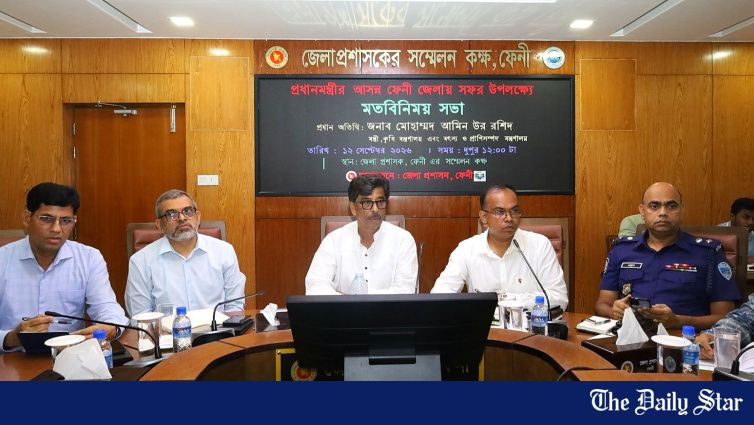
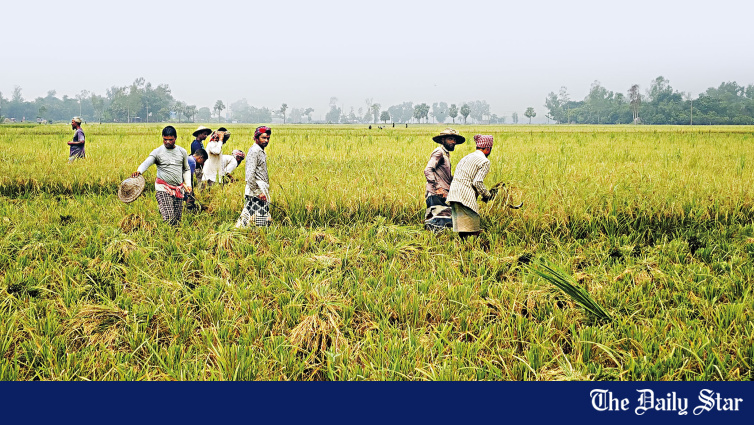
🌾 Bangladesh is set to launch its ambitious Farmer Card programme on September 17, with 1,10,364 farmers slated to receive incentives during the inaugural ceremony in Feni district. The launch, which will be presided over by Prime Minister Tarique Rahman, marks the formal rollout of a flagship agricultural support initiative designed to deliver government assistance directly to genuine farmers through a digitised, transparent and accountable mechanism.
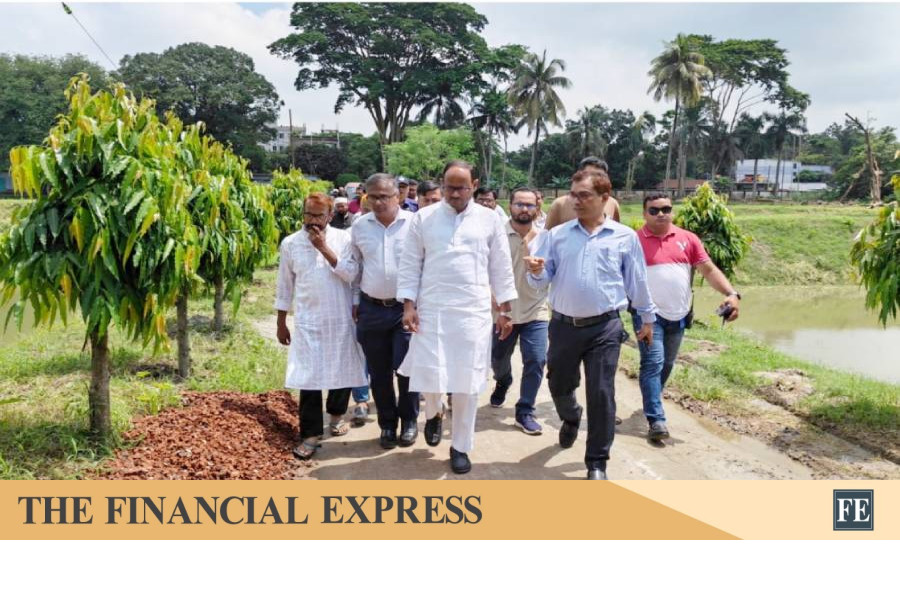
📊 Agriculture Minister Aminur made the announcement while briefing journalists after inspecting the venue of the inaugural ceremony of the Farmer Card, Family Card, and monthly honorarium allowances for Imams, Muazzins, Khadims, Purohits and Sebayets, at the Government Pilot School field in Fulgazi upazila of Feni district, ahead of the prime minister's upcoming visit to Feni.
💰 Launch Day Incentives And Farmer Card Distribution
On the inaugural day, each of the farmers enrolled in the Farmer Card programme will receive an incentive of Tk 2,500, while 7,643 farmers in Feni district will receive printed Farmer Cards, the minister said. The Farmer Card distribution programme will gradually be expanded to every upazila, union and block across the country.
The government plans to bring more than two crore farmers under the Farmer Card programme within the stipulated timeframe, the minister said. The scale of the rollout — from 1.1 lakh at launch to over 2 crore eventually — represents one of the largest direct farmer support programmes in Bangladesh's history, requiring substantial administrative capacity to verify farmer eligibility, issue cards and process incentive payments.
- 📅 Launch date: September 17, 2026
- 📍 Launch location: Government Pilot School field, Fulgazi upazila, Feni district
- 👥 Inaugural beneficiaries: 1,10,364 farmers nationwide
- 💰 Per-farmer incentive: Tk 2,500
- 💸 Feni district cards: 7,643 printed Farmer Cards
- 🌏 Target enrollment: 2 crore+ farmers nationwide
- 🏛 Categories: Marginal, small, landless, medium, large farmers
🏛 Inclusive Design: No Discrimination In Distribution
Aminur said there would be no scope for discrimination in distributing Farmer Cards. Genuine farmers from all categories, including marginal, small, landless, medium and large farmers, will be brought under the programme. The explicit commitment to inclusivity — particularly the inclusion of landless farmers who have historically been excluded from formal agricultural support programmes — represents a significant policy shift toward broader rural welfare coverage.
He said the government's objective is to ensure that farmers receive fertiliser and seeds at fair prices and get fair prices for their agricultural produce. Through the Farmer Card, necessary government support will be delivered to genuine farmers in a more organised, transparent and accountable manner. The card effectively becomes the gateway through which multiple government agricultural subsidies, input distribution programmes and price support mechanisms will be routed — replacing the previous system of universal subsidies that often leaked to non-farmer beneficiaries.
📜 Fertiliser Supply: No Shortage, Strict Action Against Hoarders
Responding to a question from journalists about fertiliser, the agriculture minister said there is no fertiliser shortage in the country. He warned that strict action would be taken against anyone attempting to create an artificial crisis, harass farmers or sell fertiliser at excessive prices. He reiterated that the government has a zero-tolerance policy towards irregularities and corruption involving fertiliser.
The minister said fertiliser is imported in a planned manner after taking into account the country's annual demand. Demand varies depending on the agricultural season, and supply and stocks are ensured accordingly. Therefore, there is no reason for a fertiliser shortage in the country, he said.
He further said reports had been received that fertiliser was being stored at different locations by people other than authorised dealers. The government is investigating whether fertiliser that is supposed to be kept with dealers is in another warehouse or in the possession of any individual, he said. The ministry has already formed several teams to monitor the situation. These teams are working from 8am to 10pm to take immediate action whenever reports of irregularities related to fertiliser are received.
⚠ Zero-Tolerance Approach To Fertiliser Syndicates
The minister said some unscrupulous individuals cause losses to farmers, society and the country as a whole. If investigations establish the truth of any irregularities involving fertiliser, action will be taken against those responsible in accordance with the law. He added that unscrupulous traders would soon realise that there is no scope for such irregularities.
The strong language reflects growing political concern about fertiliser syndicates that have repeatedly created artificial shortages during peak agricultural seasons — driving up prices and forcing farmers to either delay planting or purchase inputs at premium rates from informal channels. The formation of dedicated monitoring teams with extended working hours signals an operational intent to break the syndicate networks rather than simply issue warnings.
🌏 Strategic Significance For Bangladesh's Agriculture Sector
The Farmer Card programme carries strategic significance for Bangladesh's broader agricultural and food security agenda. By linking farmer identity verification with subsidy distribution, the programme creates the digital infrastructure needed to target support more precisely — reducing leakage and ensuring that limited fiscal resources reach the farmers who need them most.
The card also enables the government to build a comprehensive farmer database that can support policy planning, crop diversification initiatives, climate adaptation programmes and agricultural credit delivery. As Bangladesh prepares to graduate from LDC status in November 2026, the ability to design and implement targeted agricultural support programmes will become increasingly important for maintaining rural welfare in a post-LDC environment where concessional financing for agricultural subsidies may narrow.
For the export economy, the Farmer Card programme has indirect but meaningful implications. Bangladesh's agro-processing export sector — including shrimp, frozen foods, processed fruits and vegetables — depends on a reliable supply of quality agricultural inputs. By improving farmer access to fertiliser, seeds and other inputs at fair prices, the programme can support productivity gains that strengthen the upstream supply chains for agro-export industries.
🤝 Implementation Challenges Ahead
Despite the programme's strategic ambition, implementation challenges remain substantial. Scaling from 1.1 lakh farmers at launch to 2 crore farmers nationwide requires building verification capacity at every upazila, union and block level — a process that typically takes years even with strong political backing. The risk of ghost farmers, duplicate registrations and politically motivated card distribution will need to be actively managed.
The digital payment infrastructure needed to deliver Tk 2,500 incentives to millions of farmers also requires significant strengthening. Mobile financial services — bKash, Nagad and others — have built substantial capacity for person-to-person transfers, but government-to-person bulk disbursement at scale requires specialised infrastructure and reconciliation systems.
The coming months will reveal whether the Farmer Card programme can deliver on its promise of transparent, targeted agricultural support — or whether it joins the long list of Bangladeshi social welfare initiatives that have struggled to translate ambitious policy design into effective implementation at scale. The September 17 launch in Feni will be the first major test of the programme's operational readiness.
This news was originally published by The Daily Star. For the full original report, please visit: https://www.thedailystar.net/business/news/110364-farmers-will-receive-incentives-under-farmer-card-programme-minister-4270956
Related on BangladeshExport
📬 Get Bangladesh Trade News in your inbox
Weekly digest of export industry news, policy updates, and market analysis.
📰 Related Stories