Bangladesh New Import Policy 2026-2029 Eases Industrial Imports for Expatriate Investors
Import Policy Order defines expatriate Bangladeshi for the first time, simplifies capital machinery imports
TBS Report
The government has introduced new import facilities for expatriate Bangladeshis investing in industries, as part of the Import Policy Order 2026–2029, marking the first time the country's trade regulatory framework has formally defined who qualifies as an "expatriate Bangladeshi" for the purposes of industrial investment.
The new policy, gazetted by the Ministry of Commerce on 24 August 2026, provides easier procedures for importing capital machinery, machinery parts and raw materials for industrial establishments approved by expatriate Bangladeshi investors. It also allows modern international payment methods in line with Bangladesh Bank's existing foreign exchange regulations, with the explicit aim of encouraging the diaspora to channel savings and remittances into productive industrial capacity inside Bangladesh rather than into real estate or consumer imports.
The move closes a regulatory gap that had persisted for more than two years. Although the previous Import Policy Order 2021–2024 expired on 30 June 2024, it remained in effect until the issuance of the new order, leaving investors and customs officials operating under an outdated framework that did not anticipate the rapid shifts in payment technologies, the post-LDC graduation planning agenda, or the interim government's push to widen the country's industrial investor base beyond domestic conglomerates.
By formally defining "expatriate Bangladeshi" in the policy text, the Ministry of Commerce has given legal recognition to a category of investor that has long existed in practice — Bangladeshi nationals working abroad who remit earnings home and seek to establish manufacturing units — but lacked a clear, uniform regulatory pathway distinct from those available to fully foreign investors or to resident Bangladeshi citizens. The change is expected to reduce ambiguity at the Bangladesh Investment Development Authority (BIDA) approval stage and at the customs clearance point for capital machinery shipments.
The decision to permit modern international payment methods is also significant. Under the previous framework, expatriate investors often faced friction when routing funds for industrial machinery imports, with banks requiring case-by-case approvals and documentation that did not always align with the realities of cross-border digital payment rails. By aligning the new import policy with Bangladesh Bank's existing foreign exchange regulations, the government has signalled that compliant digital and card-based payment channels — already permitted under central bank rules — can now be used more straightforwardly for industrial capital expenditure, provided the underlying transactions meet foreign exchange reporting requirements.
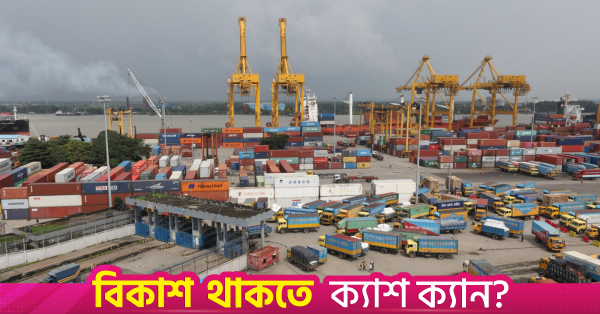
The policy shift arrives at a moment when Chattogram Port, which alone handles roughly 92% of the country's containerised cargo, is operating under sustained pressure. Container throughput at the port has climbed steadily over recent quarters, and the addition of a new expatriate-investor industrial pipeline — even at the margin — will add to demand for capital machinery berths, inland container depots, and bonded warehouse capacity. The government's parallel move, gazetted in the same week, to lay the groundwork for free trade zones and central bonded warehouses is part of the same broader push to expand the country's industrial logistics architecture in step with the new import policy.
For expatriate Bangladeshis — concentrated in the Gulf, the United Kingdom, the United States, Malaysia and Italy — the new framework lowers one of the most persistent barriers to industrial investment: the procedural opacity of importing capital machinery. Bangladesh Bank remittance data shows the country consistently receives over USD 20 billion in worker remittances annually, but the share of that flow directed into productive industrial investment — rather than consumption, land purchases or family support — has historically been small. The Ministry of Commerce's decision to bake an expatriate-specific import track directly into the Import Policy Order reflects a policy judgement that procedural friction, rather than lack of appetite, has been a binding constraint on converting remittance inflows into industrial capacity.
The gazette of the Import Policy Order 2026–2029 will run for three years, providing investors with a stable regulatory horizon through to mid-2029 — a window that aligns with Bangladesh's planned graduation from least-developed-country (LDC) status in November 2026 and the subsequent transition period during which the country will need to negotiate new market access terms with major trading partners. The new framework's emphasis on modern payment methods and expatriate industrial investment is consistent with the broader strategic objective of broadening Bangladesh's industrial base ahead of the post-LDC transition, when preferential tariff margins will narrow and competitive pressure on domestic manufacturers will intensify.
Implementation will hinge on the speed with which BIDA, the National Board of Revenue (NBR), Bangladesh Bank and commercial banks align their internal procedures to the new policy text. Past import policy orders have often seen delays of several months between gazette publication and full operationalisation at the customs station level — a friction point that the Ministry of Commerce will be keen to minimise if the expatriate investment push is to translate into actual industrial capacity on the ground within the 2026–2029 window.
This news was originally published by The Business Standard. For the full original report, please visit: https://www.tbsnews.net/economy/new-import-policy-eases-industrial-imports-expats-1524461
📬 Get Bangladesh Trade News in your inbox
Weekly digest of export industry news, policy updates, and market analysis.
📰 Related Stories