Bangladesh Government Plans Modern Meat Processing Centres in Every District
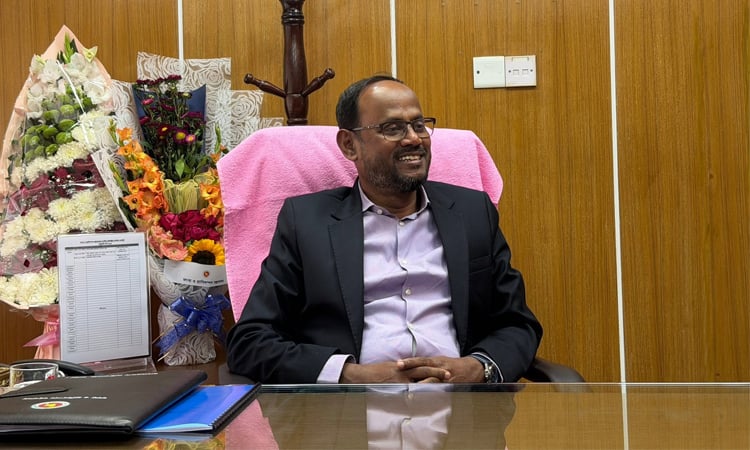
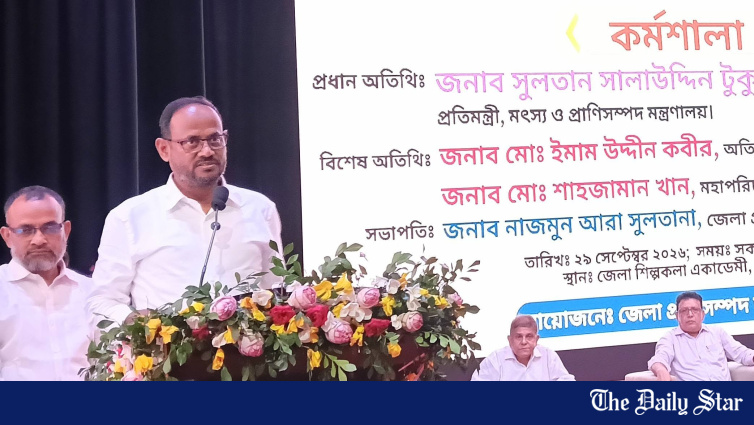
Dhaka, August 15, 2026 — The Bangladesh government has announced plans to establish modern meat processing centres in every district across the country, aiming to expand safe and quality meat processing facilities, improve preservation, and pave the way for future meat exports. State Minister for Fisheries and Livestock Sultan Salahuddin Tuku outlined the plan in an interview with BSS at his office in the Secretariat.
🍖 The Plan: District-Level Meat Processing
Bangladesh currently produces over 8.7 million tons of meat annually — with massive livestock surpluses that exceed domestic demand. However, the country's formal meat processing and export sector remains in early stages, with annual meat exports below $1 million. Key elements of the government's plan:
- 🏢 Modern meat processing centres — to be set up in every district
- 👥 13 centres already inaugurated — including one in Bogura
- 🌐 Phased nationwide expansion — remaining districts to be covered in phases
- 💰 Export-oriented infrastructure — international standard processing and preservation
- 🏛️ Modern abattoirs — scaling up to global halal and food safety standards
“If the meat processing centres are established then international standard meat processing, preservation and export would be possible,” Tuku said. The State Minister emphasised that installation of modern meat processing centres is very important to make the livestock sector export-oriented.
📊 The Meat Export Opportunity
Despite producing 8.7 million tons of meat annually, Bangladesh's meat exports remain negligible — below $1 million per year. This represents one of the country's most significant untapped export opportunities:
- 💰 Global halal meat market — valued at $300+ billion annually
- 🌐 Middle East demand — major importers of halal beef and mutton
- 🇲🇾 Malaysia — significant halal meat importer
- 🇧🇷 Brazil and Australia — currently dominate global halal beef exports
- 👥 Bangladesh competitive advantage — low-cost labour, large livestock base, Muslim-majority country
Experts note that international compliance issues are the main constraint — in addition to cold-chain gaps and the need to scale modern abattoirs. The government's district-level meat processing centre initiative directly addresses these bottlenecks.
🏛️ Livestock Sector Restructuring
Tuku indicated that during the previous regime, the fisheries and livestock sector suffered severe damage due to irregularities, corruption, and mismanagement. After assuming office, the present BNP-led government is working with sincerity and dedication for restructuring the sector. The State Minister said ministry officers and employees have worked relentlessly in the past 180 days and a sustainable plan has been taken for the future.
To check irregularities, probe committees have been formed immediately after receiving any complaints of irregularities and corruption — and these committees have already started work. After receiving the probe reports, stern action will be taken against responsible persons. Tuku expressed firm determination that no one will get any scope to do irregularities or corruption in public works.
🥞 Safe Food Initiative
To ensure safe food, Tuku said importance has been given to ensuring quality food from the growing stage. The government has taken initiatives to reach safe animal food to consumers through:
- 🌾 Modernising production systems — hygienic farming practices
- 💰 Safe animal feed — quality-controlled feed supply
- 🧰 Quality soil testing — ensuring contaminant-free growing environment
- 👥 Grower engagement — regular meetings with farmers, entrepreneurs, and stakeholders
- 📜 Disease-free animal food — health monitoring and vaccination programmes
The government is regularly exchanging views with growers — providing necessary instructions after holding meetings with growers, entrepreneurs, and other concerned persons at different stages to make safe and disease-free animal food available.
🐄 Gayal (Bos frontalis) Conservation
Regarding the Goyal (Gayal) breeding and research farm in Naikhongchhari, Bandarban, the State Minister highlighted the conservation challenge. The Gayal (Bos frontalis), also known as mithun or Drung ox, is a large semi-domesticated cattle species in the Himalayan foothills of the Indian subcontinent — primarily found in Northeast India. The farm was originally established under the initiative of former President Shaheed Ziaur Rahman and is now on the verge of extinction. The government has taken steps to revive farming of the native hill-dwelling Gayal species.
🧪 Livestock Research Breakthrough
Tuku mentioned significant progress in livestock research, noting that the Bangladesh Livestock Research Institute (BLRI) recently developed two indigenous vaccines:
- 🐑 Avian influenza (bird flu) vaccine — locally developed
- 🐐 Goat pox vaccine — locally developed
- 📅 August 2026 — formally handed over to Department of Livestock Services
These indigenous vaccines reduce Bangladesh's dependence on imported veterinary vaccines — lowering costs for farmers and strengthening the country's livestock health infrastructure.
🎂 Ramadan and Eid Programmes
Talking about the government's special programme to supply protein for common people during Ramadan, Tuku said the government sold different animal foods including meat, milk, and eggs at fair prices through mobile selling centres in different districts and 36 spots in the capital. The initiative drew huge response and common people could collect their required food at affordable prices.
Highlighting the government initiative marking the last Eid-ul Azha, he said influx of sacrificial animals through the border was strictly controlled — aiming to protect the local livestock sector and keep the interest of local farmers. Nearly 9.8 million local sacrificial animals were sold during the festival.
🌐 Strategic Context: Halal Export Diversification
The district-level meat processing centre initiative aligns with Bangladesh's broader push to develop a halal ecosystem — following the recent BIISS seminar where Commerce Minister Khandakar Abdul Muktadir positioned Bangladesh as a future global halal hub leveraging ASEAN experience. Together, the meat processing and halal certification initiatives could:
- 💰 Capture share of $300B+ global halal market — food, pharmaceuticals, cosmetics
- 🌐 Export diversification — reduce dependence on RMG
- 👥 Rural employment — create jobs in livestock farming and processing
- 🌾 Farmer income growth — higher value addition for livestock products
- 🏛️ LDC graduation buffer — new export sector to offset RMG pressure
For an export economy preparing for LDC graduation and urgently seeking diversification beyond ready-made garments, the meat processing initiative represents a strategic pivot — leveraging Bangladesh's natural livestock strengths and Muslim-majority positioning to build a new export pillar. Whether the district-level rollout can be executed effectively, and whether international halal compliance standards can be met, will determine whether the $1 million annual meat export figure can be scaled by 100x or more in the coming years.
This news was originally published by The Financial Express. For the full original report, please visit: https://thefinancialexpress.com.bd/trade/govt-to-set-up-meat-processing-centres-tuku
📬 Get Bangladesh Trade News in your inbox
Weekly digest of export industry news, policy updates, and market analysis.
📰 Related Stories