Bangladesh Import Regime Lays Groundwork for Free Trade Zones and Central Bonded Warehouses
Import Policy Order 2026-2029 includes provisions for free trade zones, aims to position Bangladesh as regional trade hub
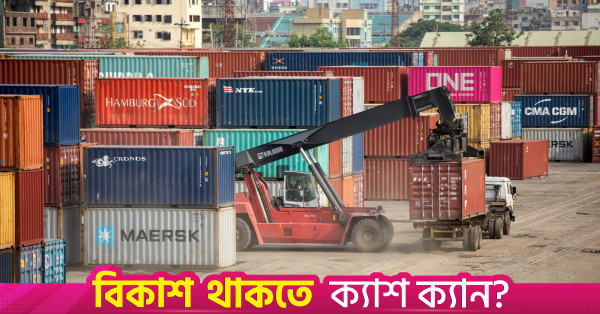
TBS Report
The Import Policy Order 2026–2029, gazetted by the Ministry of Commerce on 24 August 2026, formally embeds provisions for free trade zones and central bonded warehouses into Bangladesh's trade regulatory architecture — a structural shift that the government says is intended to strengthen the country's position as a regional hub for trade, logistics and re-export ahead of its planned graduation from least developed country (LDC) status in November 2026.
Unlike the previous Import Policy Order 2021–2024, which provided bond facilities and other benefits primarily for export-oriented industries operating under existing Economic Zone and Export Processing Zone frameworks, the new order explicitly elevates central bonded warehouses to the status of trade and logistics infrastructure. The change is more than terminological: it paves the way for a class of warehouse operators that can receive, store and re-export goods in bond without those goods entering the domestic tariff area, mirroring the model used in regional competitors such as Singapore, Dubai and Colombo.
The new policy also seeks to improve the storage and supply of raw materials for export-oriented industries — a persistent pain point for Bangladesh's apparel, leather, footwear and electronics manufacturers, who have long complained that fragmented bonded warehouse capacity forces them to hold larger inventories than competitors in Vietnam or Cambodia, raising working capital costs and tying up foreign exchange in stockpiles.
The introduction of free trade zones (FTZs) marks what observers describe as a major shift in Bangladesh's export strategy, industrial development and investment facilitation efforts. FTZs differ from the existing Export Processing Zones (EPZs) operated by BEPZA and the Economic Zones operated by BEZA in one crucial respect: they are designed to allow a broader range of commercial activity — including warehousing, repackaging, light assembly and re-export — without requiring the operator to be a manufacturer. This opens the door to multinational trading companies, third-party logistics providers and re-export specialists that have so far been constrained by a regulatory framework built around manufacturing-only investment.
The initiative is expected to help reduce supply chain delays, lower production costs and strengthen Bangladesh's position as a regional trade and logistics hub. The strategic logic is straightforward: with Chattogram Port handling roughly 92% of the country's containerised cargo and the Payra, Mongla and the under-construction Matarbari deep-sea port adding capacity, Bangladesh sits on one of the busiest maritime corridors in the Bay of Bengal. Central bonded warehouse facilities linked to those ports would allow goods destined for Northeast India, Nepal, Bhutan and landlocked Chinese provinces to be consolidated, stored and re-shipped from Bangladesh rather than transiting through Singapore or Colombo.
The new import regime also closes a long-running regulatory limbo. Although the Import Policy Order 2021–2024 expired on 30 June 2024, it remained in effect until the issuance of the new order, leaving trade and customs officials operating under an outdated framework that predated the interim government's wider economic reform agenda. The gazette of the 2026–2029 order brings the policy horizon forward to mid-2029, providing investors with a three-year window of regulatory stability that aligns with the post-LDC transition period, during which Bangladesh will need to negotiate new market access terms with major trading partners.
For the apparel sector — Bangladesh's dominant export earner — the central bonded warehouse provisions address a long-standing demand. Currently, individual manufacturers operate their own bonded warehouses under BGMEA and BKMEA membership, but the absence of centralised, shared bonded warehousing has meant that small and mid-sized factories struggle to access duty-free raw material imports at the same cost structure as their larger competitors. A central bonded warehouse regime would allow third-party operators to pool raw material inventories and supply multiple manufacturers on a just-in-time basis, reducing per-unit working capital requirements.
The move also has implications for the country's trade finance architecture. Bonded warehouse operators typically require significant bank guarantees and trade credit lines to operate at scale, and the expansion of the segment is likely to expand the range of trade finance products demanded from Bangladeshi banks — including warehouse receipts, inventory financing and re-export letters of credit. Bangladesh Bank's existing foreign exchange regulations, which the new Import Policy Order explicitly references, already provide the macro-prudential framework within which such products can be offered.
The Ministry of Commerce's decision to bundle FTZs, central bonded warehouses, raw material supply improvements and expatriate-specific import easing (covered in the companion policy gazette) into a single Import Policy Order reflects a deliberate effort to present investors with a coherent, integrated framework rather than a sequence of disconnected circulars. Implementation will now depend on the speed at which the National Board of Revenue, Bangladesh Bank, BEPZA, BEZA and the Customs Bond Commissionerate align their respective procedures with the new policy text — a coordination challenge that has, in past reform episodes, taken several quarters to fully resolve.
This news was originally published by The Business Standard. For the full original report, please visit: https://www.tbsnews.net/economy/new-import-regime-lays-groundwork-free-trade-zones-central-bonded-warehouses-1524466
📬 Get Bangladesh Trade News in your inbox
Weekly digest of export industry news, policy updates, and market analysis.
📰 Related Stories