Experts Call For Extending Bangladesh Employment Injury Scheme To All Industrial Sectors, Informal Economy
BILS and ILO media orientation hears call for permanent system beyond RMG pilot ending June 2027, with Tk 42.83 million disbursed to 574 beneficiaries so far across 248 workplace accidents.
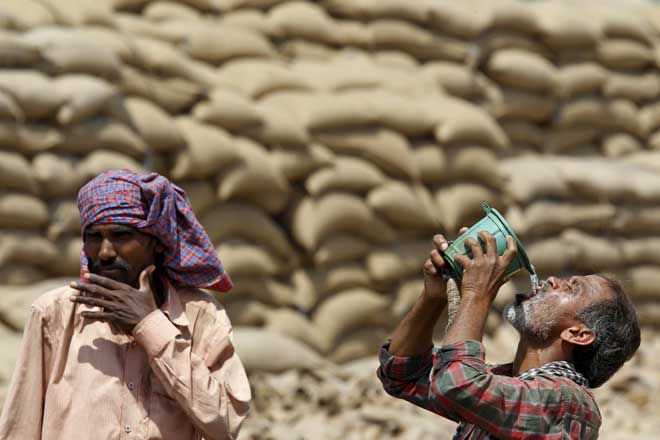
👥 Labour experts and trade union leaders on 30 September 2026 called for extending the Employment Injury Scheme (EIS) to all industrial sectors and bringing informal economy workers under its coverage to ensure comprehensive social protection across Bangladesh. The call came at a media orientation organised by the Bangladesh Institute of Labour Studies (BILS) and the International Labour Organisation (ILO) at the National Press Club in Dhaka, where stakeholders stressed that restricting the scheme strictly to export-oriented apparel units left vast segments of the workforce vulnerable.
📊 While Bangladesh had successfully established a transparent, internationally-compliant compensation pilot programme following tragic industrial accidents like the Rana Plaza collapse, transitioning to a permanent system faced several key challenges, the experts said. The current comprehensive compensation system, EIS, was only a temporary pilot programme scheduled to end in June 2027. Setting a permanent system required enacting dedicated legislation, establishing regulatory rules, and creating a permanent governing institution by securing a long-term financing model and administrative verification, they added.
🏛 Background of the EIS pilot
Launched in June 2022 following major industrial disasters, the EIS pilot scheme currently operates solely within the 100 per cent export-oriented readymade garment (RMG) sector. Supported technically by the ILO and GIZ, with financial backing from the Netherlands, Canada, and the European Union (EU), the scheme aligns with ILO Convention No 121 to offer long-term financial safety nets for workplace fatalities and permanent disabilities.
Presenting the keynote paper, BILS Joint Secretary General Md Shakil Akhter Chowdhury revealed that the pilot scheme had so far disbursed Tk 42.83 million in compensation across 248 workplace accidents. This had benefited 574 individuals, including dependents of 161 deceased workers and 87 permanently disabled workers — providing meaningful financial support to families that would otherwise have been plunged into poverty by the loss of their primary breadwinner.
🤝 ILO perspective on the pilot
Chief Technical Adviser of ILO-EIS Syed Saad Hussain Gilani noted that the protection model compensates workers with 50 per cent of their wages, offers rehabilitation services for disabled individuals, and covers both factory floor and commuting road accidents. "Bangladesh has established an international-standard compensation system during the last four years, but it is only a pilot programme that will end by June next year," he said.
Speaking about the structural challenges in scaling the pilot programme to a permanent nationwide system, Gilani said the government would have to make decisions on legislation, rules, institutions, and financing systems. These are the critical building blocks that would transform a successful pilot into a permanent feature of Bangladesh''s social protection framework.
👥 Why coverage needs to extend beyond RMG
Executive Director of BILS Syed Sultan Uddin Ahmmed emphasised that the loss or disability of sole wage earners currently plunged entire families into severe economic distress without institutional backing. Leaving non-RMG formal industries and the massive informal economy outside this safety net undermined national poverty reduction goals, he noted.
Trade union leaders, including AAM Fayez Hossain of SKOP and Salauddin Swapan of IndustryAll Bangladesh Council, noted that while the pilot programme successfully integrated compensation concepts into law, restricting coverage to RMG workers left millions of non-RMG ones without adequate protection. Bangladesh''s industrial workforce includes not just RMG workers but also workers in textiles, leather, pharmaceuticals, construction, ship recycling, transport, agriculture and many other sectors — all of whom face workplace injury risks but currently have no access to comprehensive employment injury insurance.
The informal economy is even more vulnerable. Bangladesh has a large informal sector that employs tens of millions of workers in small enterprises, household production, agriculture, transport and services. These workers have no formal employer-employee relationship, no social security coverage, and no access to workplace injury compensation. Extending the EIS to cover informal economy workers would be a complex undertaking, but it is essential if Bangladesh is to achieve universal social protection coverage.
💰 Three core recommendations
To overcome the expansion challenges and ensure sustainability when the current pilot phase concludes in 2027, the orientation outlined three core recommendations:
- ✅ Replicate across all industrial formal sectors: Extend the EIS beyond RMG to cover workers in textiles, leather, pharmaceuticals, construction, ship recycling, transport and other formal industrial sectors. This would require sector-specific adaptations of the scheme but would build on the RMG pilot''s experience.
- ✅ Bring informal sector workers under coverage: Develop mechanisms to include informal economy workers in the EIS, recognising that the informal sector represents a significant share of Bangladesh''s workforce. This would likely require innovative financing models, such as contributions from informal sector associations, government subsidies, or hybrid public-private funding.
- ✅ Universal social protection: Position the EIS expansion as part of a broader push towards universal social protection in Bangladesh, recognising that employment injury insurance is just one component of a comprehensive social protection framework that should also include health insurance, unemployment insurance, old-age pensions and disability benefits.
🏛 Bangladesh Labour Act amendments
BILS Vice Chairman Anwar Hossain said while recent amendments to the Bangladesh Labour Act incorporated provisions for an EIS fund, rapid execution through upcoming labour rules was crucial to guarantee workplace safety and dignity across all sectors. The amendments provide the legal foundation for a permanent EIS, but the implementing rules need to be drafted and gazetted to operationalise the fund and establish the administrative infrastructure for collection of contributions, assessment of claims and disbursement of benefits.
The labour rules are particularly important because they will define key operational details such as the contribution rate (who pays what), the benefit structure (how much workers and families receive), the claims process (how workers apply for compensation), the appeals mechanism (how disputes are resolved) and the governance structure (who administers the fund and ensures its integrity). Without these rules in place, the legislative amendments remain largely aspirational.
🌏 Strategic significance for Bangladesh''s social protection
The call for universal EIS coverage comes at a critical moment for Bangladesh''s social protection agenda. The country has made significant progress in expanding social safety net programmes over the past decade, but most of these programmes are targeted at poverty alleviation rather than institutionalised social insurance. A universal EIS would represent a significant step towards building a more formal, sustainable and rights-based social protection system.
For Bangladesh''s export-oriented sectors, universal EIS coverage is also strategically important. International buyers — particularly those in the EU and US markets — increasingly require suppliers to demonstrate compliance with international labour standards as part of their due diligence processes. A comprehensive EIS that covers all industrial workers (and eventually informal sector workers) would strengthen Bangladesh''s positioning as a responsible sourcing destination and reduce the risk of market access restrictions based on labour compliance concerns.
The coming months will be critical for the future of the EIS in Bangladesh. With the pilot scheduled to end in June 2027, the government has a narrow window to enact the necessary legislation, draft the implementing rules, establish the permanent governing institution, and put in place the financing model that will sustain the scheme over the long term. Industry associations such as BGMEA and BKMEA, which have been active participants in the pilot, will need to continue supporting the transition from pilot to permanent scheme. Trade unions and worker representatives will need to be meaningfully involved in the design of the permanent scheme to ensure that it adequately addresses the needs of workers and their families.
For the 574 beneficiaries who have already received Tk 42.83 million in compensation under the pilot, the EIS has been a lifeline. Scaling that lifeline to all of Bangladesh''s industrial and informal workers would be one of the most significant social protection achievements in the country''s history — and a fitting legacy for the Rana Plaza and Tazreen victims whose tragic deaths prompted the creation of the EIS in the first place.
This news was originally published by The Financial Express. For the full original report, please visit: https://thefinancialexpress.com.bd/trade/bring-informal-economy-workers-under-coverage-experts
Related on BangladeshExport
📬 Get Bangladesh Trade News in your inbox
Weekly digest of export industry news, policy updates, and market analysis.
📰 Related Stories