Bangladesh Bank Sets Up Tk 2,000 Crore Fund to Shore Up Frozen Food Exports
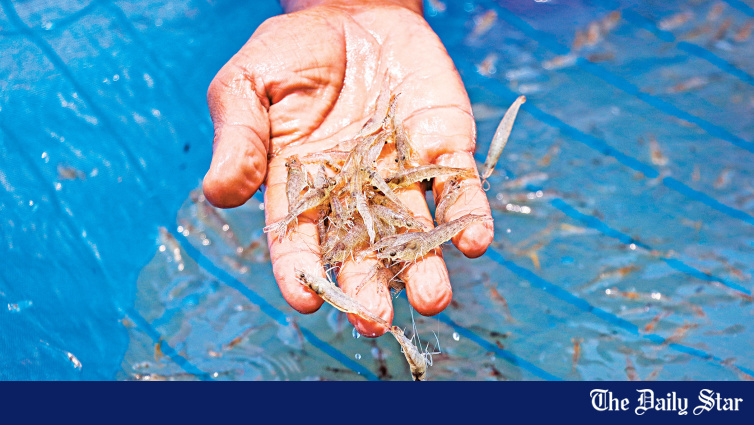
Star Business Report, Dhaka — Bangladesh Bank (BB) has formed a Tk 2,000 crore revolving pre-financing fund to support the frozen food industry, particularly shrimp and fish exporters, and help businesses cater to international markets — a strategic intervention aimed at diversifying Bangladesh's export basket beyond readymade garments.
The fund will provide financing at a maximum interest rate of 7 percent, while participating banks will receive funds from the central bank at 4 percent interest — creating a 3 percent spread for participating banks to cover operational costs and credit risk.
🐟 Why the Fund Was Created
The initiative comes as exports of frozen and live fish rose marginally in fiscal year 2025-26, while exports of shrimp, the main export item, fell nearly 4 percent year-on-year to $286 million. The decline in shrimp exports reflects the broader challenges facing Bangladesh's frozen food sector, including:
- 💰 Long cash-conversion cycles — working capital tied up in inventory
- 💰 High inventory costs — cold storage expenses
- ⚡ Expensive cold-chain operations — energy-intensive refrigeration
- 💰 Limited access to affordable financing — particularly for SME exporters
- 🐟 Production disruption from gas and power shortages
The low-cost financing is aimed at easing these key financial constraints facing the export-oriented frozen food sector, according to a Bangladesh Bank circular issued yesterday.
💰 Fund Structure and Terms
The three-year fund will operate on a revolving basis. Key structural features:
- 💰 Fund size: Tk 2,000 crore
- 💰 Duration: 3 years
- 💰 BB to banks rate: 4 percent
- 💰 Banks to borrowers rate: maximum 7 percent
- 💰 Spread: 3 percent for participating banks
- 🏛 Eligibility: All scheduled banks operating in Bangladesh
- 📜 Agreement requirement: Sign agreement with BB Agricultural Credit Department-2
🐟 Coverage of the Fund
The facility will support the production, collection, processing, and export of frozen shrimp, fish, and other frozen food products. Financing can also be used for:
- 💰 Raw material purchase
- 🏗 Factory expansion or modernisation
- 🛠 Machinery purchase
- ❄️ Cold-storage facility setup
- 🏗 Reopening of closed or partially operational fish and food-processing factories
- ☀️ Solar power projects
- 🌏 Environmental remediation, including soil reclamation
💰 Loan Terms
Under the scheme, loan terms vary by purpose:
- 💰 New factories: term loans up to 7 years (including 1-year grace period)
- 💰 Renovation/expansion/modernisation: up to 5 years (including 1-year grace period)
- 💰 Working capital: 1 year, renewable once (max 2 years total)
- 💰 New factory loan limit: up to Tk 30 crore
- 💰 Existing processor renovation: up to Tk 20 crore
- 💰 Solar panel installation: up to Tk 5 crore or 30% of main project loan (whichever lower)
- 💰 Working capital loans: up to Tk 20 crore (based on annual turnover)
👥 Priority Beneficiaries
Banks have been instructed to prioritise frozen-food exporters whose factories are fully or partly closed because of working-capital shortages. However, the eligibility criteria exclude:
- ❌ Firms already receiving financing under other BB or government schemes for the same purpose
- ❌ Classified loan defaulters
Bangladesh Bank will provide pre-financing to participating banks, but lenders will bear the full credit risk and remain responsible for loan recovery. Banks that fail to repay the pre-financed amount on time will face an additional 2 percent interest for the delayed period.
🔌 Solar Power Mandate
Beneficiaries must also take steps to meet at least 15 percent of their electricity needs from solar power within two years. Non-compliance may result in the suspension of further financing — a unique feature that aligns the frozen food fund with the broader government push for rooftop solar expansion and clean energy adoption in industrial sectors.
Banks must monitor loan utilisation and inspect borrowers' factories or offices every quarter — ensuring that the fund is used for the intended purposes and that environmental compliance (solar power adoption) is being implemented.
🌏 Strategic Objectives
The scheme aims to:
- 🌏 Diversify exports — reduce dependence on RMG sector
- 💰 Boost foreign exchange earnings — through expanded frozen food exports
- 👥 Create jobs — particularly in rural aquaculture and processing
- 🌾 Expand rural economic activity — through shrimp farming and fish processing
📊 Strategic Context: Export Diversification Imperative
The Tk 2,000 crore frozen food fund comes amid broader strategic concerns about Bangladesh's export concentration:
- 📊 RMG share of exports: over 84 percent of merchandise exports
- 📊 FY26 handicraft exports: fell 15 percent to $32.13 million
- 📊 FY26 shrimp exports: fell 4 percent to $286 million
- 📊 LDC graduation: November 2026 will reduce EU EBA preferential access
- 📊 Export diversification priority: BIDA, EPB, BGMEA all calling for broader product base
The frozen food sector represents a strategically important diversification opportunity for Bangladesh — leveraging the country's extensive coastal and riverine aquaculture capacity to develop a non-RMG export category that can absorb rural employment and generate foreign exchange earnings through the LDC graduation transition period.
🐟 Frozen Food Sector Challenges
The frozen food sector in Bangladesh has faced multiple structural challenges in recent years:
- 🐟 Shrimp disease outbreaks — affecting production volumes
- 🐟 Climate change impacts — coastal salinity, flooding, cyclones
- 🐟 EU and US food safety compliance — antibiotic residue standards
- 🐟 Cold chain infrastructure gaps — inadequate cold storage
- 🐟 Working capital constraints — long cash conversion cycles
- 🐟 Energy costs — refrigeration is energy-intensive
The BB fund addresses several of these challenges directly — particularly working capital constraints, cold chain investment, and energy costs (through the solar power mandate). The 7 percent interest rate cap is well below market rates, providing a meaningful subsidy for the sector.
🌏 Strategic Implications
The Tk 2,000 crore frozen food fund carries several strategic implications:
- ✅ Export diversification support: targeted funding for non-RMG export category
- ✅ Affordable financing: 7 percent cap below market rates
- ✅ Closed factory reopening: supports reopening of distressed frozen food factories
- ✅ Solar power mandate: aligns with clean energy transition
- ✅ Rural employment: aquaculture and processing jobs
- ⚠️ Recovery risk: banks bear full credit risk
- ⚠️ Compliance burden: quarterly inspection and solar mandate
The fund represents a strategic intervention by Bangladesh Bank to support export diversification ahead of the LDC graduation transition — with the frozen food sector identified as a priority area for development. If successful, the fund could help stabilise the $286 million shrimp export segment while expanding the broader frozen food export base through the LDC graduation transition period beginning November 2026.
This news was originally published by The Daily Star. For the full original report, please visit: https://www.thedailystar.net/business/economy/news/bb-sets-tk-2000cr-fund-shore-frozen-food-exports-4260606
📬 Get Bangladesh Trade News in your inbox
Weekly digest of export industry news, policy updates, and market analysis.
📰 Related Stories