Financing Crunch Hits Bangladesh Agri-Machinery Imports, Slowing Mechanisation
LC settlements for capital machinery fall 48% from $3.48B in FY23 to $1.81B in FY26 as high dollar rate and 100% margin requirements squeeze importers.
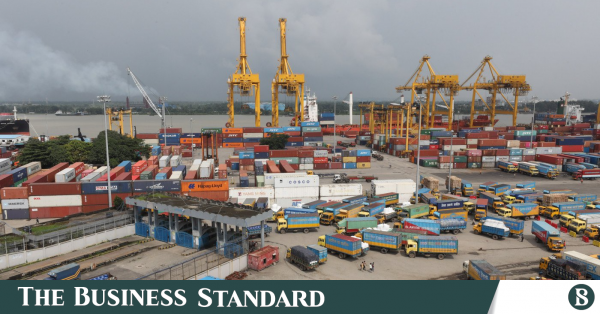
🌾 Dhaka, Bangladesh — Bangladesh’s push to mechanise agriculture is facing a financing bottleneck as importers of farm machinery struggle with the high dollar rate and increased upfront margins on letters of credit (LCs). With more funds tied up in LCs, traders with limited capital say they can no longer import the volumes they need.
📊 Bangladesh Bank data shows LC settlements for capital machinery falling from $3.48 billion in FY23 to $1.81 billion in FY26 — a 48% decline over three years.
💬 Importer Voices: Margin Requirements Squeeze Working Capital
📊 The impact of tighter financing is evident in the experience of Mohammad Zahir, owner of Zahir Enterprise, a mid-sized machinery trading firm. Speaking to The Business Standard, Zahir said importers previously did not have to deposit the full value of goods against an LC, allowing them to import larger volumes with limited working capital.
💬 “Earlier, if we imported goods worth Tk2 crore, we could do it by depositing just 30% or 40%. But now that facility is not available. Our margin requirement has gone up; in many cases we have to deposit the full amount,” he said. Zahir said the higher margins leave more working capital tied up, forcing businesses to scale down imports.
💬 Md Nurul Islam, President of the Bangladesh Agricultural Machinery Merchants Association, said financing pressure has intensified with the appreciation of the dollar.
💬 “On one hand, the dollar rate is high. On the other, new policies on LC margin requirements mean we are not getting adequate bank support, so we’re having to import using our own funds,” he said. “I am not getting bank support, so I have to self-finance. Meanwhile, I have to sell my goods on credit.”
📊 He said importers often manage several shipments simultaneously, making it difficult to maintain sufficient working capital when funds are tied up across consignments. “Managing all this has become difficult. We are now having to cut back on our import volumes,” he said.
🏛 Bangladesh Bank: Margin Not Universal
📊 However, Bangladesh Bank spokesperson and Executive Director Arif Hossain Khan said a 100% margin requirement for capital machinery imports does not apply universally. Margin requirements are generally set on a bank and client-specific basis, he said.
📊 Bangladesh Bank data shows the trajectory of LC settlements for capital machinery imports:
- 📈 FY23: $3.48 billion
- 📉 FY24: $2.66 billion
- 📉 FY25: $2.02 billion (41.95% decline over two years)
- 📉 FY26: $1.81 billion (down nearly 48% from FY23)
💬 Arif Hossain Khan said import volumes fluctuate with changes in tariffs and demand, making ups and downs in LC openings and settlements natural.
🌾 Why Agricultural Mechanisation Matters
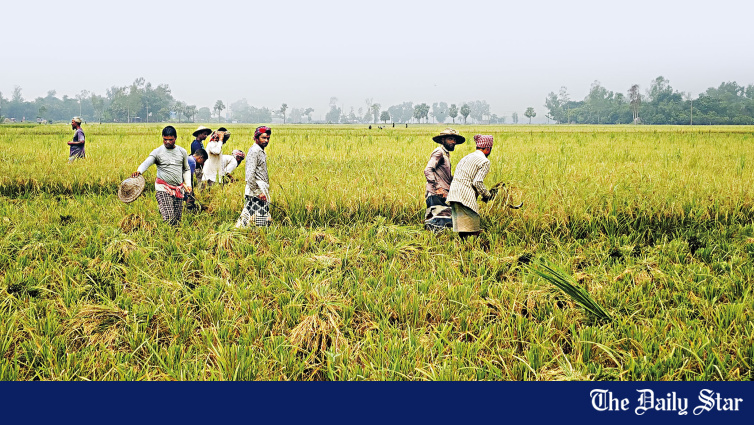
📊 Expanding machinery use in farming for land preparation, sowing, harvesting and threshing is a key part of agricultural modernisation and can reduce reliance on manual labour. For Bangladesh, where agriculture employs around 45% of the workforce but contributes only about 12% of GDP, mechanisation is essential for:
- 📈 Productivity gains — mechanised operations are 3-5x faster than manual labour
- 🌾 Yield improvement — timely sowing and harvesting reduces crop losses
- 👥 Labour shortage mitigation — rural-to-urban migration has reduced farm labour availability
- 💰 Cost reduction — mechanised farming is cheaper per hectare than labour-intensive methods
- 🌏 Food security — higher productivity supports national self-sufficiency in rice and other staples
💬 Economist Warns of Supply-Side Problems
💬 Agricultural economist Dr Jahangir Alam Khan said if agri-machinery imports decline because of the high dollar rate and LC-related complications, supply-side problems could follow.
💬 “The decline in import volumes because of the high dollar rate and LC complications will, in effect, delay agricultural development through supply shortages,” he said. He said financing for machinery imports needed for agricultural modernisation should be made easier.
💬 “Alongside providing subsidies to farmers, the government needs to focus on ensuring importers can bring in necessary machinery without difficulty,” he said.
🏢 Domestic Manufacturing Alternative
📊 Nurul Islam stressed the need to reduce reliance on imported machinery by boosting domestic production. He said there is scope to manufacture agri-machinery and parts, including:
- 🚜 Power tillers
- 🔧 Diesel engines
- 🚜 Tractors
- 🌾 Sowing equipment
- 🌾 Harvesting equipment
⚠ However, higher production costs mean local products need policy support to remain competitive.
💬 “If we stop the flow of imports for the goods we can manufacture here, domestic production will grow, and the country’s money will remain within the country,” he said. He called for long-term planning and policy coordination to boost domestic agri-machinery manufacturing.
🌏 Strategic Context: Bangladesh Agricultural Modernisation
📊 The decline in agri-machinery imports comes at a critical moment for Bangladesh’s agricultural sector. The country is facing multiple overlapping pressures:
- 🌾 Paddy price crashes — Naogaon farmers unable to recover production costs
- 🌾 Fertiliser shortages — farmer protests in Kurigram and Lalmonirhat
- 💰 High input costs — fertiliser, irrigation and labour costs rising
- 🌏 Climate stress — floods, droughts and salinity affecting yields
- 👥 Labour migration — rural workforce shrinking as youth move to cities
🤝 For Bangladesh’s policymakers, the financing crunch on agri-machinery imports highlights the need for:
- 💰 Concessional credit lines — Bangladesh Bank refinance window for agri-machinery importers at reduced rates
- 📋 Margin relaxation — lower LC margin requirements for registered agri-machinery merchants
- 💲 Subsidy on farm equipment — direct subsidy to farmers purchasing mechanised equipment
- 🏢 Domestic manufacturing incentives — tax breaks and concessional financing for local agri-machinery producers
- 📊 Dollar rationing — priority allocation of foreign exchange for essential agri-machinery imports
✅ For Bangladesh’s broader food security and rural economy, reversing the decline in agri-machinery imports is essential. With the country’s population continuing to grow and arable land shrinking due to urbanisation, only mechanisation-led productivity gains can ensure that Bangladesh feeds itself while maintaining its competitive position in global agricultural markets. A failure to address the financing crunch risks slowing the country’s hard-won progress in farm modernisation — with knock-on effects for food prices, rural employment and broader macroeconomic stability.
This news was originally published by The Business Standard. For the full original report, please visit: https://www.tbsnews.net/economy/financing-crunch-hits-agri-machinery-imports-slowing-mechanisation-1533711
📬 Get Bangladesh Trade News in your inbox
Weekly digest of export industry news, policy updates, and market analysis.
📰 Related Stories