Uttara-Ashulia CNG Stations Halt Gas Supply To Vehicles With Unauthorised Cylinders After Pretty Industrial Park Blast
Following the Pretty Industrial Park fire in Jamgora, Ashulia, CNG filling stations in Uttara-Ashulia area have decided to halt gas supply to covered vans and lorries fitted with unauthorised cylinders, exposing a long-standing regulatory gap.
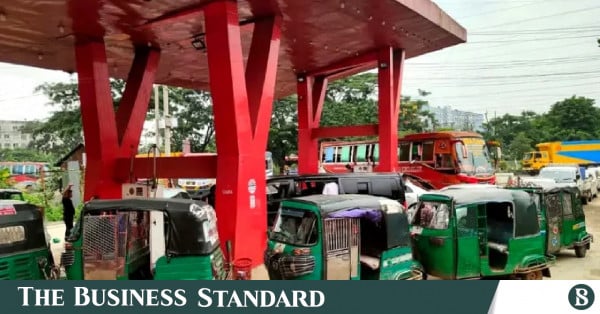
Ashulia, Dhaka, September 23, 2026 — CNG filling stations in the Uttara-Ashulia area have decided to stop supplying gas to covered vans and lorries fitted with unauthorised cylinders for transporting CNG, following an explosion and fire that killed and injured several people at Pretty Industrial Park in Jamgora, Ashulia last week. The decision exposes a long-standing regulatory gap in Bangladesh's compressed natural gas (CNG) distribution system.
🔴 Tanvir Rahman, joint secretary of the Bangladesh CNG Association and owner of TS CNG Refuelling and Conversion Ltd, said the decision was taken to halt gas supplies to vehicles carrying cylinders installed through unauthorised methods. Rahman, who is also the zonal president of the association's Uttara, Ashulia, Nabinagar, Baipail and Chandra zones, said the regional office of Titas Gas Transmission and Distribution Company Ltd has already issued written instructions to CNG stations not to supply gas to such vehicles.
📋 The Regulatory Contradiction
⚠ Titas authorities, meanwhile, said they have always instructed CNG stations not to supply gas to vehicles carrying unauthorised cylinders. Following the recent incident at Pretty Industrial Park, the authorities have once again issued letters to all CNG stations reiterating the same directive, they said.
However, several CNG station owners and officials in the area claimed that although Titas has issued written instructions not to supply gas to such covered vans, its officials have repeatedly told them verbally that Titas has no objection to supplying gas to the vehicles.
💬 Tanvir told The Business Standard that Titas formally prohibits gas supplies to the vehicles but has always verbally instructed stations to supply them with gas. “But whenever a problem occurs, the responsibility falls on us. So, we are no longer willing to get involved in this,” he said.
📜 Enforcement Gap
Tanvir further said that although the Titas office in the area issued another letter to CNG stations following the Pretty incident, no such directive had been issued in other areas. He therefore expressed doubts over whether the decision to stop supplying gas to the vehicles would be effectively implemented. He said that even if gas supplies to such covered vans are stopped in the Uttara-Ashulia area, the vehicles could still collect CNG from stations in other areas where supplies remain available.
Contacted by The Business Standard, Engineer Abu Saleh Muhammad Khademuddin, manager of Titas Gas's Ashulia Zonal Office, said the company had previously warned CNG stations against supplying gas to such vehicles and was continuing to do so.
💬 “We warned them before, and we are still warning them. Following the Pretty incident, letters have again been sent to the CNG stations. Strict action will be taken if the directive is violated,” he said.
Asked why Titas had not taken action earlier despite repeatedly warning the stations, Khademuddin said Titas does not have the legal authority to enforce a ban on such vehicles.
💬 “This will be dealt with by law enforcement agencies and the magistrate. We do not have the authority to enforce it,” he said.
The Titas official's comments indicate that while the gas distributor can instruct CNG stations not to supply gas to unauthorised cylinder-carrying vehicles, enforcement against the vehicles themselves falls under the jurisdiction of law enforcement agencies and magistrates — a structural gap that has allowed the practice to continue for years.
📊 Scale of the Uttara-Ashulia CNG Network
📋 There are a total of 19 CNG filling stations under the jurisdiction of Titas's Ashulia Zonal Office. The area is a major refuelling hub for vehicles serving the Ashulia industrial belt — one of the largest concentrations of readymade garment factories in Bangladesh.
The Uttara-Ashulia corridor also serves as a critical freight route for goods moving between the Dhaka metropolitan area and the northern districts. Covered vans fitted with unauthorised CNG cylinders have long been a common sight on this route, despite the safety risks they pose.
🔥 The Pretty Industrial Park Incident
The Pretty Industrial Park blast in Jamgora, Ashulia, was the trigger for the latest enforcement push. The explosion, attributed to an unauthorised CNG cylinder on a commercial vehicle, killed and injured several people and caused significant property damage at the industrial park — one of the largest knitwear manufacturing hubs in the area.
The incident underscored the danger of allowing widespread use of unauthorised, re-purposed or uncertified CNG cylinders in commercial vehicles. Bangladesh has a long history of similar incidents, including:
- 🚚 Covered van explosions in Dhaka's commercial districts.
- 🚚 CNG cylinder bursts during refilling at unauthorised conversion workshops.
- 🚚 Vehicle fires during road accidents where unauthorised cylinders ruptured.
Despite the recurring incidents, enforcement has remained inconsistent because of the split jurisdiction between Titas (which controls gas supply), Bangladesh Road Transport Authority (BRTA) (which regulates vehicle fitness), and law enforcement agencies (which can only act post-incident).
🏢 Wider Industrial Implications
For the Ashulia industrial belt — home to hundreds of RMG factories that depend on just-in-time freight movement — any disruption to CNG supply risks ripple effects on transport costs and delivery schedules. The Pretty Industrial Park incident, in particular, has raised concerns among factory owners about the safety of their transport operations.
The Bangladesh Garment Manufacturers and Exporters Association (BGMEA) and the Bangladesh Knitwear Manufacturers and Exporters Association (BKMEA) have repeatedly called for stronger enforcement of vehicle safety standards, particularly for commercial vehicles carrying industrial inputs and finished garments.
The CNG cylinder issue also intersects with the broader question of energy supply reliability. Bangladesh's industrial sector has been hit by repeated gas shortages in 2026, with several factories reporting production halts and order cancellations due to energy disruptions. The Pretty incident adds a safety dimension to what was previously a supply problem.
💼 CNG As A Bridge Fuel For Bangladesh's Transport Sector
💼 Bangladesh has one of the world's largest CNG vehicle fleets, with an estimated 2-3 million CNG-converted vehicles on the road. The transition to CNG began in the late 1990s as a response to urban air pollution and high petrol/diesel prices, and was supported by government tax incentives for vehicle conversion and CNG infrastructure.
The Bangladesh CNG Association represents station owners, conversion workshops and parts suppliers across the country. Its joint secretary's public acknowledgement that the sector has been operating under informal verbal directions — contrary to formal written prohibitions — is a rare moment of transparency in a sector that has long operated in a regulatory grey zone.
🏛 Policy Implications
⚖ The Pretty Industrial Park incident and the subsequent CNG station decision highlight the need for:
- 🔹 A unified regulatory framework for CNG cylinder certification, inspection and enforcement.
- 🔹 Mandatory cylinder replacement programmes for vehicles found carrying unauthorised or expired cylinders.
- 🔹 Stronger coordination between Titas, BRTA, law enforcement agencies and the Explosives Department.
- 🔹 Public awareness campaigns about the risks of unauthorised CNG cylinders and the importance of using certified equipment.
Without these reforms, the Uttara-Ashulia decision may simply shift the unauthorised cylinder problem to other areas where enforcement remains lax — as Tanvir warned in his interview with TBS.
For now, the 19 CNG filling stations under Titas's Ashulia Zonal Office are the first to take a stand. Whether the rest of the country follows depends on whether the government is willing to back the stations' decision with the legal authority and enforcement resources that Titas currently lacks.
This news was originally published by The Business Standard. For the full original report, please visit: https://www.tbsnews.net/economy/energy/uttara-ashulia-cng-stations-halt-gas-supply-vehicles-unauthorised-cylinders-1551061
📬 Get Bangladesh Trade News in your inbox
Weekly digest of export industry news, policy updates, and market analysis.
📰 Related Stories


✍️ More from System Administrator