Rough Sea Disrupts Ship-To-Ship LNG Transfer At Bangladesh's Maheshkhali Floating Terminal: Petrobangla
Petrobangla confirms that inclement weather in the Bay of Bengal near Cox's Bazar has disrupted LNG transfer from imported cargo to the floating LNG terminal, reducing overall gas supply to the national grid.
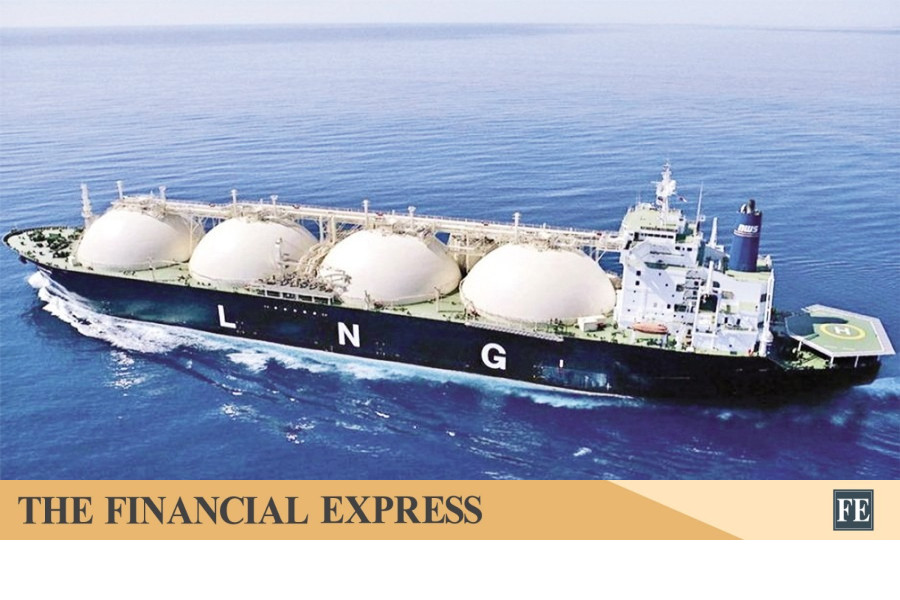
Cox's Bazar, September 24, 2026 — Liquefied natural gas (LNG) transfer from the imported LNG cargo to the floating LNG terminal has been disrupted due to inclement weather at the Maheshkhali area of Cox's Bazar in the Bay of Bengal, state-run Petrobangla stated in a press release Thursday night. The disruption has reduced overall gas supply to Bangladesh's national grid — adding to the country's already strained energy situation.
🌊 Petrobangla confirmed that overall gas supply has decreased compared to normal as a consequence of the disrupted LNG transfer. The state-owned energy corporation regretted the temporary inconvenience and assured that overall gas supply will return to normalcy when the weather in the Bay improves.
💡 Bangladesh's Floating LNG Terminal Infrastructure
Bangladesh operates two Floating Storage and Regasification Units (FSRUs) in the Bay of Bengal, both located in the Maheshkhali area of Cox's Bazar:
- 🚢 Summit LNG Terminal — operated by Summit LNG Terminal Co., a subsidiary of Summit Group. Capacity: 500 million standard cubic feet per day (mmscfd).
- 🚢 Excelerate Energy LNG Terminal — operated by Excelerate Energy, a US-based LNG infrastructure company. Capacity: 500 mmscfd.
Together, these two FSRUs can regasify up to 1,000 mmscfd of natural gas — equivalent to approximately 25-30 per cent of Bangladesh's total gas consumption. The FSRUs receive LNG cargoes from large LNG carriers (typically carrying 130,000-170,000 cubic metres of LNG), store the LNG onboard, and regasify it for injection into the national gas grid.
🚢 The Ship-To-Ship Transfer Process
The disrupted operation was a ship-to-ship (STS) transfer — a procedure where LNG is transferred from one vessel to another at sea. STS transfers are commonly used in Bangladesh's LNG operations for several reasons:
- 🚢 Larger LNG carriers cannot directly access the FSRU mooring due to draft restrictions.
- 🚢 Cargo consolidation — combining multiple smaller cargoes into a single larger one for efficient regasification.
- 🚢 Scheduling flexibility — allowing cargo swaps between different importers.
- 🚢 Emergency response — transferring cargo when one vessel cannot berth normally.
STS transfers require calm sea conditions because the two vessels must maintain a precise relative position during the transfer — typically lasting 12-24 hours. Rough seas pose a serious risk of:
- ⚠ Cargo spillage — from coupling failures.
- ⚠ Vessel collision — if positioning systems fail.
- ⚠ Equipment damage — from excessive vessel movement.
- ⚠ Crew safety risks — for personnel involved in the transfer.
🌊 Why The Bay Of Bengal Is Challenging For LNG Operations
The Bay of Bengal is particularly challenging for LNG operations due to:
- 🌊 Monsoon season (June-September) — with rough seas, high winds, and frequent cyclones.
- 🌊 Cyclone season (April-June and October-November) — with potential for severe storms.
- 🌊 Tidal variations — with significant draft changes during tidal cycles.
- 🌊 Strong currents — particularly during monsoon-driven flow changes.
These conditions periodically force LNG operations to be suspended — resulting in temporary reductions in gas supply to the national grid. Bangladesh's LNG importers have procedures in place to manage these disruptions, including:
- 📋 Maintaining strategic LNG inventory in the FSRU storage tanks.
- 📋 Scheduling cargo arrivals to avoid peak monsoon periods when possible.
- 📋 Coordinating with the national gas dispatch centre to manage supply reductions.
- 📋 Prioritising gas supply to critical sectors during disruptions.
💰 Bangladesh's LNG Import Dependency
Bangladesh has become increasingly dependent on LNG imports since the country's first FSRU began operations in 2018. Key facts:
- 💵 LNG imports in FY26: approximately 7-8 million tonnes.
- 💵 LNG import cost in FY26: approximately US$4-5 billion.
- 💵 LNG suppliers: Qatar, Oman, spot market purchases.
- 💵 Long-term contracts: Qatar (3.5 million tonnes/year), Oman (1.5 million tonnes/year).
- 💵 Spot market purchases: for additional requirements.
LNG now accounts for approximately 20-25 per cent of Bangladesh's total gas supply — making the country highly exposed to global LNG price volatility and operational disruptions at the FSRUs.
📋 Gas Supply Priority During Disruptions
When LNG operations are disrupted, Bangladesh's gas transmission company (GTCL) and distribution companies (Titas, Bakhrabad, Jalalabad, etc.) implement a priority allocation framework:
- 🔹 Priority 1: Power generation — particularly for gas-fired power plants supplying the national grid.
- 🔹 Priority 2: Captive power in export-oriented industries — particularly RMG factories.
- 🔹 Priority 3: Fertiliser production — for domestic agriculture.
- 🔹 Priority 4: Industrial process gas — for non-export industries.
- 🔹 Priority 5: Residential and commercial — for cooking and other household uses.
- 🔹 Priority 6: CNG refuelling stations — for transport sector.
During the current disruption, supply to lower-priority sectors (residential, commercial, CNG) is likely to bear the brunt of the reduction — though the magnitude depends on the duration of the weather event.
💼 Impact On Industrial And Export Operations
For Bangladesh's industrial sector — already reeling from gas supply disruptions over the past several months — the LNG transfer disruption adds another layer of pressure. The RMG sector in particular has been affected by:
- ⚠ Production halts — with 78 per cent of knitwear factories reporting partial production halts.
- ⚠ Buyer order cancellations — with 55 per cent of factories reporting buyer cuts since late August.
- ⚠ Shipment delays — as factories struggle to meet delivery deadlines.
- ⚠ Discounted orders — to retain buyer relationships despite production uncertainty.
The Bangladesh Garment Manufacturers and Exporters Association (BGMEA) and Bangladesh Knitwear Manufacturers and Exporters Association (BKMEA) have repeatedly called for priority gas supply to export-oriented factories — warning that the cumulative impact of energy disruptions threatens the country's US$48 billion RMG export target for FY27.
🌏 Strategic Context: Energy Security Challenges
The LNG transfer disruption comes at a particularly challenging moment for Bangladesh's energy sector:
- 📋 September 20 fuel price hike — Tk 20 per litre across diesel, octane, petrol and kerosene.
- 📋 West Asia conflict — disrupting global energy markets and pushing up LNG import costs.
- 📋 Power-energy subsidy burden — Tk 480 billion allocated in FY27, with Tk 238 billion already disbursed in two and a half months.
- 📋 IMF pressure — for further subsidy rationalisation and energy price increases.
- 📋 Phulbari coalmine development — being pursued as a domestic energy source alternative.
The LNG transfer disruption is therefore not an isolated incident — it is one of multiple pressure points affecting Bangladesh's energy security and economic stability.
💼 Petrobangla's Response
Petrobangla's press release was brief and direct, acknowledging the disruption and providing assurance of normalcy once weather conditions improve. The state-owned corporation did not specify:
- 📋 The expected duration of the disruption.
- 📋 The magnitude of the supply reduction.
- 📋 The specific sectors affected by the reduced supply.
- 📋 The contingency measures being implemented.
Industry observers expect Petrobangla to provide further updates as the situation develops — particularly if the disruption extends beyond 24-48 hours and begins to significantly affect power generation or industrial operations.
📜 Looking Ahead
For now, Bangladesh's energy sector operators are monitoring weather conditions in the Bay of Bengal closely. The Bay is known for its unpredictable weather patterns, and rough sea conditions can persist for several days during monsoon or cyclone periods.
If the disruption extends, it could compound the existing gas supply challenges and force further industrial production halts. Bangladesh's energy planners will also be reflecting on the strategic implications — particularly the vulnerability of relying on ship-to-ship LNG transfers as a primary regasification method.
The disruption reinforces the case for:
- 🔹 Onshore LNG regasification terminals — which would be less weather-dependent than FSRUs.
- 🔹 Domestic gas exploration — to reduce dependence on imported LNG.
- 🔹 Renewable energy expansion — to diversify the energy mix.
- 🔹 Strategic gas storage — to buffer against short-term disruptions.
Until the weather improves, Bangladesh's gas supply will remain constrained — and the country's industrial sector will need to manage the consequences of yet another energy supply disruption in what has already been a challenging year.
This news was originally published by The Financial Express. For the full original report, please visit: https://thefinancialexpress.com.bd/trade/rough-sea-disrupts-ship-to-ship-lng-transfer-in-floating-lng-terminal
📬 Get Bangladesh Trade News in your inbox
Weekly digest of export industry news, policy updates, and market analysis.
📰 Related Stories




✍️ More from System Administrator