Reforms Can Boost Bangladesh Leather Footwear Exports to $5 Billion by 2030: FLAXA
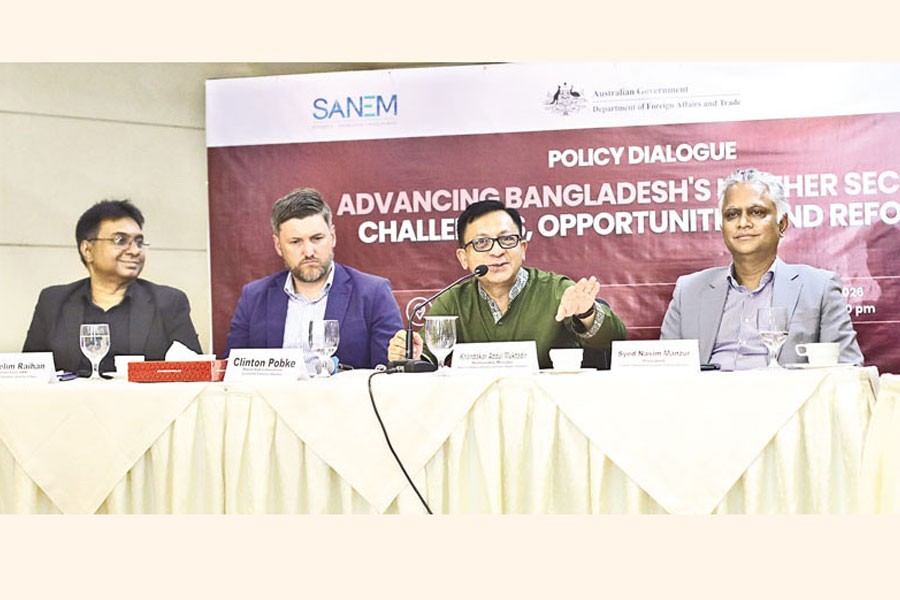
Star Business Report, Dhaka — Bangladesh can more than double its exports of footwear and leather goods to $5 billion by 2030, but this will require major policy reforms, better infrastructure, and a shift towards higher-value products, said Syed Nasim Manzur, President of the Footwear, Leathergoods & Accessories Exporters Association (FLAXA) on 3 September 2026.
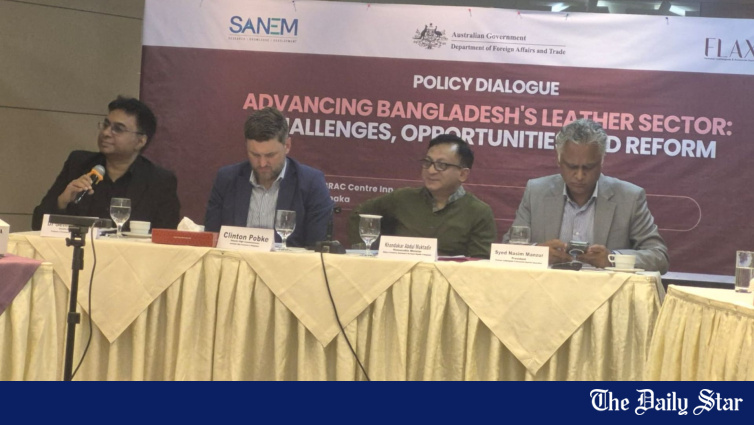
"A lot has been talked about the potential, but somehow that doesn't live up to expectations," Manzur said at a policy dialogue on advancing Bangladesh's leather sector, organised by the South Asian Network on Economic Modeling (SANEM) and FLAXA at BRAC Centre Inn.
📊 Current Position vs Target
- 👕 Current exports: $1.76 billion (footwear and leather goods)
- 👕 Target by 2030: $5 billion
- 👕 Required growth: ~2.84x increase (~184% growth)
- 🌏 Global ranking: 7th largest footwear producer
- 🌏 Export markets: 105+ countries
- 🌏 Largest markets: US and India
👕 Non-Leather Footwear: The Growth Opportunity
Manzur said policymakers need to look beyond leather when framing policies for the sector. Non-leather footwear, bags, and other products are becoming increasingly important, while new areas such as automotive leather components are also emerging.
- 👕 Non-leather footwear share: 31% of sector exports (growing faster than leather)
- 👕 Bangladesh's global non-leather footwear market share: less than 0.5%
- 👕 If increased to 5%: could generate ~$3.5 billion in exports
- 👕 Synthetic bags expansion: could bring another $3.4 billion
"This is a huge opportunity. Someone will take it," Manzur said, citing the rapid growth of countries such as Vietnam and Cambodia in these markets.
📜 Policy Reform Recommendations
Manzur called for several specific policy reforms:
- 📜 Separate customs rules based on specific HS codes for leather and non-leather products
- 📜 Export incentives unchanged for a fixed period to give investors certainty ahead of LDC graduation
- 📜 Withdrawal of advance income tax on exports (describing it as a tax on revenue, not income)
- 📜 Urgent gas and power supply action at Savar tannery estate
- 📜 CETP made operational at Savar estate
- 📜 Infrastructure improvement (roads, utilities inside estate)
📜 Excessive Paperwork Burden
Manzur criticised the excessive paperwork burden on exporters:
- 📜 Bangladesh: 23 certificates and licences, ~190 documents required
- 📜 Vietnam: only 4 certificates required
- 📊 Document burden ratio: Bangladesh has ~47.5x Vietnam's requirement
👕 Shift From Crust Leather to Finished Products
Bangladesh must move away from exporting semi-finished (crust) leather:
- 👕 Crust leather share: ~65% of leather exported as semi-finished
- 👕 Value loss: most value created abroad, not domestically
- 👕 Import raw hides for processing: like importing cotton for textile industry
- 👕 Focus on finished products: "We need to push towards finished products"
"A comprehensive strategy and a targeted roadmap can make the $5 billion export target very much doable," Manzur said.
🌏 Strategic Context
- 📊 CETP crisis: only 56-72% of designed capacity operational (ID 531)
- 📊 Hong Kong Shoe Association: investment interest in Bangladesh footwear (ID 497)
- 📊 LDC graduation: November 2026, preferential access narrowing
- 📊 Vietnam and Cambodia competition: rapid growth in non-leather markets
- 📊 Automotive leather: emerging product category
🌏 Strategic Implications
- ✅ $5b target achievable: with reforms, 2.84x growth from $1.76b
- ✅ Non-leather opportunity: $3.5b footwear + $3.4b bags potential
- ✅ Vietnam benchmark: 4 certificates vs Bangladesh's 23
- ✅ HS code separation: leather vs non-leather customs treatment
- ✅ Import raw hides model: like cotton import for textile
- ⚠️ 65% crust leather export: value created abroad
- ⚠️ 23 certificates, 190 documents: excessive compliance burden
- ⚠️ CETP not operational: environmental compliance gap
- ⚠️ Gas and power shortage: at Savar tannery estate
The $5 billion leather and footwear export target represents an achievable but ambitious goal that requires comprehensive reform across customs procedures, infrastructure (CETP, roads, utilities), product mix (shift from crust to finished), and market development (non-leather expansion). With Vietnam requiring only 4 certificates versus Bangladesh's 23, and non-leather footwear already accounting for 31% of sector exports, the opportunity is clear — but realising it will require sustained policy commitment through the LDC graduation transition period beginning November 2026.
This news was originally published by The Daily Star. For the full original report, please visit: https://www.thedailystar.net/business/news/reforms-can-boost-leather-footwear-exports-5b-2030-nasim-manzur-4263806
Related on BangladeshExport
📬 Get Bangladesh Trade News in your inbox
Weekly digest of export industry news, policy updates, and market analysis.