NBR Exempts Firms With Turnover Up to Tk 2 Crore From Minimum Tax
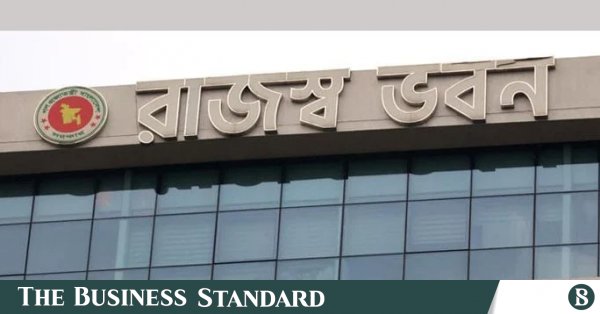
Star Business Report, Dhaka — The National Board of Revenue (NBR) has exempted businesses and companies with annual turnover of up to Tk 2 crore from minimum turnover tax, easing a tax burden that applies regardless of whether a business makes a profit — a structural relief measure targeted at small businesses and loss-making firms that have been pressured by the broader economic slowdown.
The tax authority issued a notification on 31 August 2026 introducing a revised structure for the minimum turnover tax, with the changes taking effect immediately. The exemption represents the latest in a series of fiscal relief measures introduced by the government to support businesses through the gas and power crisis that has hobbled industrial production through 2026.
💰 Revised Tax Structure
Under the new arrangement, the minimum turnover tax applies on a tiered basis:
- ✅ Annual turnover up to Tk 2 crore: NO minimum turnover tax (fully exempt)
- 💰 Annual turnover Tk 2 crore to Tk 4 crore: 0.5 percent minimum tax
- 💰 Annual turnover above Tk 4 crore: 1 percent minimum tax (unchanged)
Previously, a 1 percent minimum turnover tax was imposed regardless of whether a business made a profit or incurred a loss — a structural feature that had drawn sustained criticism from the business community, particularly during the economic slowdown when many firms reported losses but were still required to pay the turnover-based tax.
📊 Historical Context
The trajectory of minimum turnover tax rates over recent fiscal years illustrates how the burden has evolved:
- 📊 Until FY25: Most companies (with some exceptions) paid 0.60 percent minimum turnover tax
- 📊 Until FY25: Non-company businesses with turnover above Tk 4 crore paid 0.25 percent
- 📊 2025 budget: raised minimum turnover tax to 1 percent for both categories
- 📊 August 2026 reform: exempts Tk 2 crore turnover firms, halves rate for Tk 2-4 crore firms
The 2025 budget's doubling of the rate from 0.60 percent to 1 percent for companies had raised concerns among businesses with low profit margins and loss-making firms, which were required to pay tax despite having no profits. The latest exemption is expected to provide some relief to smaller businesses, NBR officials hope.
👥 Business Community Response
The business community has welcomed the move while calling for further reform of the system. The Federation of Bangladesh Chambers of Commerce and Industry (FBCCI) sent a letter to the finance minister on 24 August 2026, urging the government to gradually move away from the 1 percent minimum turnover tax imposed on businesses and companies.
Md Fazlul Hoque, administrator of the business body, recently told TBS that taxation should ultimately be based on actual income, urging the abolition of the minimum turnover tax system in favour of taxation based on actual profits. The FBCCI's position reflects the broader business community view that the minimum turnover tax is structurally regressive — taxing firms regardless of profitability, and disproportionately burdening smaller businesses with thin margins.
🏛 Strategic Rationale: SME Support
The exemption is targeted at small and medium enterprises (SMEs) — the segment of the business community most affected by the gas and power crisis, the broader economic slowdown, and the credit constraints that have characterised FY26. Key strategic considerations include:
- 👥 SME employment protection: small businesses are critical employers that have been under pressure from rising input costs and reduced consumer demand
- 💰 Cash flow relief: exempts small businesses from paying tax even when they are loss-making
- 📊 Compliance simplification: reduces administrative burden on small firms with limited accounting capacity
- 🏛 Formalisation incentive: lower tax burden encourages informal businesses to enter the formal economy
- 🌏 Economic recovery support: aligns with broader fiscal relief measures supporting industrial recovery
💰 FBCCI's Broader Reform Position
The FBCCI's August 24 letter to the finance minister articulated a broader reform position that goes beyond the immediate Tk 2 crore exemption:
- 📜 Gradual phase-out of the 1 percent minimum turnover tax
- 📜 Shift to actual profit-based taxation for businesses and companies
- 📜 Elimination of tax on loss-making firms — a structural reform that would align Bangladesh with international tax norms
- 📜 Greater tax-policy stability — reducing frequent changes that complicate business planning
The NBR's August 31 exemption represents a partial response to the FBCCI's reform agenda — providing immediate relief to the smallest businesses while stopping short of the broader abolition of the minimum turnover tax system.
📊 Strategic Implications for Bangladesh Tax Policy
The Tk 2 crore exemption carries several strategic implications:
- ✅ Small business relief: materially reduces tax burden on SMEs during the economic slowdown
- ✅ Loss-making firm protection: small firms with no profits no longer face mandatory tax payments
- ✅ FBCCI engagement signal: NBR responding to organised business community advocacy
- ✅ FBCCI-administered government: reflects the new government's market-friendly orientation
- ⚠️ Partial reform only: doesn't address the broader structural concern about turnover-based taxation
- ⚠️ Revenue impact: NBR will need to assess revenue loss from the exemption
🌏 Broader Fiscal Policy Context
The NBR exemption aligns with a broader pattern of fiscal relief measures introduced by the government in recent months to support businesses through the economic slowdown:
- 💰 Tk 60,000 crore stimulus package for commercial banks (with Tk 41,000 crore signed by 17 banks)
- 💰 Tk 13,000 crore agri refinance scheme at 7% capped rate
- 💰 Tk 2,000 crore frozen food export fund
- 💰 15-year loan rescheduling for large defaulters (Tk 1,000 crore+ loans)
- 💰 NBR Tk 2 crore turnover exemption (this measure)
Together, these measures represent a comprehensive fiscal response to the dual challenges of industrial stress and economic slowdown — providing targeted relief to businesses at different segments of the economy, from large industrial defaulters to small SMEs. The package reflects the government's strategic priority of preserving industrial capacity and employment through the LDC graduation transition period beginning November 2026, when Bangladesh will need every competitive advantage to maintain export momentum.
This news was originally published by The Business Standard / The Daily Star. For the full original report, please visit: https://www.tbsnews.net/economy/industry/firms-turnover-tk2cr-exempted-minimum-tax-1529786
Related on BangladeshExport
📬 Get Bangladesh Trade News in your inbox
Weekly digest of export industry news, policy updates, and market analysis.
📰 Related Stories