Fertiliser Subsidies Eat 80 Percent Of Bangladesh Agriculture Budget: Livestock, Poultry, Fisheries Starve
CIMMYT policy note by Dr Ravi Nandi and Dr Wais Kabir reveals fertiliser subsidies consume nearly 80% of agriculture ministry budget, with rice farming receiving 85-90% of subsidies while faster-growing livestock, poultry and fisheries subsectors receive little to no direct support.
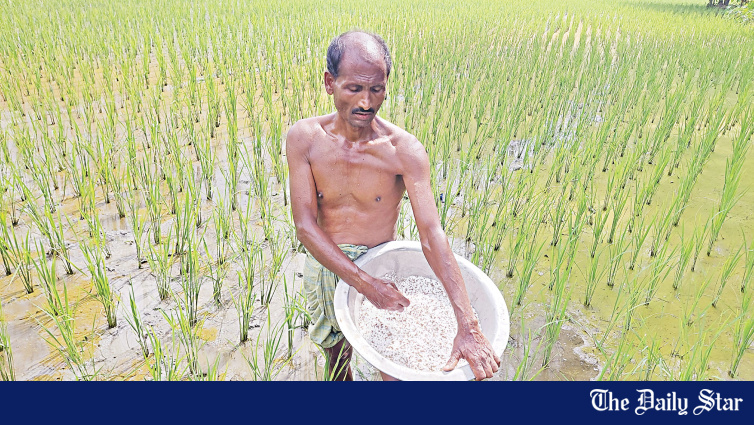
Dhaka, September 29, 2026 — Fertiliser subsidies consume nearly 80 per cent of the agriculture ministry's budget, while faster-growing subsectors such as livestock, poultry and fisheries receive little to no direct subsidy, according to a recent policy note by the International Maize and Wheat Improvement Center (CIMMYT).
🌾 The note titled “Fertilizer, Fiscal Risk, and Food Security: Rationalizing Bangladesh's Subsidy System in an Era of External Shocks” — by Dr Ravi Nandi (CIMMYT) and Dr Wais Kabir (former executive chairman of the Bangladesh Agricultural Research Council) — calls for a gradual reform of the fertiliser subsidy system.
📊 The Subsidy Imbalance
Calling the subsidy system inefficient, inequitable and fiscally unsustainable, the report explains key findings:
- 💰 Fertiliser subsidies = ~80% of agriculture ministry budget
- 💰 Rice farming receives 85-90% of fertiliser subsidies
- 💰 Livestock, poultry, fisheries receive little to no direct subsidy
- 💰 Large farmers disproportionately benefit from the current system
- 💰 Investment diverted away from potentially higher-growth subsectors
💼 Why This Matters For Bangladesh's Agriculture
The subsidy imbalance has several consequences:
- ⚠ Rice overemphasis — Bangladesh already produces enough rice for domestic consumption; marginal returns on additional rice production are diminishing
- ⚠ Livestock and poultry growth potential untapped — these subsectors are growing faster than rice but receive minimal government support
- ⚠ Fisheries underinvestment — Bangladesh is one of the world's largest fish producers, but the sector lacks adequate public investment
- ⚠ Fiscal unsustainability — with fuel price increases pushing up fertiliser import costs, the subsidy burden is growing
💰 The Fiscal Risk Dimension
The report's title highlights fiscal risk as a key concern. The fertiliser subsidy system creates fiscal vulnerability because:
- 📋 Global price volatility — fertiliser prices fluctuate with global energy markets
- 📋 Exchange rate impact — taka depreciation increases the local cost of imported fertilisers
- 📋 Growing demand — as agricultural production increases, fertiliser demand rises, pushing subsidy costs higher
- 📋 Budget competition — the large fertiliser subsidy crowds out other agricultural investments
- 📋 IMF pressure — the IMF programme is pushing for subsidy rationalisation
🌾 Bangladesh's Fertiliser Subsidy System
Bangladesh's current fertiliser subsidy system includes:
- 🌿 Subsidised farmer-level prices: Urea at Tk 27/kg, DAP at Tk 21/kg, TSP at Tk 27/kg, MOP at Tk 20/kg
- 🌿 Dealer commission: recently raised from Tk 2 to Tk 3 per kg (first increase since 2009)
- 🌿 Allocation: BCIC manages distribution through licensed dealers
- 🌿 Recent challenges: char land early cultivation surge creating shortages in Rangpur region
💬 Recommendations From The Policy Note
The CIMMYT policy note calls for gradual reform of the fertiliser subsidy system, including:
- 🔹 Reducing the disproportionate share going to rice farming
- 🔹 Redirecting investment towards livestock, poultry, and fisheries
- 🔹 Targeting subsidies to small and marginal farmers rather than large farmers
- 🔹 Introducing market-based pricing mechanisms for a gradual transition
- 🔹 Strengthening agricultural extension services for balanced fertiliser use
- 🔹 Promoting soil health management to reduce excessive fertiliser application
🌏 International Context: Subsidy Reform Pressure
The CIMMYT report aligns with broader international pressure for agricultural subsidy reform:
- 🇦🇪 IMF programme — pushing for subsidy rationalisation across all sectors
- 🇦🇪 World Bank — advocating for targeted subsidies rather than universal subsidies
- 🇦🇪 WTO — monitoring agricultural subsidy levels for trade compliance
- 🇦🇪 LDC graduation — post-graduation, Bangladesh will face new constraints on agricultural subsidies
💼 Impact On Food Security
The report's food security dimension is significant:
- 🥬 Rice self-sufficiency achieved — Bangladesh produces enough rice for domestic needs
- 🥬 Protein deficiency — livestock, poultry, and fish are critical protein sources that are underinvested
- 🥬 Nutritional diversity — overemphasis on rice contributes to limited dietary diversity
- 🥬 Climate resilience — diversified agriculture is more resilient to climate shocks
📜 Looking Ahead
For Bangladesh's agricultural policymakers, the CIMMYT policy note provides a timely evidence base for subsidy reform. The recommendations align with:
- 📝 The government's 18-country export diversification strategy — which includes agricultural products
- 📝 The Kurigram Soil Health Protection Card initiative — targeting fertiliser to genuine farmers
- 📝 The fertiliser dealer commission increase — improving distribution efficiency
- 📝 The Special Branch's 15 recommendations — on anti-collusion in fertiliser distribution
The coming months will reveal whether the government takes concrete steps to rebalance agricultural subsidies — or whether the current rice-heavy subsidy structure will persist despite mounting evidence of its inefficiency and fiscal unsustainability.
This news was originally published by The Daily Star. For the full original report, please visit: https://www.thedailystar.net/business/economy/news/fertiliser-subsidies-eat-budget-livestock-poultry-starve-4285426
📬 Get Bangladesh Trade News in your inbox
Weekly digest of export industry news, policy updates, and market analysis.
📰 Related Stories
✍️ More from System Administrator