Entrepreneurs Seek Clear Roadmap for Smooth Bangladesh LDC Graduation
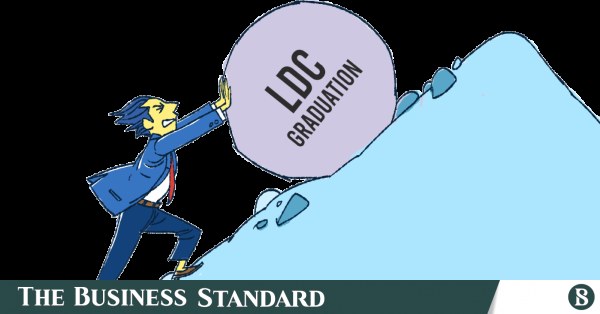
TBS Report, Dhaka — As Bangladesh prepares to graduate from the least developed country (LDC) category, private-sector leaders have demanded detailed, sector-specific action plans for SMEs, agriculture, pharmaceuticals, and other key industries — rather than broad and generic reform pledges that have historically characterised the country's LDC transition planning.
Speaking at a consultation organised by the Federation of Bangladesh Chambers of Commerce and Industry (FBCCI) in the capital on 31 August 2026, business leaders warned that plans alone mean little without disciplined implementation and continuous monitoring to ensure real outcomes — a pointed critique of the government's LDC graduation preparation effort that has been criticised for its top-down approach.
🏛 Chaired by FBCCI Administrator
Chaired by FBCCI Administrator Md Fazlul Hoque, the meeting called for:
- 👥 Stronger entrepreneurial capacity building
- 👥 Skills development across industrial sectors
- 💰 Greater investment in research and innovation
- 💻 Wider technology adoption across industries
- 💰 Affordable financing for businesses
- 🚢 Upgraded logistics infrastructure
- ⚡ Uninterrupted energy supply for industrial operations
All of these elements, business leaders say, are essential for industries to remain competitive once LDC-related trade benefits expire. The breadth of the demand list reflects the comprehensive structural transformation Bangladesh's industrial sector must undergo to maintain competitiveness in the post-graduation environment.
📊 LDC Graduation Challenges Identified
At the beginning of the meeting, FBCCI Secretary General Md Almgir presented a report on the challenges and opportunities associated with Bangladesh's LDC graduation. The report noted that:
- 📉 Duty-free market access will be lost post-graduation
- 📉 Generalised Scheme of Preferences (GSP) preferential treatment ends
- 📉 Everything But Arms (EBA) access to EU market transitions
- 📉 Stricter intellectual property rights (IPR) regulations will pose challenges to several industries, including pharmaceuticals
Against this backdrop, the report stressed the importance of ensuring private-sector participation in the government's reform initiatives — a clear call for more inclusive policy formulation.
👥 Private-Sector Concerns
During the open discussion, private-sector entrepreneurs said the benefits of LDC graduation would not materialise unless the action plans were realistic and implementable. They proposed collecting accurate data and information from the grassroots level to identify the priority needs of different sectors and formulate strategies accordingly — a bottom-up approach that contrasts with the traditional top-down LDC graduation planning methodology.
Rajib H Chowdhury, Senior Vice President of the Dhaka Chamber of Commerce and Industry (DCCI), said Bangladesh lacks sufficient negotiation capacity and needs to strengthen it. "Bangladesh's negotiation capacity needs to be enhanced. At the same time, the National Single Window must be made fully operational," he said.
💊 Pharmaceutical and Plastic Sector IPR Concerns
Shamim Ahmed, President of the Bangladesh Plastic Goods Manufacturers and Exporters Association, said a large portion of the country's plastic industry produces copycat products. After LDC graduation, intellectual property issues would become a major challenge for the sector, much like the pharmaceutical industry, he said. He called for urgent government-private sector action plans to protect industries such as:
- 🧴 Plastics — facing IPR challenges with copycat products
- 🔧 Light engineering — needs IPR protection framework
- 🏢 Cottage, micro, small and medium enterprises — vulnerable to compliance costs
K S M Mostafizur Rahman, President of the Bangladesh Agro-Chemical Manufacturers Association (BAMA), said Bangladesh would face major challenges regarding intellectual property rights after LDC graduation. The pharmaceutical, agriculture, and agro-chemical sectors would be among those affected, he said, urging the government to expedite the registration of products manufactured in Bangladesh that fall under patent protection.
👩 Women Entrepreneurs' Voice
Ismat Jarin Khan, President of the Patuakhali Women Chamber of Commerce and Industry, urged the FBCCI to ensure that strategies for sustainable LDC graduation do not remain focused only on industries based in Dhaka. She also called for:
- 💰 Easy-term loans for women entrepreneurs
- 👥 Skills development programmes targeting women
- 🚢 Logistics support for women entrepreneurs at the grassroots level
The intervention reflects a broader concern that LDC graduation planning has been Dhaka-centric, with insufficient attention to the differential impacts on regional and women-led businesses.
🏛 Government Engagement and Councils
Attending the meeting, Md Munir Chowdhury, National Trade Expert of the Bangladesh Regional Connectivity Project-1 under the Ministry of Commerce, said private-sector stakeholders must clearly identify the challenges facing their respective sectors. He suggested:
- 🏛 Forming councils involving the government and private sector to address sectoral challenges
- 📊 Results-based action plans with measurable outcomes
- 👥 Continuous engagement between government and industry
🏛 FBCCI Administrator's Closing
FBCCI Administrator Md Fazlul Hoque urged all district chambers and sector-based associations to submit their specific proposals in writing to the FBCCI, so that these could be analysed and placed before policymakers. He said that the additional three years Bangladesh had received must be utilised properly — a reference to the LDC graduation transition extension granted by the United Nations.
He added that if the private sector's capacity could be enhanced, the country's competitiveness in international markets would also increase, and sought cooperation from all district chambers and sector-based associations to this end.
👥 Senior Industry Leaders Present
The meeting was attended by senior leaders from across Bangladesh's business community:
- 🏛 Former FBCCI Administrator Md Hafizur Rahman
- 🌏 Nesar Ahmed, International Trade Expert, Support to Sustainable Graduation Project
- 👕 BGMEA Director Sheikh Hossain Mohammad Mustafiz
- 🧵 BKMEA Vice President Mohammad Rashed
- 🧴 BJMA Chairman Abul Hossain
- 🧵 BTMA Director Sajid Ishraq
- 👩 Bangladesh Women Chamber President Sangeeta Ahmed
- 🧭 Bangladesh Jute Diversified Products President Md Rashedul Karim Munna
Representatives from the Ministry of Commerce, Ministry of Industries, Bangladesh Standards and Testing Institution (BSTI), and ICT Division were also present — ensuring inter-ministerial coordination on the LDC graduation planning agenda.
🌏 Strategic Implications
The FBCCI consultation signals a strategic shift in how Bangladesh's private sector is engaging with the LDC graduation agenda:
- ✅ Bottom-up planning demand — grassroots data collection
- ✅ Sector-specific action plans rather than generic reforms
- ✅ IPR preparation for pharmaceuticals, plastics, agro-chemicals
- ✅ Negotiation capacity enhancement with development partners
- ✅ National Single Window operationalisation for trade facilitation
- ✅ Regional and women entrepreneur inclusion in LDC strategy
With LDC graduation now less than three months away (formal date 24 November 2026) and the additional three-year transition period as a buffer, the FBCCI's call for sector-specific roadmaps represents a critical input to the government's final-stage graduation preparation. The success of the transition will depend critically on whether the government heeds the FBCCI's call for bottom-up, implementable, sector-specific action plans — or continues with the top-down generic reform approach that has characterised much of the LDC graduation preparation to date.
This news was originally published by The Business Standard / The Daily Star. For the full original report, please visit: https://www.tbsnews.net/economy/entrepreneurs-seek-clear-roadmap-not-vague-promises-smooth-ldc-graduation-1529781
Related on BangladeshExport
📬 Get Bangladesh Trade News in your inbox
Weekly digest of export industry news, policy updates, and market analysis.
📰 Related Stories