Bangladesh's Aviation Sector Embarks on Billion-Dollar Fleet Expansion as Third Terminal Nears Completion
Local airlines plan to grow fleet strength to 91 aircraft by 2027, positioning Dhaka as a regional aviation hub ahead of the new terminal opening
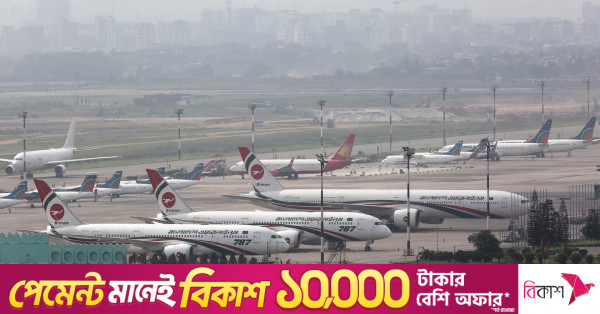
Bangladesh's commercial aviation industry is undergoing its largest-ever fleet expansion, with local airlines planning to grow their combined fleet to 91 aircraft by 2027 — a billion-dollar investment spree timed to coincide with the opening of the new third terminal at Hazrat Shahjalal International Airport.
An Unprecedented Expansion
Bangladesh's commercial aviation industry is gearing up for its largest-ever fleet expansion. Spurred by the massive capacity being created by the new third terminal at Hazrat Shahjalal International Airport (HSIA) in Dhaka, local airlines plan to grow their combined fleet strength to 91 aircraft by 2027 — a more than doubling of current capacity. The total capital outlay is estimated at over $1 billion, financed through a combination of operating leases, supplier financing from Boeing and Airbus, and domestic bank debt.
Drivers of the Expansion
Several factors are driving the expansion. First, the third terminal at HSIA — slated for full operational commissioning in 2027 — will increase the airport's annual passenger handling capacity from 8 million to 22 million, creating the physical infrastructure needed for a larger fleet. Second, Bangladesh's growing middle class is generating robust demand for both domestic and international air travel, with passenger growth averaging 10-12% annually in recent years. Third, the country's role as a major apparel exporter generates substantial belly-cargo demand on passenger routes.
Fleet Composition and Route Strategy
The expansion will see local carriers add wide-body aircraft (Boeing 787 Dreamliners and Airbus A350s) for long-haul routes to Europe, North America, and the Far East, alongside narrow-body aircraft (Boeing 737 MAX and Airbus A320neo) for regional routes. New destinations under consideration include direct flights to New York, London, Tokyo, and Sydney — routes that would significantly improve Bangladesh's connectivity with its key apparel export markets and major labour diaspora destinations.
Cargo Capacity Boost
For Bangladesh's apparel exporters, the most strategically important aspect of the expansion is the boost to cargo capacity. While passenger aircraft belly cargo currently handles a significant share of apparel air-freight, dedicated freighter aircraft are needed for high-density cargo routes. Several local carriers are evaluating the addition of Boeing 777F and Airbus A330F freighters to their fleets, which would dramatically increase Bangladesh's air-cargo export capacity — particularly valuable for time-sensitive fashion shipments to EU and US buyers.
The Hub Ambition
Beyond meeting domestic demand, the expansion reflects an ambition to position Dhaka as a regional aviation hub, competing with Kolkata, Colombo, and Kathmandu for transit passenger traffic. A successful hub strategy could generate significant ancillary revenue for the national aviation ecosystem, including ground handling, maintenance, repair and overhaul (MRO), and aviation training services. However, hub competitiveness will depend on visa liberalisation, customs efficiency, and competitive landing fees — areas where Bangladesh currently lags regional peers.
Risks and Headwinds
Despite the optimism, the expansion carries risks. Bangladesh's aviation regulatory framework remains work-in-progress, with concerns about pilot training capacity, air traffic control modernisation, and maintenance infrastructure. The global aviation supply chain is also constrained, with Boeing and Airbus facing multi-year delivery backlogs. Local carriers will need to compete aggressively with better-capitalised Gulf and Southeast Asian airlines for delivery slots and lease availability.
This news was originally published by The Business Standard. For the full original report, please visit: https://www.tbsnews.net/economy/aviation/local-airlines-go-biggest-ever-billion-dollar-expansion-ahead-new-3rd-terminal
📬 Get Bangladesh Trade News in your inbox
Weekly digest of export industry news, policy updates, and market analysis.
📰 Related Stories