Pertamina Wins O&M Contract For Bangladesh's First Single-Point Mooring
Indonesian state-owned PT Pertamina secures five-year operation and management contract for SPM at Kutubdia after re-tendering, ending two-year idle period of fuel pipeline infrastructure
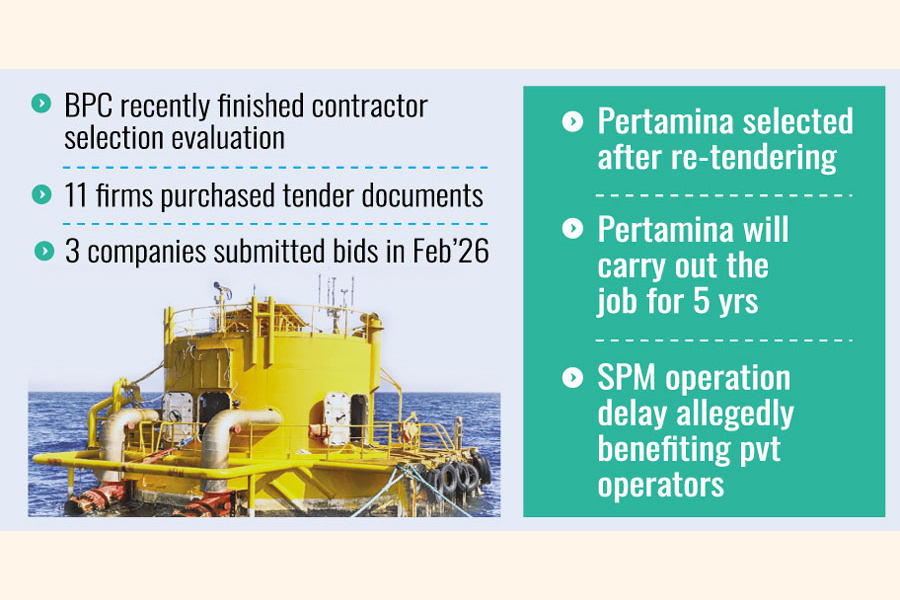
🚢 Indonesian state-run company PT Pertamina is all set to bag the operation and management (O&M) contract of Bangladesh's maiden single-point mooring (SPM) for carrying fuel from vessels in outer anchorage to onshore storage tanks. The selection ends a two-year delay that has cost the state-run Bangladesh Petroleum Corporation (BPC) extra money in alternative lighterage operations and raised questions about vested interests benefiting from the SPM's idle status.
📊 The state-run Bangladesh Petroleum Corporation (BPC) recently completed the evaluation for selecting the O&M contractor to initiate the operation of the country's much-needed oil carrying infrastructure two years after its installation, a senior official of the Energy and Mineral Resources Division (EMRD) under the Ministry of Power, Energy and Mineral Resources (MPEMR) told The Financial Express on Thursday. A total of 11 companies had purchased tender documents to compete in the bidding, and three of them submitted bids in February this year to carry out the job.
After inking the deal, the Indonesian company will carry out the operation and management job for five years. The Indonesian company has been selected as the O&M contractor following re-tendering — a process triggered after the initial tender was cancelled due to pricing concerns.
💰 Why The Initial Tender Was Cancelled
Pertamina was the lone bidder in the initial tender, which was cancelled due to higher than expected price quotes. During the BPC's previous tender, the Indonesian company had quoted $117 million, which was around 33 per cent above the BPC's budget of $88 million, resulting in the cancellation, said sources. The cancellation forced a re-tendering process that has now produced a more competitive outcome — though the two-year delay in getting the SPM operational has come at a substantial cost.
The SPM has already been kept idle for two years, and the BPC is counting extra money while using lighter vessels to carry fuel from mother vessels to tanks onshore as a consequence. Lighter vessels are smaller shuttle tankers that transfer fuel from large crude carriers anchored in deep water to onshore storage facilities — a slower, more expensive and operationally riskier alternative to a functioning SPM system.
- 🚢 BPC's initial tender budget: $88 million
- 💰 Pertamina's initial quote: $117 million (33% above budget)
- ⏳ SPM idle period: 2 years (since August 2024 handover)
- 📜 O&M contract tenure: 5 years
- 📅 Re-tender bids submitted: February 2026
- 👥 Companies that purchased tender documents: 11
🏗 Construction And Handover Timeline
Chinese firm China Petroleum Pipeline Engineering Co Ltd (CPPEC) completed the construction of the SPM with a double-pipeline project and handed over the infrastructure to the BPC in August 2024. The guarantee period to resolve faults in operations of the SPM, however, expired in February this year, much ahead of its commencement of commercial operation, it has been alleged. The expiry of the guarantee period before commercial operations begin is a particularly damaging feature of the delay — meaning that any technical faults that emerge during start-up may no longer be covered by CPPEC's warranty, exposing BPC to additional repair costs.
The delay in starting operations of the SPM system is allegedly benefiting private operators, who are earning hefty profits by carrying fuel from outer anchorage to onshore storage through lighter vessels, at the expense of public money, industry insiders said. Allegations are rife that a vested interest group, working in collusion with private sector beneficiaries, was playing a key role in delaying the SPM and its associated fuel pipelines and infrastructure. The private lighterage operators have a clear commercial interest in maintaining the status quo — every additional month of SPM idleness preserves their profit margin on fuel transfer operations.
🌏 What An SPM Does
The SPM system is used for piping petroleum from vessels far offshore and onshore storage tanks, thus slashing both time and cost of oil imports. The system works by allowing very large crude carriers (VLCCs) to discharge their cargo directly into a buoy moored in deep water, which is connected by undersea pipeline to onshore storage tanks. This eliminates the need for ship-to-ship transfers via lighterage and dramatically reduces the time required to discharge a cargo — from days to hours.
For Bangladesh, which imports over 5 million tonnes of crude and refined petroleum products annually, the SPM represents a strategically critical piece of energy infrastructure. The system enables Bangladesh to receive larger crude cargoes at lower per-unit freight rates — since VLCCs are cheaper per tonne than smaller aframax or suezmax tankers — and reduces demurrage costs associated with prolonged port stays. The economic case for SPM operations is clear; the only question has been operational readiness.
💵 Project Cost And Financing
CPPEC built the SPM system after being selected as a contractor "unsolicitedly" under the currently repealed Quick Enhancement of Electricity and Energy Supply (Special Provision) Act 2010. The act, which allowed the energy ministry to award contracts without competitive bidding, was repealed after the political transition in August 2024 — but projects initiated under its provisions continue to shape Bangladesh's energy infrastructure landscape.
The project cost escalated by 60 per cent to Tk 80 billion from the initial target of Tk 50 billion. The installation of the SPM with the double pipeline project was implemented with Chinese concessional loans of around $554 million. Of the total, China provided around $467.84 million as preferential buyers' credit and the remaining $82.5 million was available as soft loan. The financing structure — combining preferential buyers' credit with soft loan components — reflects China's broader approach to infrastructure lending in Bangladesh, which has funded several major energy and transport projects over the past decade.
🤝 Pertamina's Strategic Positioning
For PT Pertamina, the contract marks a strategic expansion of its international O&M footprint. The Indonesian state-owned major has been building its credentials as an operator of complex fuel logistics infrastructure across Southeast Asia, and the Bangladesh SPM contract — its first major engagement in South Asia — gives the company a foothold in a market with significant growth potential. Indonesia's own experience operating SPM systems for crude imports makes Pertamina a technically credible operator, even though the initial pricing dispute suggests that commercial terms took time to align.
For Bangladesh, the choice of an experienced international operator addresses concerns about technical capacity to manage a complex offshore fuel transfer system. Local operators would have required significant training and technical support, whereas Pertamina brings immediate operational expertise. The five-year contract tenure provides medium-term stability while allowing BPC time to develop in-house operational capacity for potential future renewal.
📜 What Comes Next For Bangladesh's Fuel Logistics
Once the contract is signed, Pertamina is expected to mobilise its operational team within weeks and commence commercial operations shortly thereafter. The first commercial use of the SPM will mark the end of a costly two-year delay and the beginning of significant operational savings for BPC. Industry estimates suggest the SPM could reduce fuel transfer costs by 30-40% compared to lighterage operations, translating into hundreds of crores of taka in annual savings once the system is operating at full capacity.
For Bangladesh's broader energy security, the SPM's operationalisation comes at a strategically important moment. With the country's fuel import volumes growing and global oil markets volatile, the ability to receive VLCC cargoes at lower freight rates provides a meaningful cushion against price shocks. The system also reduces Bangladesh's dependence on regional transshipment hubs — including Singapore and Sri Lanka — for fuel logistics, strengthening the country's strategic autonomy in energy supply.
The coming months will reveal whether Pertamina can deliver a smooth operational start-up or whether the technical and political baggage of the SPM project — including the expired warranty period and the vested interests that benefited from its delay — continue to complicate operations. For Bangladesh's energy sector, getting the SPM running commercially is a long-overdue milestone that, if successfully executed, will be a tangible win for the interim government's infrastructure delivery agenda.
This news was originally published by The Financial Express. For the full original report, please visit: https://thefinancialexpress.com.bd/economy/pertamina-to-get-om-contract-for-bds-first-spm
📬 Get Bangladesh Trade News in your inbox
Weekly digest of export industry news, policy updates, and market analysis.
📰 Related Stories