Bangladesh Poultry Feed Prices Jump Twice In One Month As Raw Material Costs Rise 27 Percent For Corn, Soybean Meal
Animal feed prices up nearly 7% in a month as corn rises 24%, de-oiled rice bran 27% and soybean meal 20%; manufacturers still incurring losses of more than Tk 3 per kg.
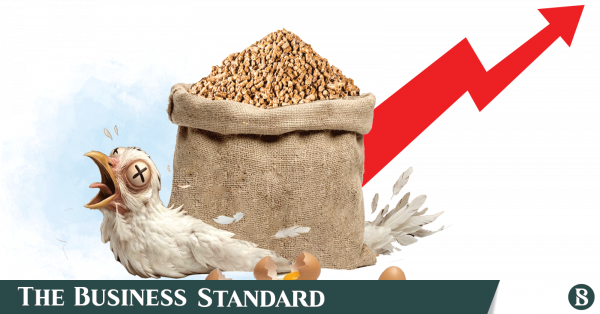
🐔 Bangladesh poultry feed prices have jumped twice in one month as major raw materials became more expensive, forcing feed mills to absorb losses, farmers to cut production, and consumers to pay more for eggs and chicken. A kilogram of animal feed that sold for around Tk 68 in early August now costs up to Tk 72.50 — an increase of nearly 7% in just one month, according to industry stakeholders.
📊 The raw material price increases driving the feed price hike have been significant. Over the past month, corn prices have increased by about 24%, de-oiled rice bran (DORB) by 27% and soybean meal by 20%, according to industry stakeholders. These three raw materials are the primary protein and energy sources used in poultry feed formulations, meaning that feed manufacturers have no choice but to pass on the higher costs — or absorb significant losses.
🏛 Why feed manufacturers are still losing money
Feed manufacturers, however, say they are still incurring losses of more than Tk 3 per kg as finished-feed prices have not fully reflected rising raw-material costs. This reflects the competitive dynamics of Bangladesh''s poultry feed market, where manufacturers are reluctant to pass on the full extent of raw material price increases to farmers — who are already struggling with weak poultry prices and reduced consumer demand.
The feed manufacturers'' dilemma illustrates the chain of pressure that runs through Bangladesh''s poultry value chain. Raw material price increases hit feed manufacturers first, who pass on some of the costs to farmers through higher feed prices. Farmers, facing higher input costs and weak poultry prices, reduce production — which eventually leads to lower supply and higher consumer prices for eggs and chicken. The cycle takes time to play out, but the end result is invariably higher prices for consumers and tighter margins for everyone in the value chain.
👥 Raw material dependency
Bangladesh''s poultry feed industry is heavily dependent on imported raw materials — particularly corn, soybean meal, and other protein sources. While Bangladesh produces some corn domestically, the country''s corn production is insufficient to meet the demands of the rapidly growing poultry and livestock sectors. As a result, feed manufacturers must import significant quantities of corn and soybean meal — exposing them to international price volatility and exchange rate risks.
The recent price increases in corn, soybean meal and DORB reflect a combination of international market dynamics and domestic supply constraints. International corn and soybean prices have been elevated due to supply disruptions in major exporting countries, adverse weather conditions affecting crops, and increased global demand for animal feed as the world''s middle class grows and consumes more meat and dairy products.
The Bangladesh Taka''s depreciation against the US dollar has further amplified the impact of international price increases on domestic feed manufacturers. As the taka weakens, imported raw materials become more expensive in local currency terms — even if international prices remain unchanged. Bangladesh has been facing sustained pressure on its foreign exchange reserves, contributing to taka depreciation and higher import costs across the economy.
🌏 Impact on farmers and consumers
The poultry feed price increases are having significant downstream effects on farmers and consumers. Farmers, facing higher input costs and weak poultry prices, are being squeezed on both sides of their income statement. Many farmers have responded by reducing flock sizes or exiting the business altogether — leading to lower domestic poultry production.
Reduced poultry production eventually translates into higher consumer prices for eggs and chicken — basic protein sources for millions of Bangladeshis. Eggs, in particular, are a critical source of affordable protein for low-income households, and significant price increases can have meaningful nutritional consequences for vulnerable populations. The government has been monitoring egg and chicken prices closely, but its ability to control prices is limited given that the underlying raw material cost increases are driven by international market dynamics.
💰 Broader context: Bangladesh''s livestock sector
The poultry feed price crisis highlights the broader vulnerability of Bangladesh''s livestock sector to imported input price volatility. The sector has grown rapidly over the past two decades, driven by rising consumer demand for meat, eggs, and dairy products. Bangladesh is now one of South Asia''s largest poultry producers, with millions of farmers relying on poultry for their livelihoods.
However, the sector''s growth has been built on a foundation of imported raw materials — making it vulnerable to international supply disruptions, price volatility, and exchange rate movements. The current crisis underscores the need for Bangladesh to develop more resilient domestic sources of animal feed — including expanded domestic corn production, alternative protein sources, and improved feed conversion efficiency through better animal genetics and farming practices.
🤝 Looking ahead
For Bangladesh''s poultry sector, the coming months will be challenging. Raw material prices are likely to remain elevated as long as international market conditions remain tight, and the taka''s depreciation shows no signs of reversing. Feed manufacturers will continue to face pressure on their margins, farmers will continue to struggle with high input costs and weak poultry prices, and consumers will face higher prices for eggs and chicken.
The longer-term solution requires investment in domestic raw material production — particularly expanded corn cultivation, development of alternative protein sources such as insect meal or single-cell protein, and improvements in feed conversion efficiency. The government''s recent announcement that 850 farmers have been trained in cattle feed production using imported Australian grass varieties is a small step in this direction, but much more needs to be done to build a more resilient and self-sufficient animal feed supply chain in Bangladesh.
For consumers, the poultry feed price crisis is a reminder of how international market dynamics can quickly translate into higher costs of living for ordinary Bangladeshis. The government will need to balance the interests of feed manufacturers, farmers, and consumers — while also investing in the longer-term structural changes needed to reduce the country''s vulnerability to imported input price volatility.
This news was originally published by The Business Standard. For the full original report, please visit: https://www.tbsnews.net/economy/poultry-feed-prices-jump-twice-month-raw-material-costs-rise-27-1556866
📬 Get Bangladesh Trade News in your inbox
Weekly digest of export industry news, policy updates, and market analysis.
📰 Related Stories