How Malaysia Engineered Its Economic Turnaround: Lessons For Bangladesh From Asian Tiger Recovery And Halal Trade Push
FE correspondent reports from MIHAS 2026 in Kuala Lumpur as Malaysia records RM6.78 billion in sales, with halal market projected to reach $113 billion by 2030 contributing 11% of GDP.
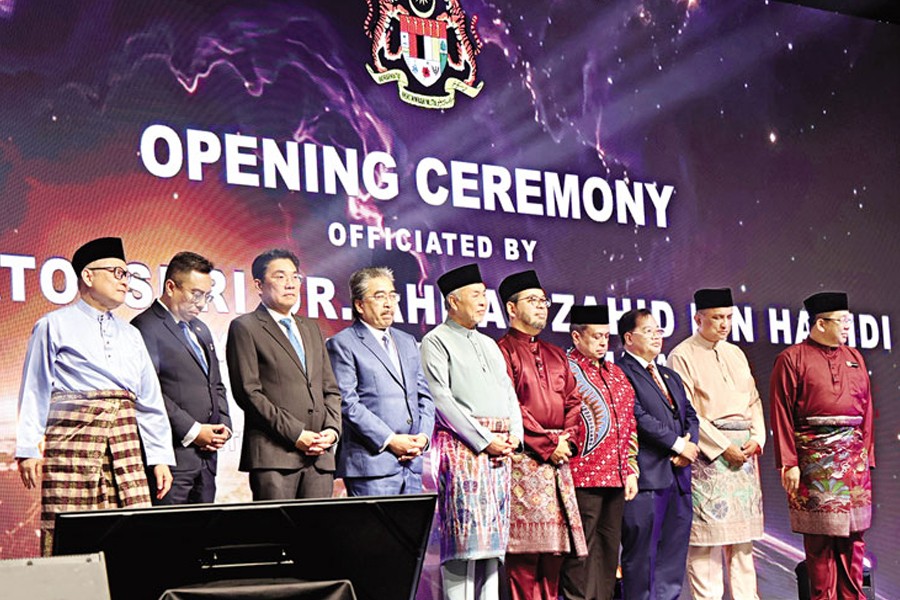
🌏 The four-day Malaysia International Halal Showcase (MIHAS) 2026, the largest event of its kind connecting thousands of buyers and business visitors representing 58 countries, was not closed yet when the chairman of the Malaysia External Trade Development Corporation (MATRADE), YB Dato'' Seri Reezal Merican Naina Merican, stood on stage at an award ceremony arranged for local entrepreneurs at MIHAS in Kuala Lumpur on 26 September 2026.
📊 Then he proudly announced: "Before closing the international event MIHAS 2026, we have already recorded RM5.2 billion in sales by its fourth day, exceeding MATRADE''s target of more than RM5.0 billion." After the closure of MIHAS 2026, MATRADE said it recorded RM6.78 billion in total sales, exceeding its initial sales target and marking a 12 per cent increase compared to 2025.
🏛 Malaysia''s halal ecosystem strategy
The country that projects that its halal market will reach roughly RM523.5 billion ($113 billion) by 2030, with the sector expected to contribute about 11 per cent to the national gross domestic product (GDP), has been arranging MIHAS since 2024 to promote its products among international buyers and businesses. On a broader scale, halal products are manufactured under strict safety and ethical standards, which is why many non-Muslims prefer them as well.
Going well beyond food and beverage, Malaysia has enhanced its efforts to achieve global trust in different industries, such as pharmaceuticals, cosmetics, healthcare, finance, logistics, tourism, and beyond, under the coverage of the halal ecosystem. This strategic positioning of Malaysia as the global hub for halal products and services has given the country a unique competitive advantage in the multi-trillion-dollar global halal market — an advantage that Bangladesh, with its own large Muslim population and growing halal industry, has yet to fully exploit.
👥 From 1998 crisis to Asian Tiger
During the 1998 Asian Financial Crisis, Malaysia experienced a severe post-independence recession that ended a decade of rapid economic growth. The country''s GDP shrank by around 7.4 per cent, reversing the growth averages of the early 1990s of over 8-9 per cent. Heavy speculative attacks devalued the Malaysian Ringgit (RM) by 45 per cent to 50 per cent against the US dollar, while the Kuala Lumpur Stock Exchange lost 75 per cent of its market value.
As businesses struggled to service their debts amid economic contraction, the banking system''s net non-performing loan (NPL) ratio surged to 9.0 per cent, with gross NPLs peaking at up to 22 per cent, severely straining financial institutions. Following the recession, per capita income in Malaysia fell to approximately $3,670 in 1998, about 21 per cent lower than the $4,660 recorded in 1997. By 2025, it rose significantly to approximately $13,125 per person, reflecting the country''s strong base of economic development.
But the country''s economy turned around without a bailout by global agencies, and Malaysia today is the 15th most competitive economy worldwide. The Malaysian turnaround story is particularly relevant to Bangladesh, which faces similar challenges — including a struggling banking sector with high NPLs, currency pressure, weak private credit growth, and the need to diversify its export basket beyond readymade garments.
🤝 The MATRADE chairman''s perspective
The message behind the recovery from recession, the subsequent rise in the economy, and its sustainable growth in the words of the MATRADE chairman is this: "We believe every handshake creates an opportunity." That means Malaysia opened the door for foreign investments alongside ensuring hassle-free services and security for foreign investors. "I think the consistency in policy decisions was very helpful for the country to regain its position as an Asian Tiger," he said. He said they always played a pro-business role as the story was always about the economy. "So, this country runs on economy."
Shankar, a civil servant quoted in the FE report, also said as civil servants, they were not bothered about which government came to power and they played their due roles irrespective of the political parties that assumed office. This continuity of policy and bureaucratic commitment, regardless of political changes, has been a critical factor in Malaysia''s sustained economic success — and is something that Bangladesh has historically struggled to achieve.
💰 Foreign investment success
In 2025, Malaysia recorded a landmark total approved investment of RM426.7 billion, where foreigners had a contribution of 48.5 per cent and the percentage stood at 58.1 per cent in the first six months of 2026, according to information from the Department of Statistics Malaysia (DOSM). When asked, Toni Dominaguez, area business leader of Spain-based manufacturing company Girbau SA, said Malaysia was not a dangerous country for foreigners.
Malaysia has opened pathways for foreign investors, high-net-worth individuals, and business professionals to reside, work, study, and invest in the country through initiatives like the Premium Visa Program (PVIP) and Malaysia My Second Home (MM2H). These programmes have been instrumental in attracting foreign capital, talent and businesses to Malaysia — and represent a sharp contrast to Bangladesh''s more restrictive approach to foreign investment and expatriate residency.
🌏 Lessons for Bangladesh
Bangladesh can draw several lessons from Malaysia''s economic turnaround. First, policy consistency matters: Malaysia''s ability to maintain consistent economic policies across different governments has been critical to its sustained growth. Bangladesh has historically struggled with policy discontinuity, with each new government reversing or modifying the policies of its predecessor — creating uncertainty for investors and businesses.
Second, foreign investment attraction requires more than just tax incentives: it requires a hassle-free business environment, security for foreign investors, and pathways for foreign talent to live and work in the country. Malaysia''s PVIP and MM2H programmes have been instrumental in attracting foreign capital and businesses, while Bangladesh''s more restrictive approach has limited its ability to attract similar levels of foreign investment.
Third, the halal economy represents a major untapped opportunity for Bangladesh. With its large Muslim population, growing halal food industry, and existing pharmaceutical and leather sectors, Bangladesh has the building blocks for a significant halal economy. But it has not yet developed the integrated halal ecosystem strategy that Malaysia has pursued — covering food, pharmaceuticals, cosmetics, finance, logistics, and tourism under a unified halal certification and promotion framework.
Fourth, civil service continuity and professionalisation matters. Malaysia''s civil servants have historically been able to maintain policy continuity across changes of government, providing institutional memory and stability that supports long-term economic planning. Bangladesh has made progress in this area but still faces challenges with politicisation of the civil service and policy discontinuity across electoral cycles.
💰 Looking ahead
For Bangladesh, the Malaysian story is both inspiring and challenging. It shows that a country can recover from severe economic crisis and build a competitive, diversified economy — but it also shows that this requires sustained policy consistency, openness to foreign investment, and strategic positioning in high-growth global markets. As Bangladesh navigates its own economic challenges, including banking sector stress, weak private credit growth, and the need to diversify exports beyond readymade garments, the Malaysian turnaround offers a useful reference point.
The MIHAS 2026 showcase, with its RM6.78 billion in sales and 58 participating countries, also demonstrates the potential of the global halal market — a market that Bangladesh is well-positioned to capture a larger share of, if it can develop the integrated halal ecosystem strategy that Malaysia has pursued. The coming years will show whether Bangladesh can learn from Malaysia''s success and translate these lessons into its own economic turnaround story.
This news was originally published by The Financial Express. For the full original report, please visit: https://thefinancialexpress.com.bd/trade/how-malaysia-engineered-its-economic-turnaround
📬 Get Bangladesh Trade News in your inbox
Weekly digest of export industry news, policy updates, and market analysis.
📰 Related Stories