Bangladesh Government Diverts Development Budget to Clean Power Generation
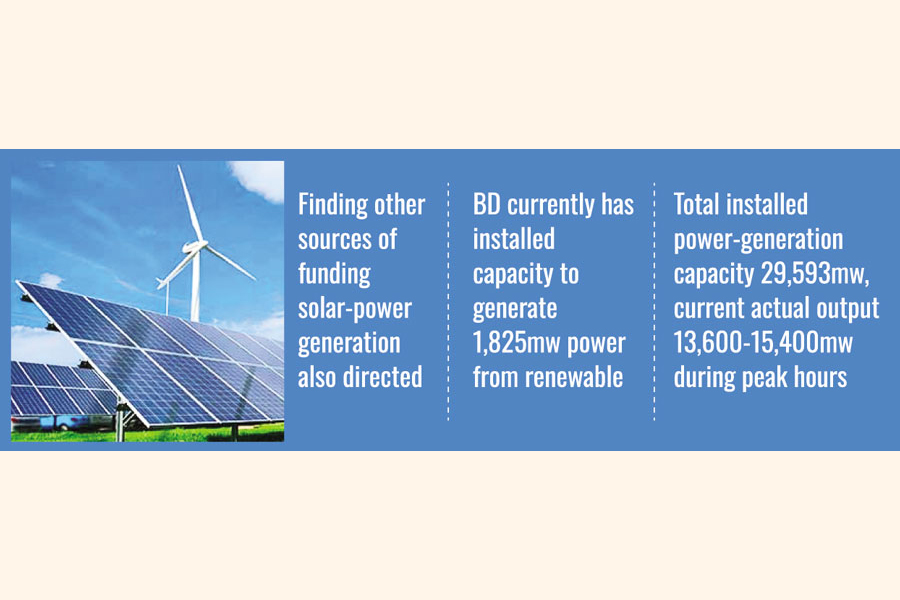
The Financial Express, Dhaka — The Bangladesh government has asked the Finance Division to divert necessary funds from the development budget to support the initiative for higher generation of clean energy — an unprecedented policy move that signals the strategic priority being attached to renewable energy expansion amid the prolonged gas and power crisis that has hobbled industrial production through 2026.
The directive comes as the Finance Division submitted a possible way-out plan on the energy crisis to Prime Minister Tarique Rahman earlier this week. The plan comprises short-, mid-, and long-term solutions to the nagging crisis, with sources indicating that the Prime Minister may submit the plan before Parliament during the ongoing session.
💰 Tk 10 Billion Reallocation to Rooftop Solar
According to Finance Division officials, the government in the current budget allocated some Tk 20 billion to provide funds to state-run umbrella bodies associated with microcredit and poverty alleviation. Preparing rules is underway to channel the funds to them.
However, amid the ongoing power crisis, government high-ups have now asked the Finance Division to divert Tk 10 billion from that allocation and use the money for installation of rooftop solar power systems in particular. The diversion represents a 50 percent reallocation of the microcredit fund pool — a significant policy shift in favour of clean energy investment.
Contacted, Finance Division Secretary Dr Md Khairuzzaman Mozumder told The Financial Express that using the funds for solar-power generation will be finalised in a meeting to be held next week. "We have been asked to find out other sources as well to finance solar power generation," he said.
📊 Short-Term Solution: Solar Before Next Summer
According to officials concerned, the Finance Division in its paper submitted to the Prime Minister has suggested that as part of the short-term solution, if necessary funds and policy supports can be provided now to both government- and private-sector entities, solar-power generation will increase manifold before the next summer. This may significantly help avert electricity shortage next year, the paper mentions.
"We could not find out any other short-term solution to the power crisis," a senior Finance official told The Financial Express — underscoring the urgency of the solar intervention as the only viable near-term response to the energy crisis before the next peak demand season.
🏛 Power Division Engagement with Private Sector
After being instructed by the Prime Minister, sources said, the Power Division officials this week had a meeting with private-sector renewable energy-based electricity producers seeking their help to enhance generation. The engagement with private renewable energy producers reflects a strategic acknowledgement that:
- 🏢 Government capacity alone cannot deliver the required solar expansion in the available timeframe
- 👥 Private sector capital and project execution capacity are needed for rapid rooftop solar deployment
- 📜 Policy support framework must be aligned with private sector investment requirements
- ⚡ Grid integration and net metering protocols must be operationalised at scale
💰 The Broader Reallocation Strategy
The Tk 10 billion rooftop solar reallocation is part of a broader fiscal strategy being developed by the Finance Division to redirect development spending toward clean energy:
- 💰 Tk 10 billion: diverted from microcredit allocation to rooftop solar
- 💰 Additional funding sources: being identified for further solar investment
- 💰 Policy support framework: under development for both government and private sector solar expansion
- 💰 Short-term focus: solar capacity addition before next summer
- 💰 Mid-term plan: to be detailed in the parliamentary submission
- 💰 Long-term vision: structural shift toward renewable energy mix
🏛 Strategic Context: Energy Crisis Imperative
The fiscal reallocation comes amid a deepening energy crisis that has affected virtually every segment of Bangladesh's industrial economy:
- 📊 660 textile mills affected by gas shortage since July 2026
- 📊 62 power plants faced generation disruption in late August 2026
- 📊 FY26 petroleum import bill: $10.63 billion (up 107% YoY)
- 📊 August LNG regasification low: ~190 mmcfd (vs ~750 mmcfd September forecast)
- 📊 Rampal second coal unit: cancelled, replaced by 442 MW solar plant
- 📊 US nuclear cooperation: Bangladesh seeking SMR technology partnership
The combination of these developments signals a comprehensive strategic rethink of Bangladesh's energy mix — with clean energy (solar, nuclear) receiving elevated priority while coal dependence is being scaled back and gas/LNG dependence is being treated as a transitional bridge to a more diversified energy portfolio.
💰 Rooftop Solar: Strategic Choice
The government's focus on rooftop solar as the principal short-term intervention reflects several strategic considerations:
- 🏢 Industrial rooftop potential: Bangladesh has substantial industrial rooftop space suitable for solar deployment
- 📊 CPD study: Bangladesh RMG factories can generate 1,768 MWp from rooftop solar
- 💰 Lower capital cost per MW than utility-scale ground-mount solar
- ⚡ Direct industrial consumption: reduces grid transmission requirements
- 📈 Faster deployment: rooftop systems can be installed in months vs years for utility-scale plants
- 👥 Private capital mobilisation: industrial consumers can co-invest
The reference to the CPD study finding 1,768 MWp of rooftop solar potential at RMG factories is particularly significant — representing a substantial untapped clean energy resource that could be mobilised rapidly with the right fiscal incentives and policy framework.
🏛 Implications for State-Run Microcredit Bodies
The diversion of Tk 10 billion from the original Tk 20 billion microcredit allocation also has implications for the state-run microcredit and poverty alleviation bodies that were originally scheduled to receive the funds:
- 💰 Reduced microcredit funding: Tk 10 billion instead of Tk 20 billion
- 🏛 Operational impact: state-run microcredit bodies will need to scale down lending plans
- 👥 Rural borrower impact: rural micro-borrowers may face tighter credit availability
- 📜 Policy trade-off: prioritising industrial energy recovery over rural microcredit expansion
The trade-off reflects the government's strategic judgement that the energy crisis poses a more immediate threat to the broader economy than the reduced microcredit allocation — particularly given that the gas shortage has already affected 660 textile mills and threatens the apparel export pipeline that generates Bangladesh's dominant foreign exchange earnings.
📊 Parliamentary Submission
Sources have indicated that Prime Minister Tarique Rahman may submit the comprehensive energy crisis response plan before Parliament during the ongoing session. The parliamentary submission is expected to detail:
- 📜 Short-term measures: rooftop solar expansion, gas supply recovery, immediate industrial relief
- 📜 Mid-term measures: utility-scale solar and wind capacity addition, grid modernisation
- 📜 Long-term vision: nuclear SMR deployment, renewable energy mix rebalancing
- 📜 Fiscal framework: financing sources, reallocation strategy, private sector engagement
- 📜 Policy reforms: regulatory changes needed to accelerate renewable energy deployment
The parliamentary submission represents a critical opportunity for the government to articulate a comprehensive energy strategy to the public and to opposition parties — building political consensus for the structural energy transition that Bangladesh must navigate through the LDC graduation period and beyond.
🌏 Strategic Significance
The fiscal reallocation decision carries strategic significance on multiple levels:
- ✅ Clean energy priority: rooftop solar elevated above microcredit in fiscal priority
- ✅ Industrial recovery focus: gas-dependent industries prioritised for relief
- ✅ Private sector engagement: renewable energy producers engaged for capacity expansion
- ✅ Parliamentary accountability: comprehensive plan to be submitted to Parliament
- ✅ Multi-timeframe strategy: short, mid, and long-term measures in integrated plan
The decision also signals a maturing of Bangladesh's approach to energy policy — moving away from the previous pattern of crisis-driven incremental responses toward a more integrated strategic framework that addresses both the immediate industrial crisis and the longer-term structural energy transition needed for the post-LDC graduation competitive environment.
🏛 Implementation Challenges
Despite the strategic clarity, several implementation challenges remain:
- 📜 Rule preparation: rules for fund channelling still being prepared
- 📜 Identification of additional funding sources: ongoing Finance Division effort
- 📜 Private sector policy framework: details to be finalised
- 📜 Net metering operationalisation: critical for rooftop solar viability
- 📜 Grid upgrade requirements: distribution grid capacity for distributed solar
- 📜 Industrial consumer participation: incentive structure to drive adoption
The success of the Tk 10 billion rooftop solar programme will depend critically on the speed at which these implementation challenges are addressed. With the next summer peak demand season approaching, the government has a narrow window — perhaps 6-8 months — to translate the fiscal commitment into actual installed solar capacity. The Finance Division's scheduled meeting next week to finalise the fund use, combined with the Power Division's engagement with private renewable energy producers, suggests that implementation momentum is building — but the test will be in actual megawatts deployed, not policy announcements made.
This news was originally published by The Financial Express. For the full original report, please visit: https://thefinancialexpress.com.bd/economy/govt-orders-diverting-funds-from-dev-budget-for-clean-power-generation
📬 Get Bangladesh Trade News in your inbox
Weekly digest of export industry news, policy updates, and market analysis.
📰 Related Stories